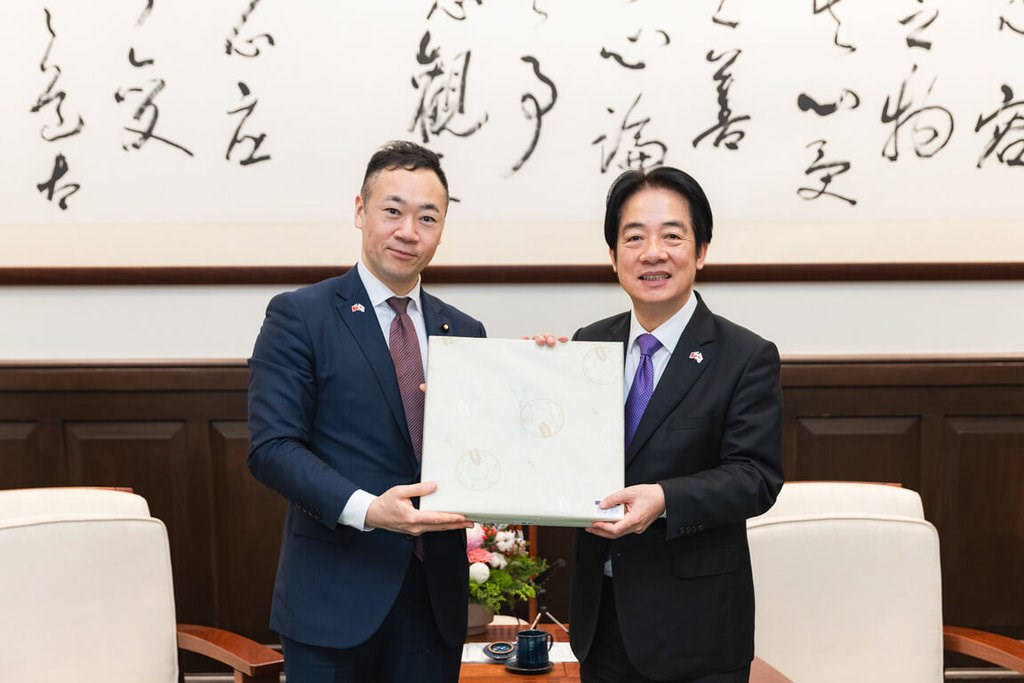
Former Japanese justice minister and LDP lawmaker Keisuke Suzuki concluded a three-day visit to Taipei where he met President Lai Ching-te, Vice President Hsiao Bi-khim and Taipei's mayor and called for stronger Japan–Taiwan deterrence to prevent a “Taiwan contingency.” The trip, involving other LDP lawmakers, comes amid elevated Tokyo–Beijing tensions after Prime Minister Sanae Takaichi’s comments on a potential Japanese military response to a Chinese attack and Beijing’s retaliatory measures (travel/study advisories, bans on Japanese marine products and military drills), increasing regional geopolitical risk that could pressure trade flows and investor risk sentiment.
Market Structure: Near-term winners are defense contractors (Lockheed Martin LMT, Northrop Grumman NOC, RTX) and semiconductor-equipment suppliers (Applied Materials AMAT, Lam Research LRCX, ASML ASML) as governments shift capex to deterrence and on‑shoring. Direct losers are Taiwan‑centric manufacturing (TSMC TSM) and travel/food exporters exposed to China‑led sanctions; expect 5–15% relative re-rating over 6–12 months as procurement flows and insurance costs reprice. Cross‑asset impact: safe‑haven flows lift JPY and gold (GLD) in days-weeks; sovereign spread widening could pressure JGBs vs USTs if Japan ramps defense spending over quarters.
Risk Assessment: Tail risks include a blockade/kinetic incident that disrupts Taiwanese fabs producing up to ~60% of leading-edge wafers, causing 20–40% shock to foundry output and global chip shortages for months. Immediate (days) is volatility spikes in FX, equities and shipping; short-term (weeks–months) is reallocation of capex and supply chains; long-term (quarters–years) is structural on‑shoring of fabs and higher defense budgets. Hidden dependencies: U.S. export-controls, insurance and shipping rerouting costs; catalysts include Japan budget votes (30–90 days) and PLA exercises announced with <72‑hour lead times.
Trade Implications: Establish 2–3% long positions in LMT and NOC (target +15–25% in 6–12 months, stop −12%). Implement a relative‑value pair: long AMAT (2%) / short TSM (2%) expecting 10–20% relative outperformance in 6–12 months; use 9‑month call spreads on LMT/NOC to cap premium. Hedge macro: buy 0.5–1% notional long JPY via 3‑month USD/JPY put spread (strike ~1% below spot) and 1% notional in GLD as a tail hedge.
Contrarian Angles: Consensus may overpay defense beta and oversell TSM; if TSM falls >20% on headline risk, that’s a tactical buy opportunity (mean reversion within 3–6 months) given irreplaceable capacity. Conversely, if Japan’s budget does NOT increase defense spending by >5% year‑over‑year in the next 90 days, trim defense longs by 25% as the policy premium fades. Historical parallels (Korea/Japan flareups) show sharp 1–3 month moves that reverse once economic friction becomes mutual.
AI-powered research, real-time alerts, and portfolio analytics for institutional investors.
Request DemoOverall Sentiment
moderately negative
Sentiment Score
-0.35
