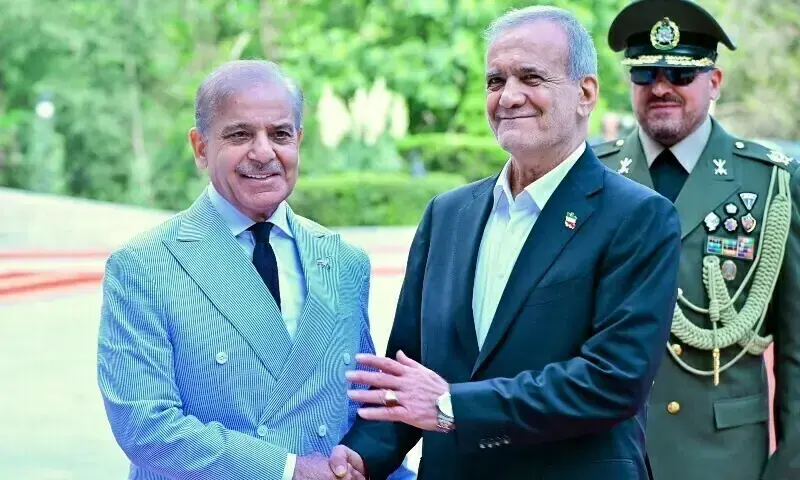
Pakistan reiterated its commitment to regional peace and security after Prime Minister Shehbaz Sharif spoke with Iranian President Masoud Pezeshkian for about 45 minutes. The call followed Pakistan-brokered US-Iran ceasefire diplomacy and ongoing talks in Islamabad, with both sides agreeing to keep dialogue and engagement going. While the developments are diplomatically constructive, the article is primarily a geopolitical update and does not indicate an immediate market-moving shift.
Pakistan is trying to monetize its role as an indispensable channel between Washington and Tehran, but that creates a narrow window where Islamabad gains diplomatic relevance without yet paying the economic cost of alignment. The near-term market effect is less about direct Pakistan assets than about the probability distribution of regional risk: every successful round of talks lowers tail risk in crude and shipping, while every delay increases the odds of a sharper risk premium into the April 22 ceasefire expiry.
The second-order winner is any asset class sensitive to Gulf stability: lower implied volatility in oil, tighter Middle East credit spreads, and a marginally better backdrop for EM risk if the ceasefire survives. The loser is the regional defense-risk complex: if talks keep extending, the market has to fade the urgency premium in defense contractors and in energy names that were trading a geopolitical supply shock. Conversely, if mediation fails, the market likely reprices quickly through the front of the oil curve rather than spot alone, because the immediate issue is not lost barrels but the probability of disruption and interdiction.
The key contrarian view is that consensus may be overestimating the durability of a Pakistan-brokered process. Islamabad can facilitate calls, but it cannot guarantee enforcement, and the two-week truce is a classic event risk that invites leverage around the deadline. If the next 72 hours bring no concrete extension mechanism, expect a spike in hedging demand across crude, freight, and regional FX even without new fighting.
For Pakistan, the upside is reputational rather than fundamental unless it converts diplomacy into IMF/policy goodwill and lower sovereign risk premia; that would take weeks, not days. Near term, the trade is on volatility compression or expansion, not on directional country beta.
AI-powered research, real-time alerts, and portfolio analytics for institutional investors.
Request DemoOverall Sentiment
neutral
Sentiment Score
0.05
