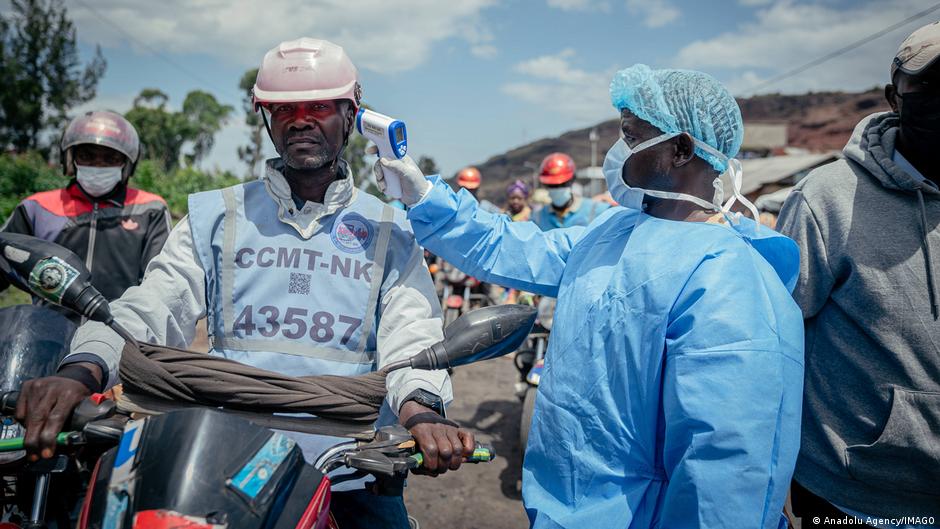
Congo’s Ebola outbreak has reached an estimated 900 cases and 220 suspected deaths, with seven suspected cases reported in neighboring Uganda. WHO chief Tedros Adhanom Ghebreyesus traveled to the DRC to support response efforts, while authorities warned the true scale may be larger and no vaccine or treatment is currently available for this Bundibugyo strain. Uganda has shut its border immediately, and regional officials say a vaccine could be ready by end-2026.
This is less an isolated public-health headline than a stress test for a fragile logistics corridor in one of Africa’s most operationally important and institutionally weak regions. The near-term market read-through is not a direct sector hit but a second-order risk premium: anything with exposure to eastern DRC, Ugandan border trade, or regional mining logistics faces a higher probability of temporary work stoppages, checkpoint friction, and labor absenteeism over the next 2-8 weeks. Because the epicenter sits in a conflict zone, containment is likely to be uneven; that raises the odds of rolling restrictions rather than a clean, short-lived outbreak arc.
The most underappreciated channel is commodities. The eastern Congo mineral belt is embedded in global supply chains for cobalt, copper, and gold; even if exports do not fully halt, a deterioration in road access, medical screening, or militia activity can widen delivery spreads and lift working capital needs for buyers. That tends to help diversified miners with alternative sourcing and balance-sheet flexibility while hurting processors and industrial buyers that depend on just-in-time inputs and low inventories.
On the public-health side, the statement that a vaccine could be ready by year-end creates a binary timeline: if credible clinical progress arrives within 3-6 months, the market will rapidly fade the risk premium; if not, repeated flare-ups could keep border policy and humanitarian spending elevated into 2027. The bigger contrarian point is that travel bans are often economically visible but epidemiologically blunt, so the sharper market issue is not a pandemic shock but a prolonged drag on regional commerce and investor sentiment toward frontier Africa.
Consensus may be overestimating how much global risk assets care and underestimating how much local supply chains can be disrupted without headline-grabbing case growth. This argues for tactical, event-driven positioning rather than a broad de-risking trade: the asymmetry is in names with concentrated east-Africa exposure or vulnerable input chains, not in the global market beta itself.
AI-powered research, real-time alerts, and portfolio analytics for institutional investors.
Request TrialOverall Sentiment
strongly negative
Sentiment Score
-0.55
