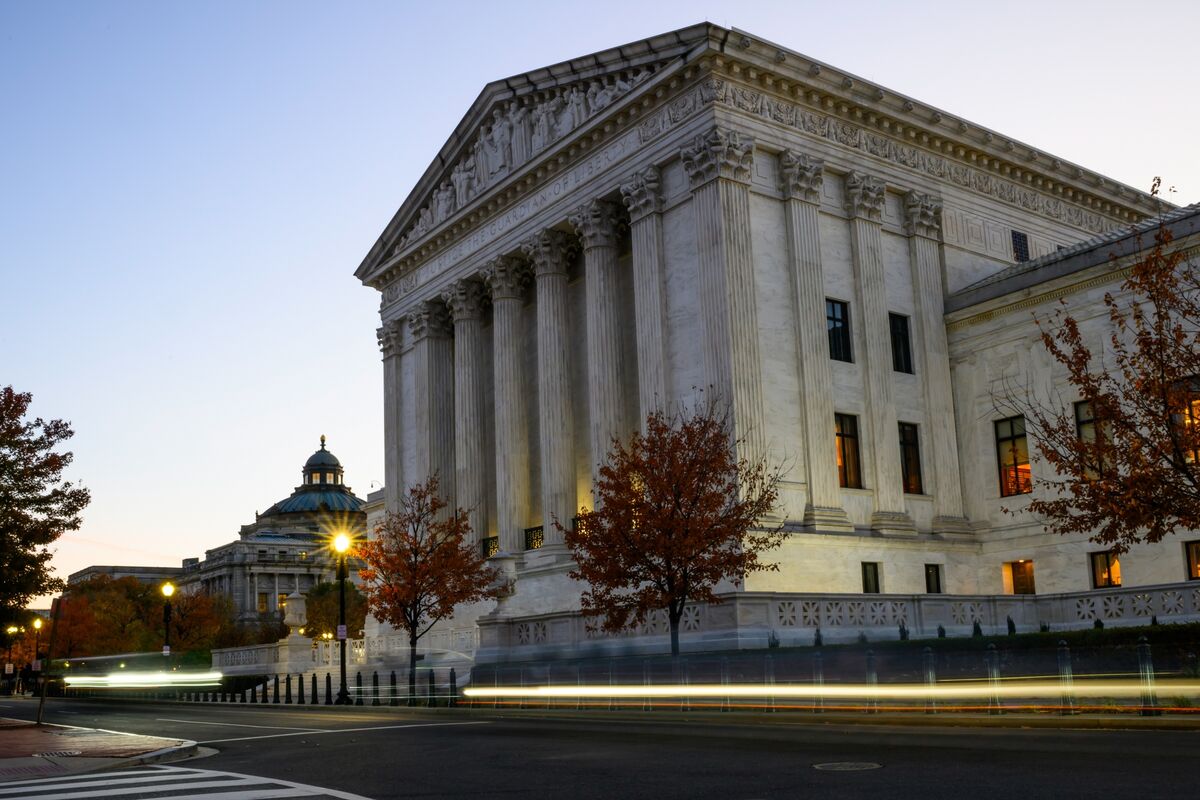
The U.S. Supreme Court is hearing arguments on the legality of former President Trump's tariffs, a decision that could significantly impact the executive branch's ability to use tariffs as a trade negotiation tool. A ruling deeming the tariffs illegal could trigger requests for refunds exceeding $100 billion, posing substantial financial implications for affected businesses and potentially reshaping future U.S. trade policy.
The U.S. Supreme Court is currently hearing arguments regarding the legality of former President Trump's tariffs, a pivotal case that could significantly redefine the executive branch's authority to impose duties. A ruling against the tariffs would directly challenge the President's ability to leverage tariffs as a primary tool for trade negotiation and concessions. This legal challenge introduces considerable uncertainty into future trade policy.
Financially, the stakes are substantial, with a potential adverse ruling triggering refund requests exceeding $100 billion. This would create significant financial implications for businesses that have paid these tariffs, potentially impacting their balance sheets and future capital allocation, particularly for import-heavy sectors.
The "mixed" sentiment and "uncertain" tone surrounding this event, coupled with a high market impact score of 0.75, underscore the significant policy and economic uncertainty. The outcome will not only affect past tariff payments but also shape the future landscape of U.S. trade policy and regulatory enforcement.
AI-powered research, real-time alerts, and portfolio analytics for institutional investors.
Request DemoOverall Sentiment
mixed
Sentiment Score
-0.10
