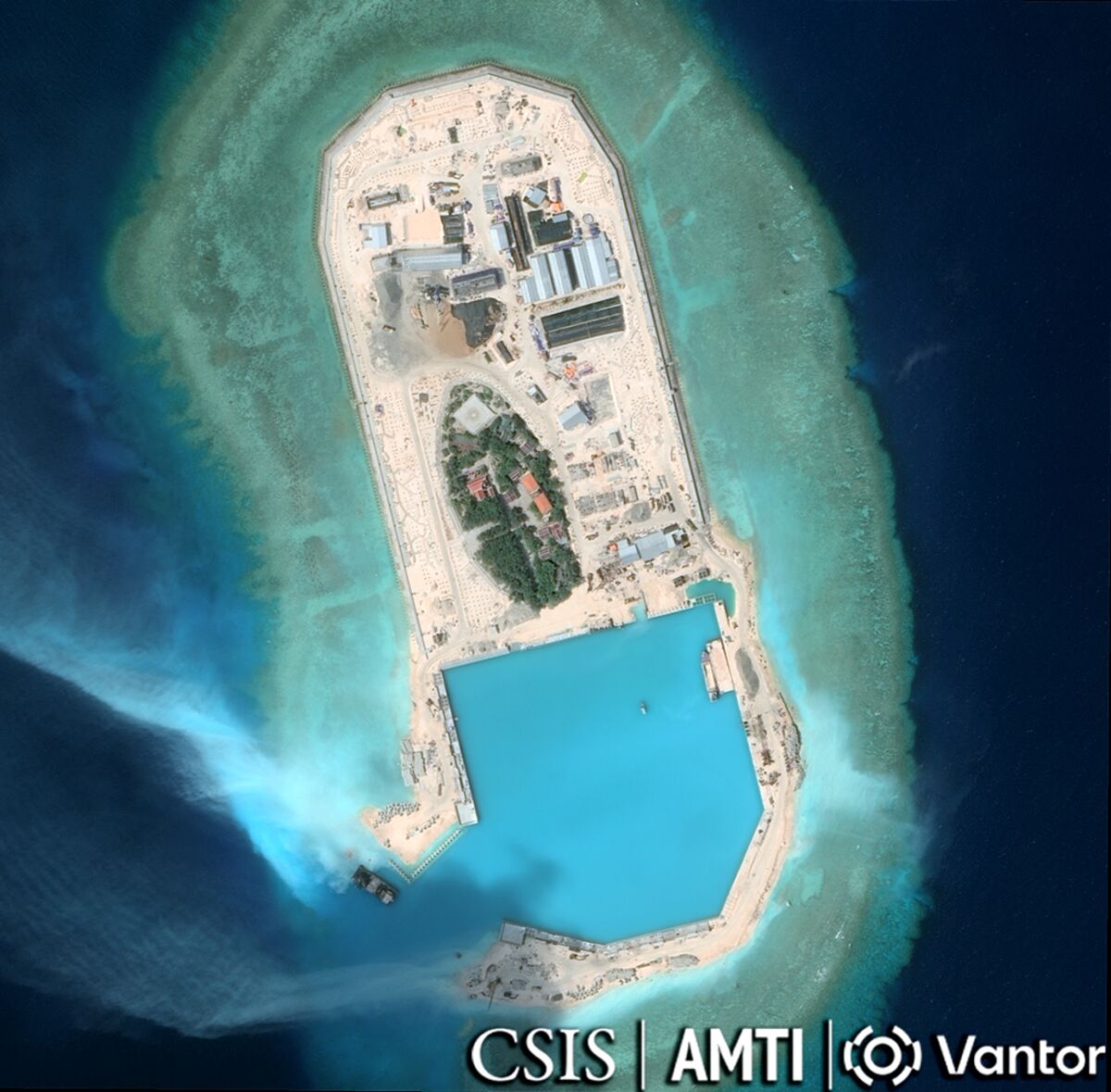
Vietnam added about 534 acres of land in the Spratly Islands over the past year, bringing its total reclaimed area to roughly 2,771 acres, but Beijing has still widened its lead in the South China Sea. The update signals ongoing geopolitical rivalry and reinforcement of competing territorial claims, which may sustain regional security risks. Market impact is likely limited to defense, shipping, and broader emerging markets sentiment rather than a direct macro shock.
This is less a near-term market event than a slow-burn geopolitical capex race, and the second-order effect is that both sides are converting disputed water into sunk-cost deterrence. The incremental acreage matters because reclamation changes the military math: more runway, sensor, and logistics capacity raises the cost of coercion and reduces the probability of a quick fait accompli, but it also hardens a long-duration standoff that keeps regional risk premia sticky.
The more important winner is not the reclaiming state itself but the defense-and-surveillance ecosystem around it. Any sustained buildout implies higher demand for maritime domain awareness, drones, coastal radar, hardened communications, and expeditionary infrastructure; that favors primes and niche electronics suppliers more than conventional shipbuilders. By contrast, ASEAN trade-sensitive sectors face a hidden tax: insurers, offshore energy operators, and port/logistics names can see episodic premium creep even without shots fired, because the market prices in a higher tail-risk of harassment or access restrictions.
The contrarian view is that markets often overreact to visible land reclamation while underpricing the fact that the real escalation path is usually legal and administrative, not kinetic. That means the near-term catalyst set is sparse unless there is an incident, but the regime is still constructive for a persistent “security spend” bid over the next 12-24 months. If Beijing’s lead keeps widening, Hanoi is more likely to respond asymmetrically with alliances, procurement, and dispersed capabilities rather than trying to match acreage, which makes the event bullish for defense suppliers and bearish for any thesis dependent on a rapid de-escalation.
The main tail risk is a localized maritime confrontation that hits shipping, offshore exploration, or tourism sentiment in the region; that would likely show up first in higher volatility, not outright macro damage. Reversal would require either a credible negotiation framework or a deliberate pause in reclamation activity, neither of which appears likely on a weeks-to-months horizon. In the meantime, the most actionable posture is to own the beneficiaries of persistent tension rather than try to time a geopolitical resolution.
AI-powered research, real-time alerts, and portfolio analytics for institutional investors.
Request DemoOverall Sentiment
mildly negative
Sentiment Score
-0.15
