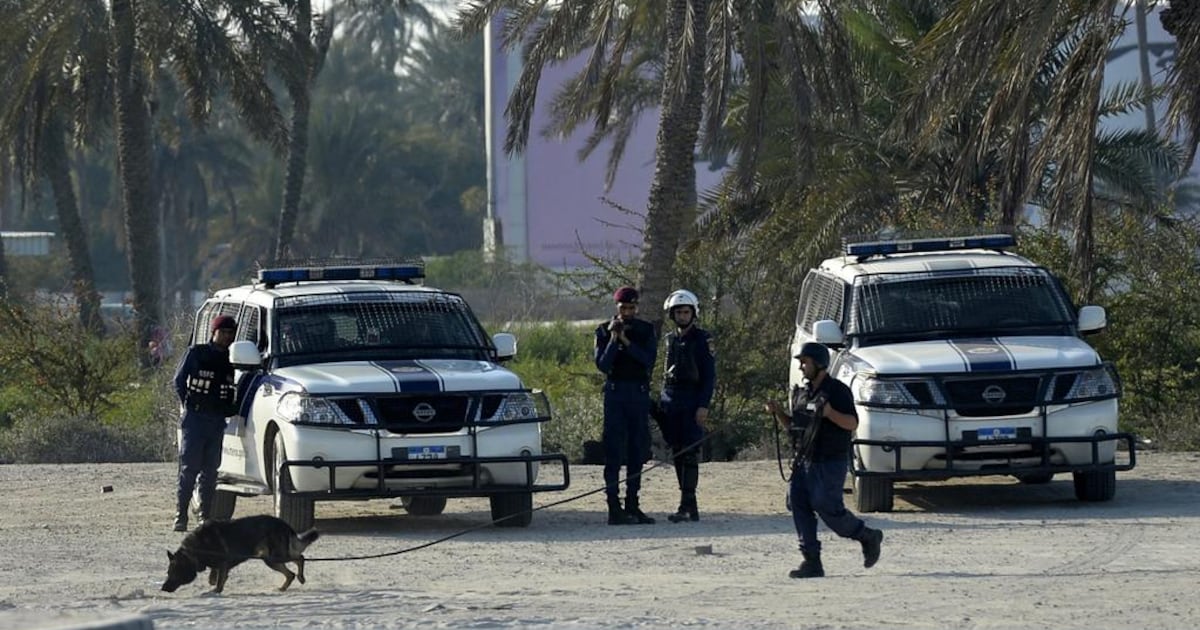
Bahrain has put a National Security Agency officer on trial over the death of a detainee assaulted in custody, with the accused reportedly confessing and remaining in detention. The case adds to a period of heightened regional tension as Bahrain has recently pursued espionage and terrorism-related charges tied to Iran-backed groups and has faced drone and missile strikes from Iran. The news is primarily legal and political in nature, with limited direct market impact.
This is less a single-country legal headline than a signal that Bahrain is tightening internal security discipline while trying to preserve external deterrence credibility. In the near term, that usually lowers the probability of uncontrolled escalation because the regime is demonstrating chain-of-command accountability; over a 1-3 month horizon, however, it also implies a broader sweep of security cases that can keep political risk premia embedded in local assets and maintain a heavier hand in domestic policing. The second-order effect is reputational: investors may distinguish between institutional control improving and underlying political stress worsening, which can matter more for duration-sensitive sovereign exposure than for near-term credit cash flow.
The market’s bigger read-through is regional, not domestic: heightened internal-security sensitivity tends to coincide with sharper scrutiny of cross-border networks and proxy activity. That can keep Gulf risk headlines clustered, but it also raises the odds of quiet de-escalation on the foreign-policy side because states under pressure often prefer contained legal actions over kinetic responses. For Bahrain specifically, the most relevant risk is not another isolated court case; it is whether this becomes evidence of a broader security crackdown that prompts more arrests, sanctions chatter, or softer tourism/investment sentiment over the next quarter.
The contrarian angle is that the headline may actually be slightly stabilizing for sovereign risk if investors interpret it as institutional self-correction rather than opacity. If the trial is viewed as credible, it reduces tail risk around arbitrary security behavior and can modestly help Bahrain’s financing narrative; if the process looks selective or politicized, the opposite happens quickly. The market is likely to overreact to the conflict rhetoric and underweight the possibility that visible accountability is part of a broader effort to de-risk the regime from external pressure.
For tradeable impact, this is a watchlist item rather than a high-conviction alpha event, but it argues for staying cautious on Bahrain-sensitive EM risk until the next 2-6 weeks of legal follow-through are clear. The key catalyst is whether additional arrests or accusations expand beyond the original security case set; that would shift the story from isolated governance control to persistent geopolitical spillover.
AI-powered research, real-time alerts, and portfolio analytics for institutional investors.
Request TrialOverall Sentiment
moderately negative
Sentiment Score
-0.30
