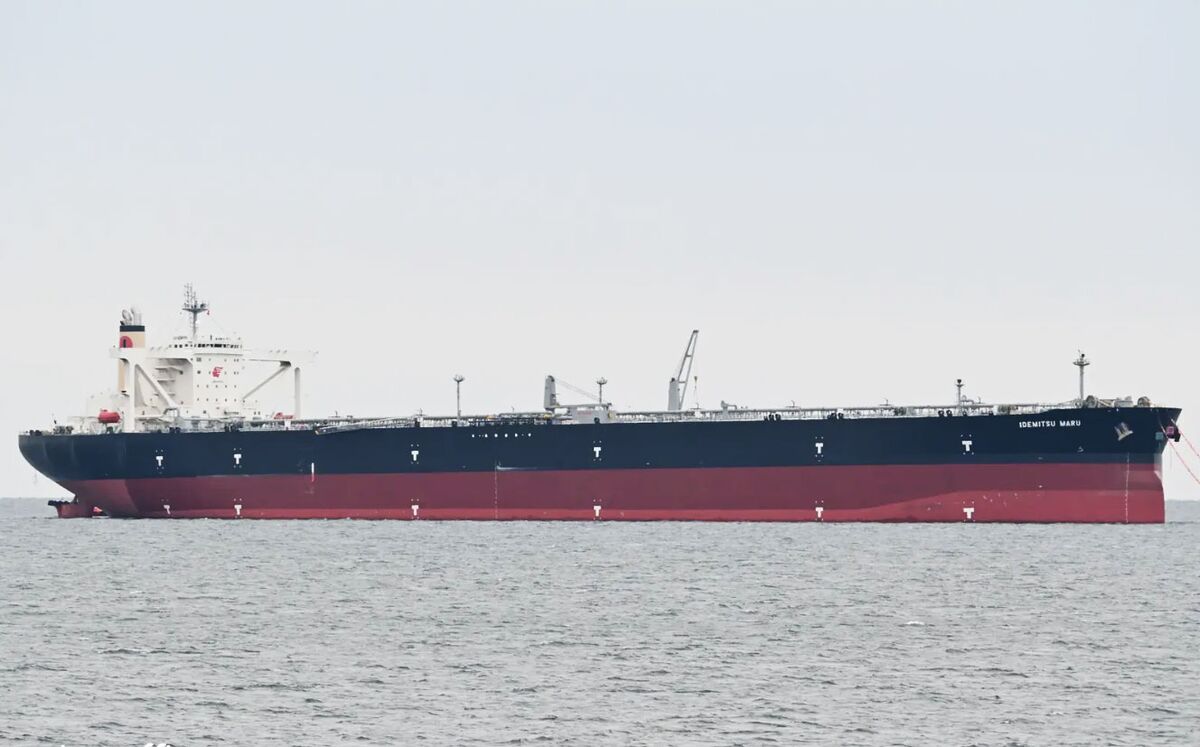
The Japan-linked supertanker Idemitsu Maru is attempting to exit the Persian Gulf through the Strait of Hormuz, reportedly the first oil-carrying vessel from Japan to try leaving since the Iran war began. The ship is carrying 2 million barrels of crude loaded from Saudi Arabia’s Juaymah terminal in early March. The transit underscores elevated geopolitical risk around a critical energy chokepoint that could disrupt crude flows and freight routes.
The key market signal is not one vessel’s movement; it is whether the market has to reprice the probability distribution for Hormuz disruption. Even a brief convoy-style exit by a large crude carrier tells you freight and prompt physical differentials are likely to stay bid, because shipowners will demand a higher geopolitical risk premium before committing tonnage back into the Gulf. The first-order price reaction is usually modest unless there is an actual incident, but the second-order effect is a tightening of availability in VLCCs and product tankers for several weeks as owners de-risk routes and insurers widen exclusions.
The beneficiaries are not only upstream crude producers but also non-Gulf supply chains that can arbitrage any localized Asian cargo shortage. Atlantic Basin grades, particularly those with flexible destination optionality, should see a relative bid if Asian refiners start paying up for replacement barrels and freight. By contrast, Gulf-dependent refiners and crack-spread-sensitive names are exposed to input-cost volatility that can compress margins faster than finished-product prices can adjust, especially if the market is forced to chase prompt barrels rather than forward supply.
The contrarian view is that the market may be overpricing a near-term blockade scenario while underpricing the regime’s incentive to avoid a true closure that would invite overwhelming response. That means the higher-probability outcome is persistent premium, not a supply shock large enough to justify panic buying in outright crude. The critical catalyst window is days, not months: if more vessels transit normally, the premium fades quickly; if there is even one interdiction, the market likely shifts from logistics risk to strategic supply risk within hours.
This setup favors volatility expression over directional crude beta. The cleanest trade is to own optionality or relative value where the downside is limited if tensions de-escalate, because the asymmetry is skewed toward a sharp but potentially short-lived spike rather than a sustained demand-driven trend. In other words, the best edge is in anticipating insurance, freight, and regional crack spread dislocations before they show up fully in flat-price Brent.
AI-powered research, real-time alerts, and portfolio analytics for institutional investors.
Request DemoOverall Sentiment
mildly negative
Sentiment Score
-0.20
