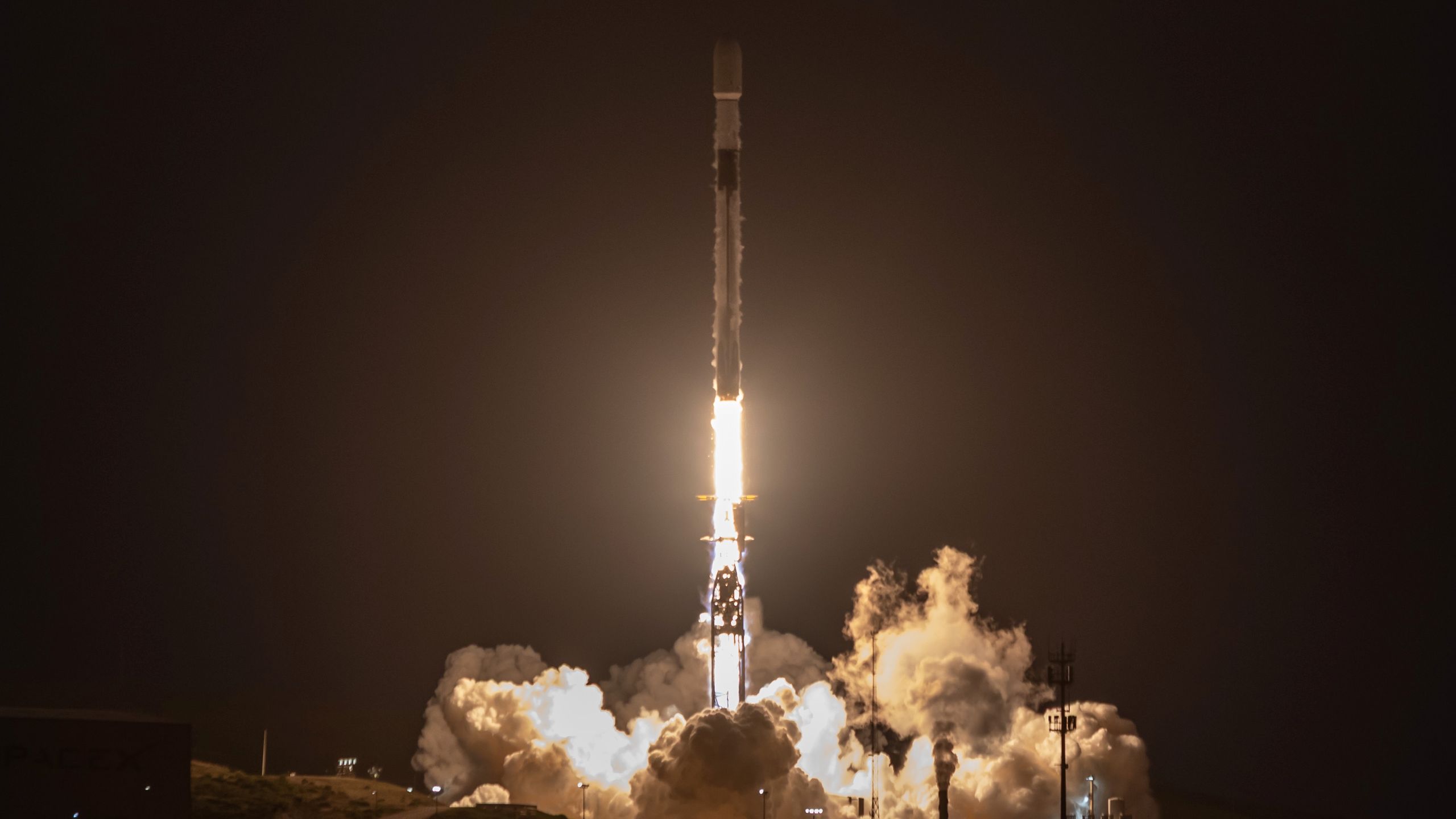
SpaceX successfully launched 24 Starlink satellites from Vandenberg Space Force Base, with Falcon 9 booster B1081 landing as planned in the Pacific Ocean after its 25th flight. The satellites were deployed into low Earth orbit just under 62 minutes after liftoff, marking SpaceX's 74th Falcon 9 launch this year and its 59th dedicated to Starlink. The article is primarily a routine operational update with limited near-term market impact.
The key market signal is not the launch itself, but the continuing proof that Starlink can be mass-deployed with unusually low marginal cost and high operational cadence. That compounds SpaceX’s strategic moat: every successful reuse cycle lowers launch cost and raises confidence in schedule reliability, which makes the constellation harder for rivals to economically displace and more attractive for enterprise/government customers that value uptime over headline performance.
Second-order, the beneficiary set extends beyond SpaceX. Semiconductor, RF, and optical-component suppliers tied to user terminals and gateway infrastructure should see a longer-duration demand curve as the network density expands, while incumbent GEO/LEO competitors face a tougher pricing environment. The bigger pressure point is on legacy telecom and satellite service providers that still rely on sparse capacity; as Starlink scales, their customer churn risk rises first in rural broadband and maritime/defense niches, then in higher-margin mobility contracts over the next 12-24 months.
The main risk is that the market already treats Starlink as a straight-line growth story, while regulatory and spectrum constraints are the real gating items. If cross-border licensing friction or defense procurement delays slow terminal adoption, the monetization curve can lag the launch curve by quarters, not weeks. That creates a useful asymmetry: the technical execution is de-risking, but the revenue recognition from the constellation may still be underappreciated in the next 6-9 months.
Contrarian takeaway: the overowned trade is the pure launch-services narrative, while the underowned trade is the picks-and-shovels ecosystem that monetizes persistence, not headlines. Investors should focus on businesses exposed to recurring satellite traffic, ground infrastructure, and terminal demand rather than trying to front-run the next launch count milestone.
AI-powered research, real-time alerts, and portfolio analytics for institutional investors.
Request DemoOverall Sentiment
neutral
Sentiment Score
0.10
