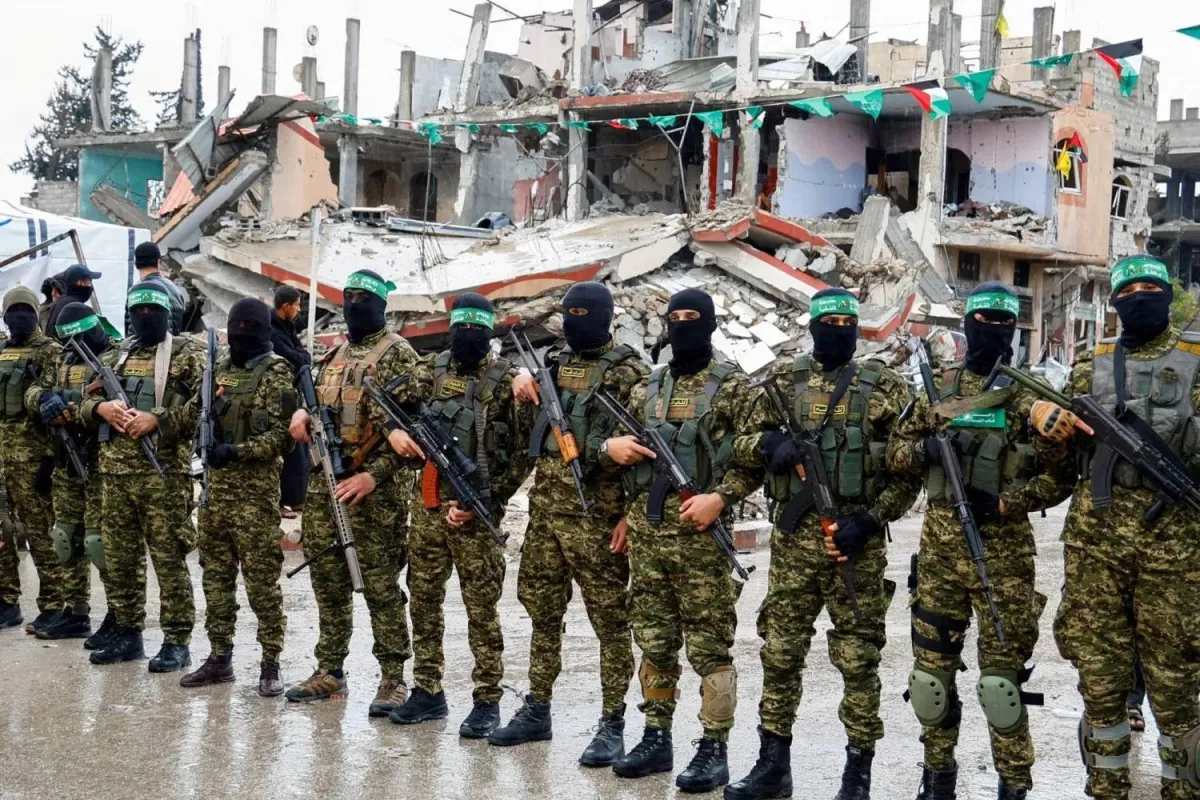
60,000 rifles: Israeli PM Netanyahu has demanded Hamas surrender 60,000 Kalashnikovs, a figure Gaza factions call unrealistic after a two-year war that devastated the enclave. Hamas leaders, including Khaled Meshaal, are consulting factions and mediators on a limited weapons handover (small numbers of anti-armor rounds, IEDs, light arms, and some DShK-mounted pickup trucks) while rejecting full disarmament; proposals remain at an informal consultation stage and have been slowed by the wider US-Israeli war on Iran. A Hamas delegation in Cairo is focused on humanitarian relief, and mediators have yet to present a formal US disarmament proposal, keeping the outlook for a negotiated settlement and regional risk elevated.
The diplomatic knot over weapons custody creates a multi-stage political premium: markets should price an initial liquidity/shock phase (days–weeks) if Israeli demands remain maximal, followed by a bargaining phase (weeks–months) where mediators trade guarantees for partial surrender. That sequencing makes near-term risk assets in the Levant and adjacent EM corridors susceptible to a 10–25% realized-volatility jump relative to global peers, with tail outcomes tied to Iran escalation.
Operationally, the likely transfer of only specific mountable systems (pickup-mounted MGs) and retention of light arms raises a monitoring and enforcement trade: third-party guarantors and technology providers for verification will be in demand, while reconstruction contractors face a high bar to mobilize capital until verification regimes and an international stabilization force are credibly on the ground. This favors firms with NATO/UN contracting footprints and those selling non-lethal stabilization tech.
For commodity and insurance channels, even limited mediation reduces the probability of full-scale, prolonged blockade but preserves episodic supply-chain shocks — shipping war-risk premia and short-term Brent implied vol should remain elevated 30–90 days around negotiation milestones. Reinsurers and specialty maritime underwriters therefore face concentrated loss windows tied to headline-driven spikes.
The asymmetric political incentives — domestic leaders demanding total surrender vs. field commanders refusing — make sudden reversals possible if a mediator proposes enforceable, escrow-style arms registries; that’s the single plausible catalyst to collapse the premium within 2–3 months, creating sharp mean-reversion opportunities in risk assets.
AI-powered research, real-time alerts, and portfolio analytics for institutional investors.
Request DemoOverall Sentiment
strongly negative
Sentiment Score
-0.55
