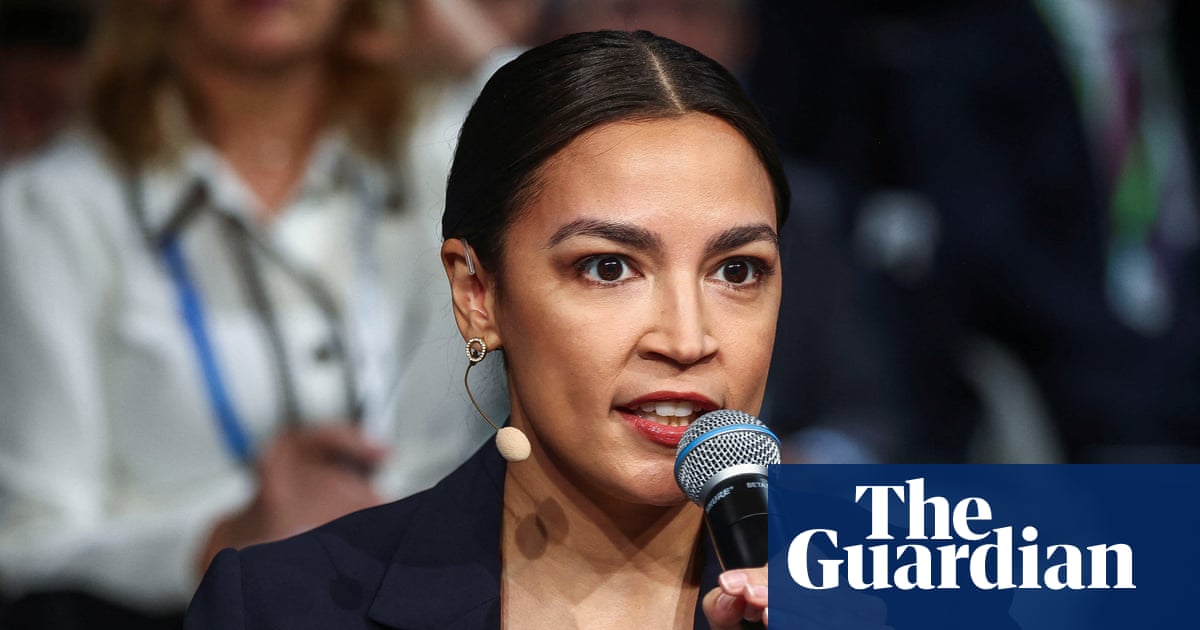
Alexandria Ocasio-Cortez said her ambition is to "change the country" rather than pursue a specific higher office, amid speculation about a 2028 presidential bid or Senate challenge. She reiterated support for single-payer healthcare, a living wage, workers' rights, and women's rights, framing her focus as policy-driven rather than title-driven. The remarks are politically notable but have limited direct market impact.
The market read-through is less about one politician and more about the probability distribution of the Democratic nominee field shifting leftward earlier than expected. Even without an official campaign, sustained media oxygen around a youthful, high-recognition progressive candidate raises the odds that healthcare, wage, and anti-monopoly rhetoric become the modal language of the primary, which matters for sector positioning well before November 2028. That creates a subtle but real political premium on anything exposed to incremental policy risk in managed care, pharma pricing, and large-cap consumer margin structures.
The bigger second-order effect is competitive: if the party’s center of gravity moves toward an economically populist message, establishment alternatives have to spend more time defending the status quo than attacking Trump-era policy. That dynamic can flatten the field for a few quarters, but it also increases the chance that a centrist consensus candidate eventually emerges as an anti-fragile compromise. In other words, the current signaling helps the activist wing in the near term, but may paradoxically improve a moderate’s odds if donors and institutional validators decide the base is drifting too far left.
For markets, the time horizon matters. Near-term impact is mostly optical and should not be chased in single-session price action; the tradable window is the next 6-18 months as polling, fundraising, and media coverage reshape implied probabilities. The real risk is not a direct policy implementation, but a repricing of regulatory beta in sectors where valuation depends on continuation of current reimbursement and pricing regimes. If a progressive nomination looks more plausible after the midterms, that catalyst can compress multiples in health care, private education, and higher-margin consumer names.
The contrarian view is that the headline is overread: rhetoric around structural change is table stakes for a progressive and does not necessarily translate into executable national viability. The consensus may be too quick to extrapolate presidential odds from brand strength alone, when the harder problem is coalition breadth in a general election. That makes this more of a volatility event than a directionally persistent theme unless polling converts the persona into a credible front-runner.
AI-powered research, real-time alerts, and portfolio analytics for institutional investors.
Request DemoOverall Sentiment
neutral
Sentiment Score
0.00
