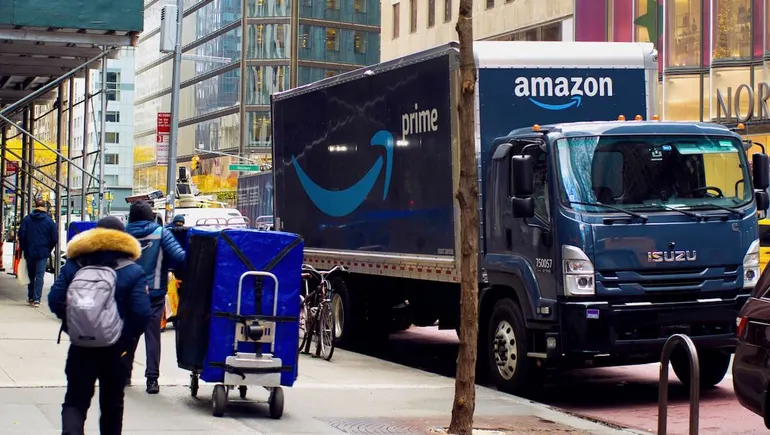
California’s unredacted filing alleges Amazon used vendors to pressure Walmart, Target and other retailers to raise prices, then price-matched the higher levels on Amazon. The evidence cites communications involving Levi’s, Hanes, Newell Brands and Linon, plus allegations that Amazon suppressed listings, ceded buy boxes and trained employees to avoid written records. The case includes a preliminary injunction hearing set for July 23 and a trial scheduled for January, adding legal and reputational risk for Amazon.
This is less about a one-off legal headline than a potential re-rating of Amazon’s “invisible tax” on the retail ecosystem. If discovery proves the company systematically used vendor leverage to harmonize prices across channels, the market should start assigning a higher litigation/regulatory discount to AMZN’s retail margin durability and a lower probability that its low-price brand remains unassailable. The second-order risk is that vendors, fearing antitrust exposure, become less willing to participate in coordinated pricing, which could weaken Amazon’s ability to defend price parity during peak demand windows.
The immediate beneficiaries are not the named retailers so much as the broader channel-compliance ecosystem: rivals can use the case to argue for cleaner procurement terms and stronger vendor independence, while branded suppliers may gain leverage to resist platform-driven price pressure. For WMT and TGT, the direct P&L hit is limited, but the strategic upside is that any forced loosening of Amazon’s coordination tactics could improve their relative pricing optics and reduce the need to match the lowest online offer in real time. For NWL, the issue is different: the company may face margin compression if it has to choose between preserving Amazon shelf access and maintaining higher pricing elsewhere.
The catalyst path matters. Near term, the injunction hearing is a binary event for sentiment, but the bigger swing factor is whether the court allows broad discovery and testimony from vendors; that would extend the overhang for quarters and keep a lid on multiple expansion. Over months, the principal risk for AMZN is not damages but injunctive relief that constrains commercial negotiation practices during holiday periods, where even a small reduction in price-match aggressiveness can affect conversion and ad monetization.
Consensus may be underestimating how broad the spillover could be: if regulators establish a workable theory around vendor-mediated price coordination, similar conduct at other platforms becomes easier to challenge. That argues for viewing this as a sector precedent risk, not just an Amazon-specific headline. The bearish setup is strongest if the stock rallies into legal milestones; the fundamental damage tends to surface later via higher compliance costs and weaker merchant trust, not immediately in reported earnings.
AI-powered research, real-time alerts, and portfolio analytics for institutional investors.
Request DemoOverall Sentiment
strongly negative
Sentiment Score
-0.55
Ticker Sentiment
