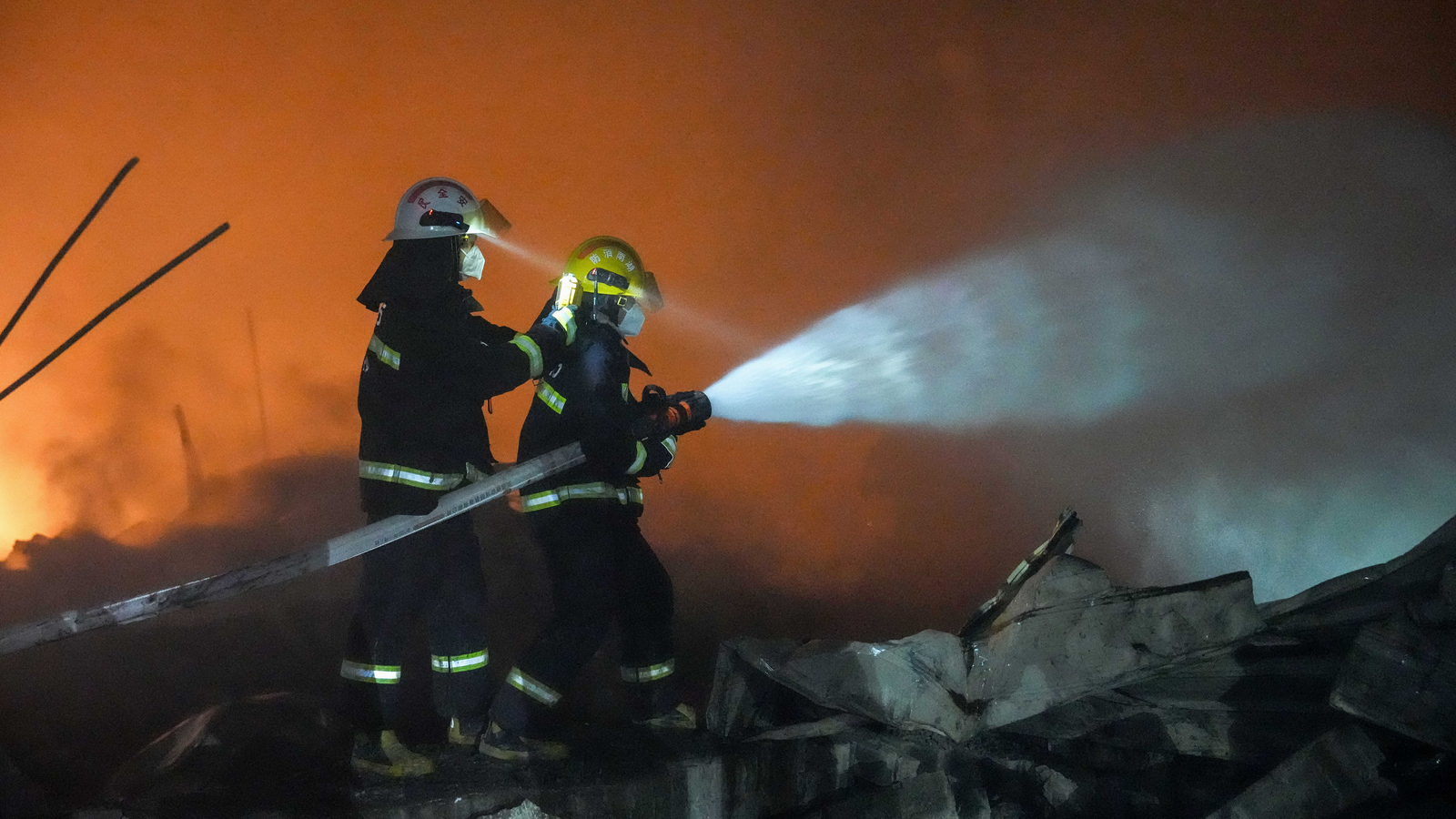
An explosion at a fireworks plant in Hunan province killed at least 26 people and injured 61, prompting authorities to halt all fireworks manufacturing near the site and investigate the cause. The blast damaged or collapsed facilities, threatened rescue teams due to stored gunpowder, and led to evacuations in surrounding danger zones. Chinese officials also detained the person in charge of the company and ordered a broader safety review in key industries.
This is a localized supply shock with broader signaling value: the immediate economic hit is small, but the policy response is likely to be disproportionate because fireworks sit at the intersection of industrial safety, local employment, and recurring seasonal accident risk. The first-order loser is the Liuyang ecosystem, but the second-order beneficiary is any compliant, larger-scale chemical/consumer safety operator that can absorb demand if authorities permanently force consolidation rather than a temporary shutdown. Expect inspectors to use this incident to justify a wider audit of hazardous storage, which can ripple into adjacent small manufacturers and logistics providers that handle pyrotechnics, oxidizers, and black powder inputs.
The main market implication is not fireworks revenue; it is regulatory tightening and a higher probability of temporary production disruptions in other high-hazard, low-compliance industrial clusters. If the clampdown extends beyond days into weeks, black powder, nitrates, packaging, and specialty transport could see spot price dislocations, while listed firms with stricter EHS controls gain share and pricing power. The more interesting second-order effect is around municipal/industrial safety capex: incident-driven enforcement typically increases demand for fire suppression, industrial monitoring, and remote inspection solutions over the next 1-3 quarters.
Consensus may underweight how quickly Beijing can convert a single event into a sector-wide inspection cycle, especially ahead of politically sensitive periods when social stability matters more than preserving marginal SME output. That makes the risk asymmetric to the downside for small private operators but potentially constructive for scaled public companies with compliance moats. The move is probably underpriced if authorities treat this as evidence of systemic risk rather than an isolated accident.
AI-powered research, real-time alerts, and portfolio analytics for institutional investors.
Request DemoOverall Sentiment
extremely negative
Sentiment Score
-0.85
