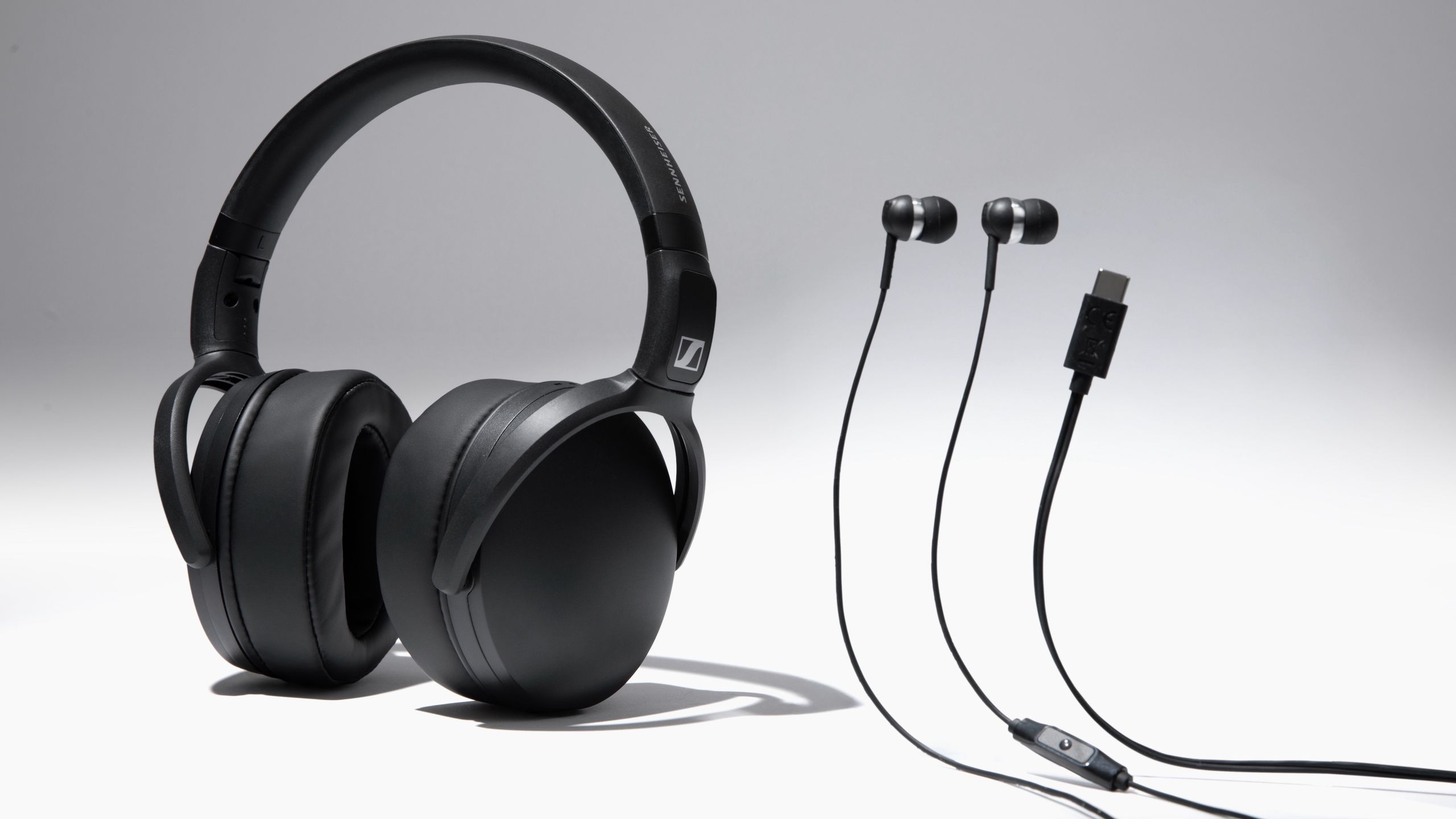
Sennheiser has updated two budget wired headphone models — the HD 400U over-ears (£69.99 / $99.95) and CX 80U in-ears (£34.99 / $39.95) — replacing 3.5mm jacks with USB-C to enable direct connection to modern smartphones and support up to 24-bit/96kHz lossless audio. The products, available now in black, preserve predecessor features (foldable, closed-back isolation for the HD 400U; three eartip sizes and in-line mic for the CX 80U) and aim to improve compatibility and competitiveness in the entry-level audio segment, though the announcement is unlikely to have material near-term market impact on Sennheiser's financials.
Market structure: Sennheiser’s USB‑C budget models (US$40–100) accentuate ongoing commoditization at the low end and exploit regulation-driven USB‑C adoption; winners are low‑cost headphone OEMs and USB‑C DAC component suppliers, losers are standalone dongle/adapter vendors and some low‑end Bluetooth players. Expect modest pricing pressure on mid‑tier wireless headphones (retail price band US$150–300) that could shave ~1–3% off segment revenue growth over 12–18 months as consumers trade convenience and lossless wired audio for price. Cross‑asset impact is small but real: marginal downgrades for niche accessory credits could widen spreads a few bps, FX exposure for Asian OEMs remains idiosyncratic, commodities unaffected beyond normal cable/connector copper volumes.
Risk assessment: Tail risks include rapid vertical integration of DACs by smartphone OEMs or a component shortage (USB‑C connectors/DAC ICs) that could raise input costs 5–15% for small OEMs; regulatory acceleration (EU enforcement or broader USB‑C mandates) is a high‑impact catalyst within 6–18 months. Immediate (days) effects are negligible; short term (weeks/months) could trigger SKU shifts and clearance sales; long term (quarters/years) could compress margins in accessory-heavy public companies. Hidden dependencies: chip supplier concentration (few DAC IC vendors) and smartphone OEM certification rules can flip winners quickly.
Trade implications: Tactical plays: small, size‑constrained longs to diversified large-cap consumer electronics (SONY) for resilience—target 2–3% portfolio position with 6–12 month horizon—while trimming specialist accessory/dongle exposures by 20–40% within 30 days. Use options defensively: buy 3‑month put spreads on any small‑cap accessory names you hold to cap downside to ~1% portfolio risk, and consider a 6‑month call spread (1–2% position) on CRUS (Cirrus Logic) as a directional gadget/DAC supplier upside if Apple/Android adoption increases. Rotate cash from trimmed accessory names into larger OEMs and selective component suppliers over 3–9 months.
AI-powered research, real-time alerts, and portfolio analytics for institutional investors.
Request DemoOverall Sentiment
mildly positive
Sentiment Score
0.30
Ticker Sentiment
Contrarian angle: The market may overestimate cannibalization of premium wireless; ANC, battery, latency and brand ecosystem keep premium margins durable — the real upside is in component and certification winners, not commoditized retail brands. Historical parallels (MP3 player commoditization) show segmentation, not elimination, of premium products; mispricing exists in small accessory makers that depend >25% on adapters — these are candidates for targeted shorts or hedges. Unintended consequence: faster USB‑C adoption could consolidate DAC supplier power and create a narrow oligopoly that drives 20–50% margin expansion for chosen chip vendors over 12–24 months.
