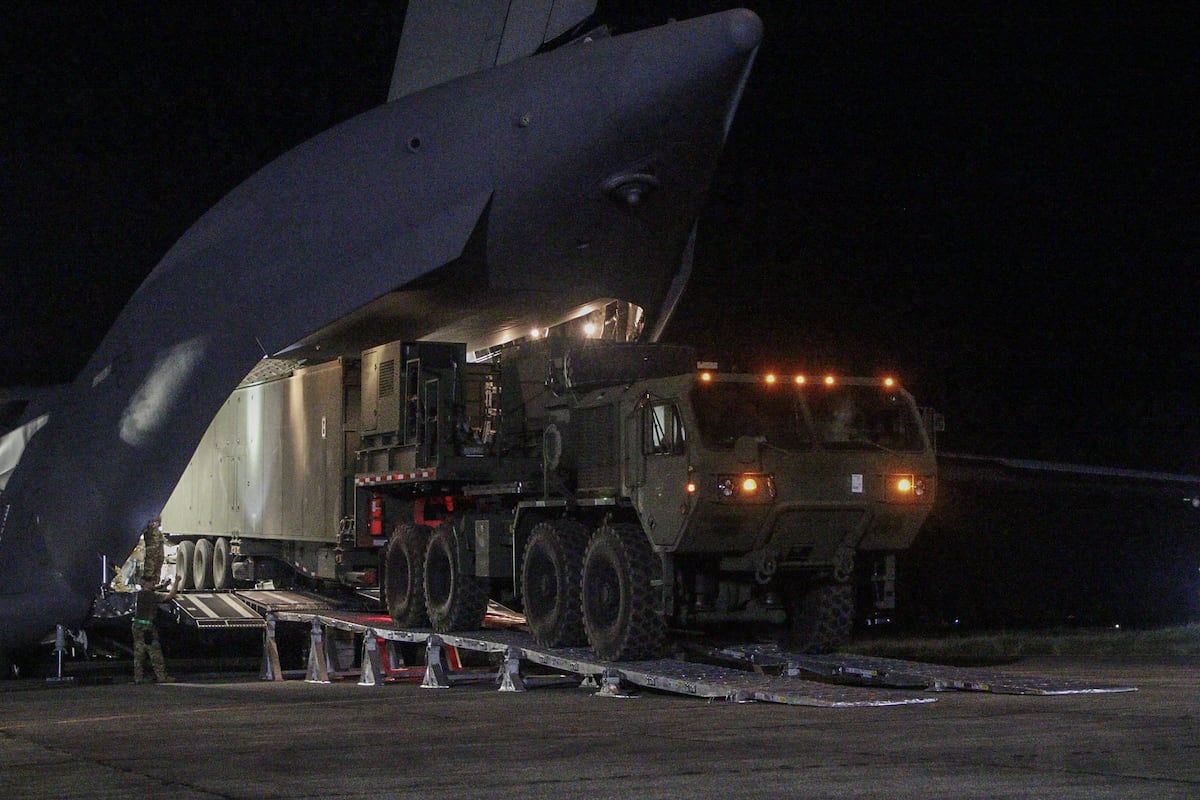
The U.S. Army publicly displayed its Typhon mid-range missile system in Japan for the first time during the bilateral Resolute Dragon exercise, a move signaling enhanced deterrence against China's regional assertiveness. This land-based system, capable of firing missiles that can reach China's eastern coasts, was delivered to Iwakuni last month, coinciding with Japan's accelerated military buildup and recent sightings of China's new aircraft carrier near disputed territories, underscoring rising geopolitical tensions in the Indo-Pacific.
The first public exhibition of the U.S. Army's Typhon mid-range missile system in Japan marks a significant escalation in regional military posturing, directly supporting the stated U.S.-Japan goal of deterring China. The deployment, part of the large-scale Resolute Dragon exercise involving over 19,000 troops, is a tangible demonstration of enhanced military interoperability. While the Typhon's presence is temporary and no live fire is expected, its capability to launch Tomahawk cruise missiles that can reach China's eastern coast sends a strong, hawkish signal. This event coincides with Japan's own rapid military acceleration toward a 'strike-back' missile capability and follows the recent sighting of China's newest aircraft carrier near disputed islands, underscoring a cycle of escalating tensions. The negative sentiment and moderate market impact score reflect the growing risk of miscalculation in the Indo-Pacific, a key concern for regional stability and asset pricing.
AI-powered research, real-time alerts, and portfolio analytics for institutional investors.
Request DemoOverall Sentiment
moderately negative
Sentiment Score
-0.40
