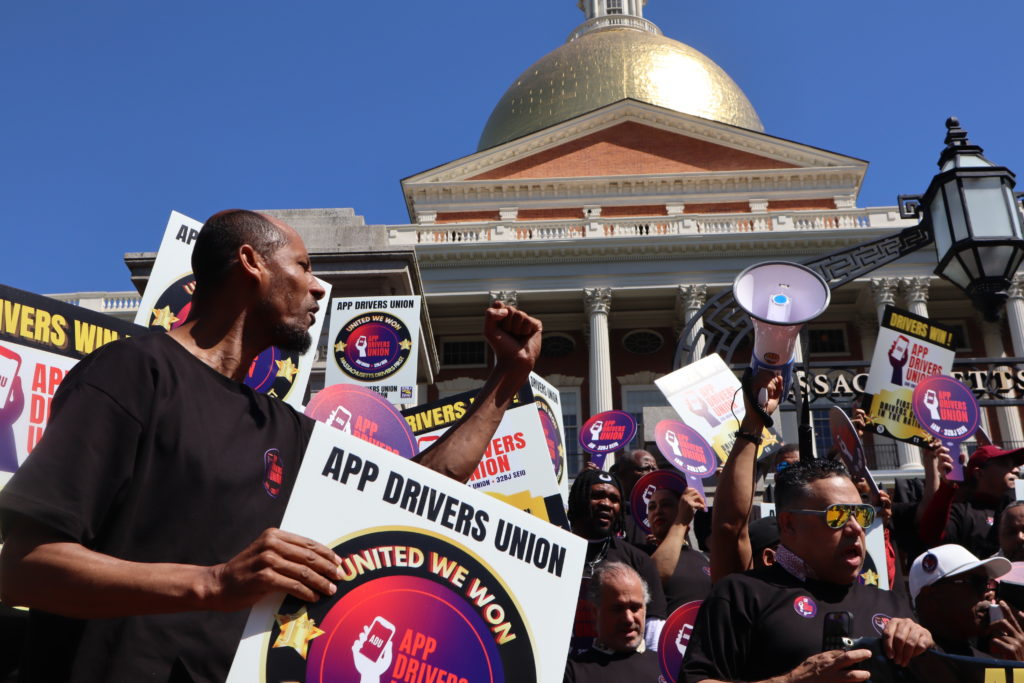
Massachusetts became the first state to recognize a ride-hailing union, creating a new bargaining framework for Uber and Lyft drivers who remain independent contractors. The union could ultimately represent nearly 70,000 drivers statewide and may serve as a model for similar organizing efforts in California and Illinois. The move adds regulatory and labor cost pressure for Uber and Lyft, while autonomous vehicle expansion remains a key overhang for drivers.
This is less a near-term P&L event for UBER/LYFT than a structural change in bargaining asymmetry. The important second-order effect is that Massachusetts just created a replicable template for other blue-state regulators: once one jurisdiction proves contractors can organize without a full employment reclassification, the marginal cost of similar deals in California and Illinois drops materially. That increases the odds of a multi-state “floor” on driver economics, which would compress the platform’s ability to dynamically reprice labor in dense coastal markets.
For the stocks, the immediate earnings risk is not headline wage inflation alone; it is the combination of higher labor-sharing, more restrictive deactivation practices, and slower product iteration once state-level oversight becomes more formalized. The larger issue is that any improvement in driver retention may partially offset take-rate pressure, but it also reduces one of the companies’ most flexible levers to manage supply during demand shocks. Over 6–18 months, this could show up as higher incentive spend just to hold service levels, especially if regulators pair union rights with stricter safety/accountability rules.
The market may be underpricing the automation overhang. A formalized driver voice can slow the social license for autonomous rollout in key metro areas because it creates an organized political constituency that will fight displacement narratives before vehicles are ever commercially scaled. That said, if AV deployment accelerates faster than expected, the union becomes a bargaining tool for a shrinking labor pool rather than a durable moat, so the stock reaction may be capped by the belief that autonomy still solves the long-run margin structure.
Ford is mostly a zero here, but the broader read-through is to OEMs and fleet/service enablers: anything that keeps human drivers in the loop longer supports incremental demand for vehicles, maintenance, and financing. The more interesting contrarian view is that the union could improve unit economics for top drivers by reducing churn and deactivations, which may tighten supply and modestly lift consumer pricing before it hurts platform growth. If so, the first visible impact may be in take-rate and incentive lines, not rider volumes.
AI-powered research, real-time alerts, and portfolio analytics for institutional investors.
Request DemoOverall Sentiment
neutral
Sentiment Score
0.15
Ticker Sentiment
