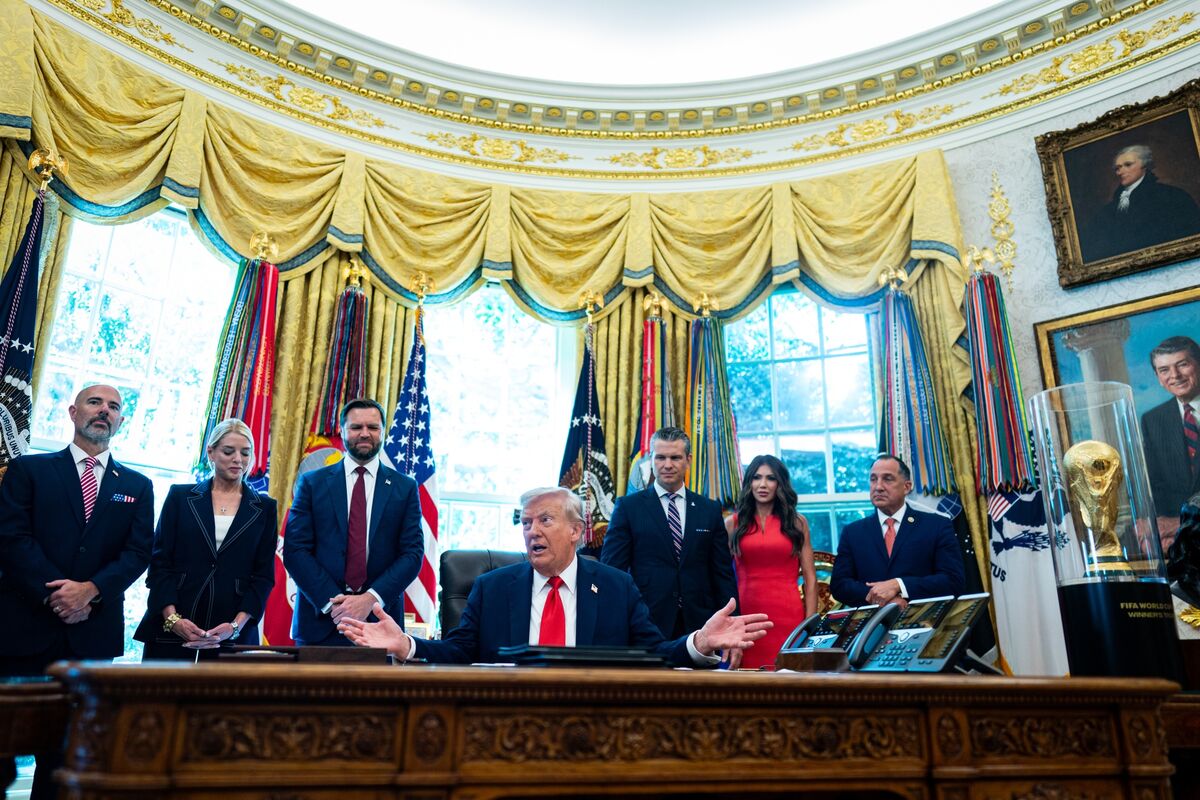
The article asserts that the 'Trump 2.0 agenda' represents the most radical U.S. policy shift in a generation, carrying significant implications that extend beyond domestic borders. It suggests this agenda is pushing other nations towards critical 'tipping points,' which will ultimately determine the success of the American effort to remold the global financial system, signaling potential widespread international economic reconfigurations.
The analysis indicates a significant geopolitical and economic shift driven by the 'Trump 2.0 agenda,' which is framed as the most radical U.S. policy change in a generation. The core of this shift is an attempt to 'remold the global financial system,' an initiative whose success is uncertain and depends heavily on the reactions of other countries, many of which are approaching their own 'tipping points.' The potential firing of key figures like Lisa Cook is presented as a specific catalyst that could introduce instability. The overall outlook, supported by a moderately negative sentiment and uncertain tone, points to a period of heightened risk where U.S. domestic policy, described as 'barely contested,' will have profound and unpredictable effects beyond its borders, potentially reconfiguring the international economic order.
AI-powered research, real-time alerts, and portfolio analytics for institutional investors.
Request DemoOverall Sentiment
moderately negative
Sentiment Score
-0.40
