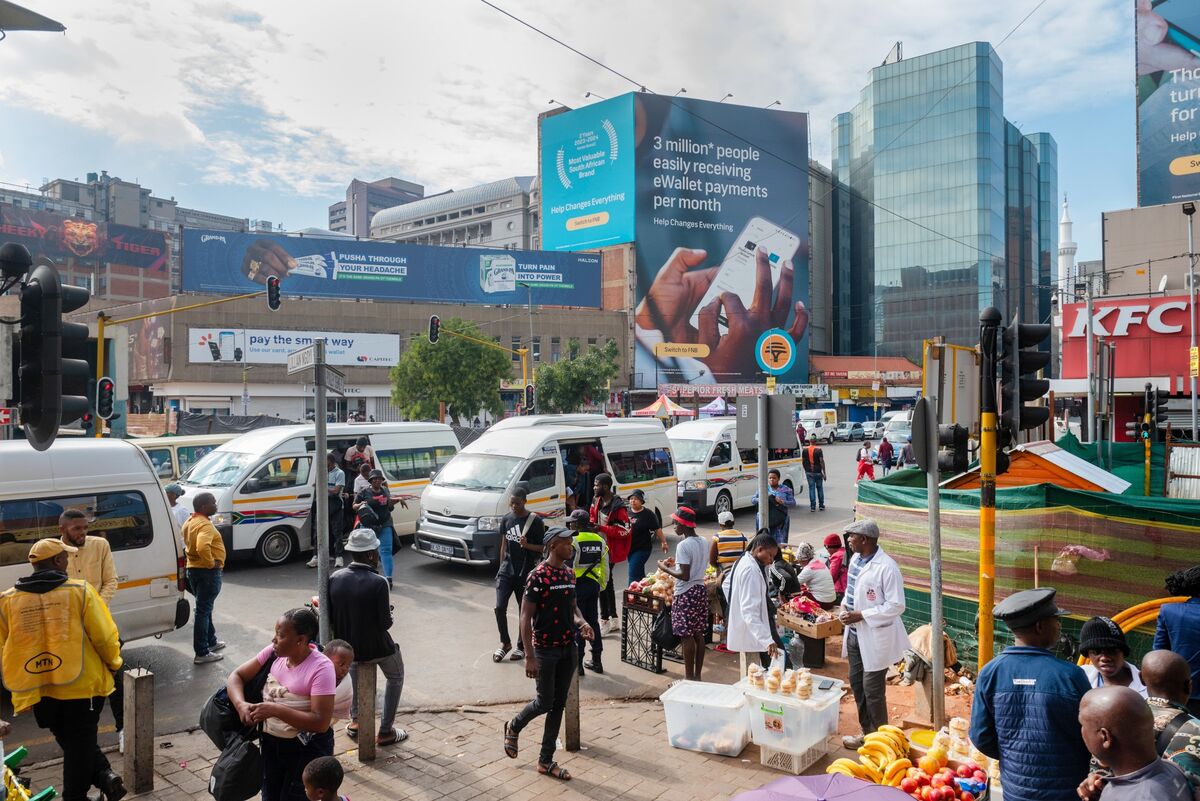
African startups are facing tighter funding conditions as capital increasingly shifts toward U.S. AI firms, forcing founders to look closer to home for support. The article frames this as a competitive squeeze on venture funding rather than a company-specific event, with no hard numbers disclosed. The impact is broader for African private markets and startup financing sentiment, but likely limited market-wide.
The capital starvation of African startups is less about a broad de-risking of emerging markets and more about a sharp repricing of optionality: growth capital is migrating to sectors with faster scaling, clearer monetization, and a perceived path to AI-linked winner-take-most outcomes. That creates a second-order effect where local fintech, logistics, and software names face a higher cost of capital precisely when they need patience, while incumbents and later-stage survivors gain bargaining power in down rounds and acqui-hires.
The real loser is not just venture-backed startups, but the regional innovation ecosystem: fewer follow-on checks reduce hiring, product iteration, and cloud spend, which feeds back into lower demand for enterprise software, payments, and digital infrastructure. In practice, this can compress revenue growth across the ecosystem over the next 6-18 months even if headline startup counts remain stable, because the bottleneck becomes runway rather than idea quality. The AI boom also diverts scarce technical talent, increasing wage pressure for engineers and making retention harder for African founders.
A useful contrarian read is that this may be a funding-cycle reset rather than a structural death spiral. If US AI valuations normalize or growth funds rotate back toward under-owned frontier markets, the rebound could be fast because many African startups have already been forced into capital efficiency, making them better businesses at lower burn. The catalyst to watch is liquidity: a handful of regional exits, sovereign-backed funds, or local-bank venture vehicles could quickly re-open the pipeline within 2-4 quarters.
For public-market expression, the cleanest trade is not a direct Africa bet but a relative one: long global AI infrastructure beneficiaries versus emerging-market venture proxies and fintech-enablers that depend on startup formation. If the funding squeeze persists, the market will likely reward firms selling picks-and-shovels to AI builders while punishing any asset class tied to speculative private growth. The key risk to that view is that AI capex itself may overshoot, creating an eventual air pocket that rotates capital back toward earlier-stage emerging-market innovation.
AI-powered research, real-time alerts, and portfolio analytics for institutional investors.
Request TrialOverall Sentiment
mildly negative
Sentiment Score
-0.35
