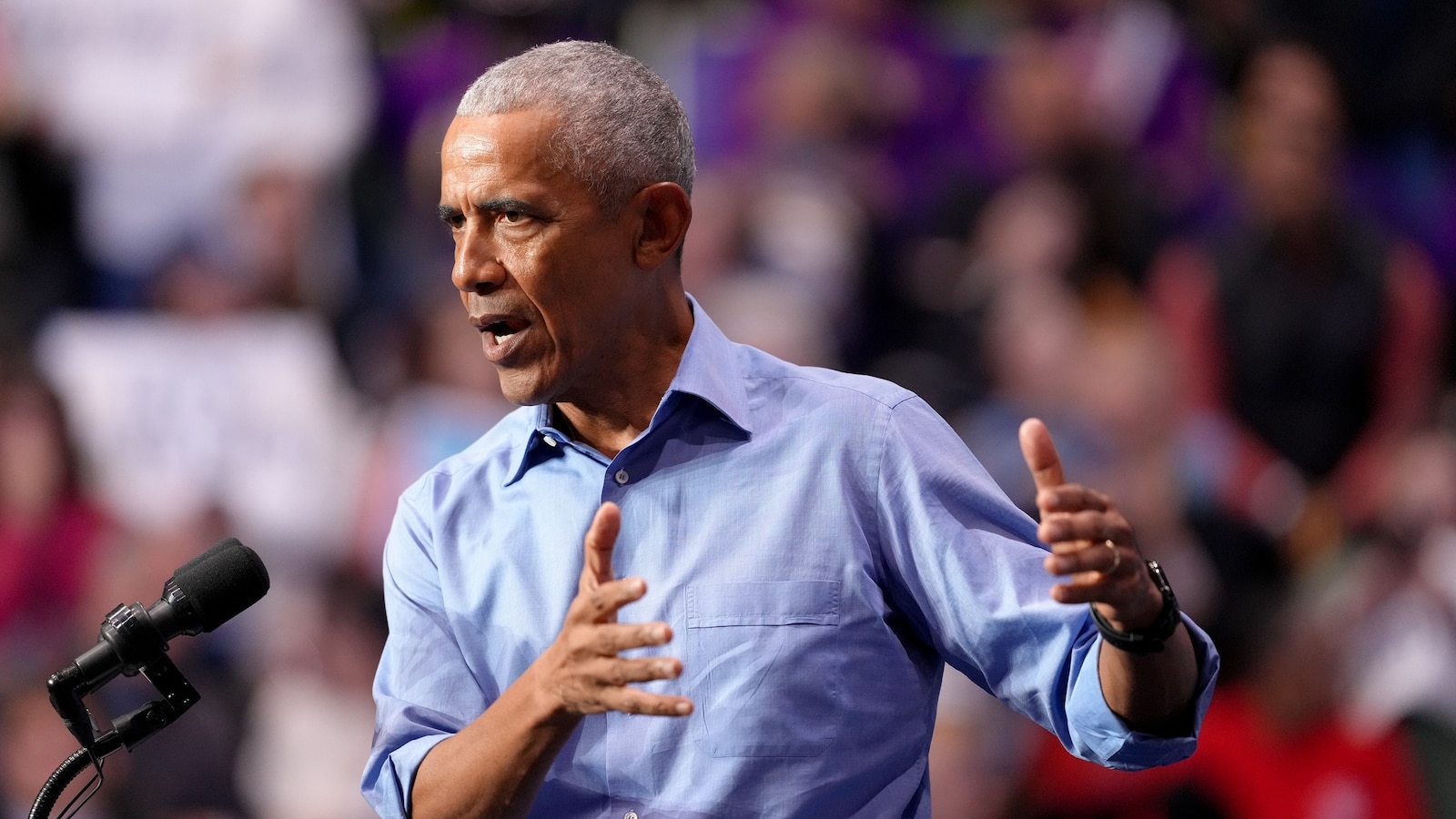
Former President Barack Obama urged Virginians to vote 'Yes' on an April 21 redistricting referendum that could let the Democratic-controlled legislature redraw the state's congressional map and potentially create four additional seats favoring Democrats. More than 1 million Virginians had already voted early, and polls showed a tight race at 52% support versus 47% opposition. The measure remains under court challenge, but the article is primarily about state political positioning rather than direct market-moving financial developments.
This is less a single-state referendum than a forward signal on how aggressively both parties are willing to weaponize mapmaking into 2026. If the measure passes, the immediate market implication is not the state itself but the probability bump for a tighter House and a higher premium on litigation, ballot-access, and turnout infrastructure across other purple states. That tends to favor vendors with exposure to campaign media, voter file/data, and political consulting over the next 12-18 months, while also increasing headline volatility around any company with regulated-adjacent revenue tied to state politics.
The bigger second-order effect is on expectations for federal policy continuity. A modest shift in the House composition changes the odds of divided government after 2026, which matters for sectors where regulatory rollback was being priced as a base case: managed care, renewables, utilities, and defense appropriations all become less linear. In the near term, the main catalyst is binary and arrives over days; over the next 6-9 months, the relevant signal is whether this creates copycat referenda or court challenges that turn redistricting into a recurring national campaign theme rather than a one-off state fight.
The contrarian read is that the consensus may be overestimating the electoral math and underestimating fatigue. Even a favorable result could be interpreted as permission for escalation on both sides, which raises legal risk and donor exhaustion rather than cleanly translating into seats. If turnout models show young and irregular voters are not expanding enough, the 'yes' outcome may still be a short-lived sentiment pop rather than a durable structural edge for Democrats.
From a positioning standpoint, this is a better trade in political-services and media-adjacent names than in broad equities. The cleanest expression is to stay nimble and use event-driven optionality rather than outright index exposure, because the payoff is driven by probability shifts in 2026 narratives, not immediate earnings revisions.
AI-powered research, real-time alerts, and portfolio analytics for institutional investors.
Request TrialOverall Sentiment
neutral
Sentiment Score
0.00
