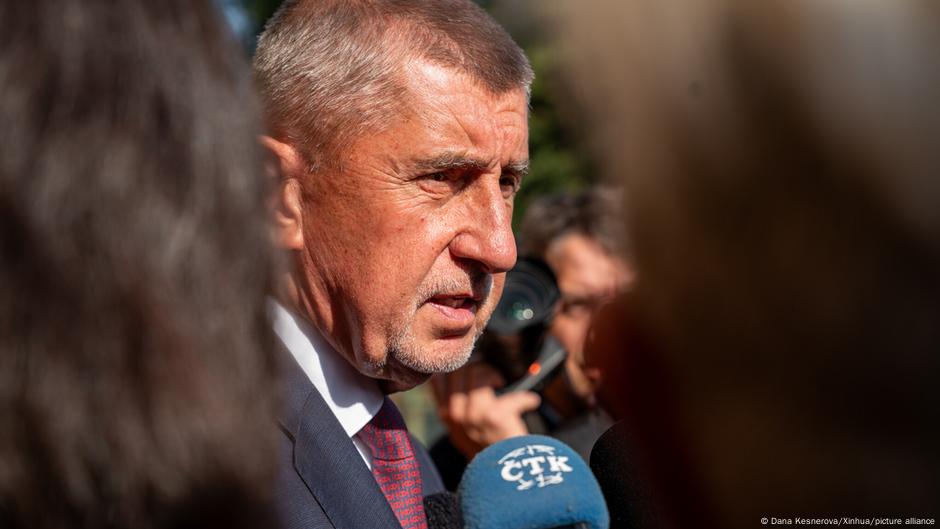
Andrej Babis's right-wing populist ANO party secured victory in the Czech parliamentary election with 36% of the vote, positioning the former Prime Minister for a return to power. This outcome signals a potential shift in Czech foreign policy, as Babis opposes continued military aid to Ukraine and advocates a 'Czech first' approach, which could weaken support for Kyiv and align the Czech Republic with Hungary and Slovakia in challenging EU consensus on issues like Russian sanctions. Despite not achieving an absolute majority, Babis aims to form a one-party cabinet, with the far-right Freedom and Direct Democracy party as a potential coalition partner.
Czech Republic: 'Trumpist' ex-PM Babis wins elections October 4, 2025As voters in the Czech Republic wrapped up a second day of voting in the country's parliamentary election, a familiar face looks set to return to power. With over 90% of votes counted the right-wing populist party ANO of billionaire former Prime Minister Andrej Babis, a self-described "Trumpist" who opposes continued military assistance for Ukraine, had garnered 36% of the vote. Calling the result "historic," Babis said after the election that he hopes to form a one-party Cabinet, despite not having won an absolute majority of the vote. ANO translates to "Yes" but is also an acronym for Action of Dissatisfied Citizens. The center-right Spolu (Together) coalition, headed by Prime Minister Petr Fiala, is on track to take 22.4% of the vote. Earlier on Saturday, the liberal-conservative bloc, STAN, was polling around 10%, with numerous others also garnering support. What will the consequences of a Babis/ANO victory be for Ukraine and the EU? Observers fear ANO's victory in the Chamber of Deputies vote could spell trouble for Ukraine. The Czech Republic under Fiala has been a steadfast ally to Kyiv. Saturday's result could further affect the balance of power within the EU as well, with the Czech Republic potentially joining truculent Hungary and Slovakia in opposition to Brussels. Hungary and Slovakia have rejected Ukraine military aid and challenged EU sanctions against Russia. Babis has dubbed himself a "peacemonger" during the campaign and promised a "Czech first" approach to leadership. Speaking to reporters after casting his ballot in the eastern city of Ostrava, Babis had said, "Nothing is certain, we haven't won yet." Fiala, casting his ballot in Brno, made the stakes of the election clear, saying voters are "deciding the direction of the Czech Republic … whether we head into the past or into the future, whether our path goes east or west." Fiala later congratulated Babis on his victory. What happens if Babis and ANO don't win an outright majority? Though ANO has come out on top, it has not won an absoulte majority. But that has not kept Babis from stating he does not intend to form a coalition government — as would appear necessary. Should his one-party plan fail, a likely partner would seem to be the far-right Freedom and Direct Democracy (SPD) party, which was polling at around 12% on Saturday. Observers say the SPD has spent far more than all other parties on online advertising. It is also accused of using TikTok accounts to "systematically spread pro-Russian propaganda and support anti-system parties through manipulated engagement." As a result, the European Commission on Thursday called an "emergency meeting" with the operators of TikTok, leading to the removal of "several bots" from the platform "in the context of Czech elections." Polls closed at 2 p.m. (1200 GMT) with Czech media reporting that voter turnout was high on Friday. Edited by: Sean Sinico The victory of Andrej Babis's right-wing populist ANO party, securing 36% of the vote in the Czech parliamentary election, signals a significant geopolitical shift with direct implications for European Union stability and support for Ukraine. Babis's stated opposition to continued military aid for Kyiv and his 'Czech first' platform position the country to potentially align with Hungary and Slovakia, forming a dissenting bloc that could challenge EU consensus on sanctions against Russia and other key foreign policy initiatives. While ANO did not win an absolute majority, Babis's ambition to form a one-party government introduces domestic political uncertainty. A failure to do so could necessitate a coalition with the far-right SPD party, which polled at 12% and has been accused of spreading pro-Russian propaganda, a concern significant enough to trigger an emergency intervention by the European Commission with TikTok. This election result injects a considerable degree of political risk into Central Europe, potentially weakening a key ally for Ukraine and creating further fractures within the EU.
AI-powered research, real-time alerts, and portfolio analytics for institutional investors.
Request DemoOverall Sentiment
strongly negative
Sentiment Score
-0.70
