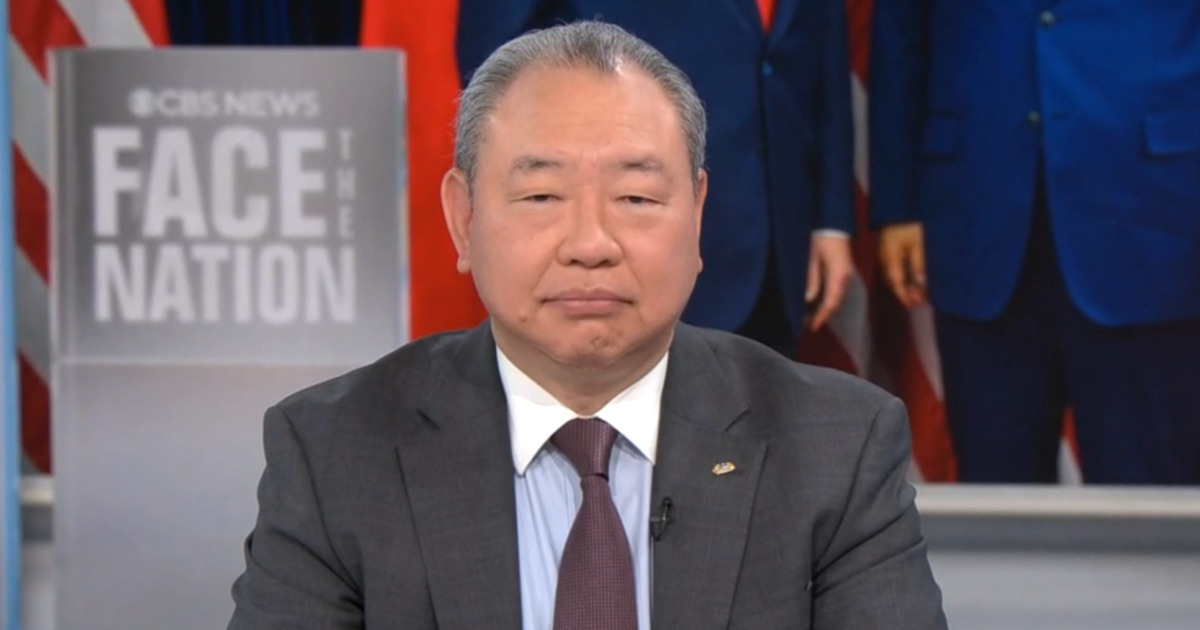
Taiwan’s representative to the U.S. said the island wants "peace and stability" and is not the party creating tensions with China, after Taiwan became a key issue in Trump’s summit with Xi Jinping. Trump said he made no commitment on future U.S. weapons sales to Taiwan and described the sale as a potential negotiating chip, while China reportedly warned of possible "clashes and even conflicts" if the issue is mishandled. The article reinforces ongoing geopolitical risk around the Taiwan Strait and U.S.-China defense relations.
The market implication is not a near-term kinetic event premium, but a gradual repricing of policy credibility. The key second-order effect is that Taiwan risk is becoming a bargaining chip in U.S.-China trade/technology negotiations, which raises the odds of intermittent headline-driven volatility in semis, defense, and shipping rather than a clean one-way de-risking. That keeps the risk premium elevated even if nothing happens operationally, because counterparties will assume export controls and weapons sales can be used as negotiating leverage.
The most exposed complex is advanced semiconductors and the equipment stack. Even without new sanctions, repeated signaling around Taiwan tends to accelerate customer diversification away from Taiwan-centric capacity into U.S., Japan, and Korea, but that transition is slow and costly; the near-term beneficiaries are not the fabs themselves, but firms that sell redundancy, cyber, missile defense, and supply-chain hardening. For Europe and Asia industrials, the bigger risk is not Taiwan invasion probability in the next quarter, but a creeping rise in lead times, insurance costs, and working-capital buffers if cross-strait tension persists.
Contrarian view: the market may be overpricing an imminent policy break and underpricing how hard it is to unwind decades of U.S. strategic ambiguity. If Washington actually softens support, the first-order market response would likely be a sharp Taiwan dollar and local equity drawdown, but that could quickly provoke a re-armament cycle that benefits U.S. defense primes and select missile-defense names. The time horizon matters: days to weeks for headline volatility, months for procurement, and years for supply-chain relocation.
The cleanest setup is to own defense as a geopolitical vol hedge while fading Taiwan-specific beta on spikes. The tradeable asymmetry is that the downside for defense is limited unless rhetoric de-escalates meaningfully, while the upside from budget rephasing and allied procurement can compound for quarters. Semiconductor equipment is the one area where any escalation of export-control rhetoric can cause multiple compression before fundamentals actually change, creating a short-term tactical short opportunity.
AI-powered research, real-time alerts, and portfolio analytics for institutional investors.
Request DemoOverall Sentiment
neutral
Sentiment Score
-0.10
