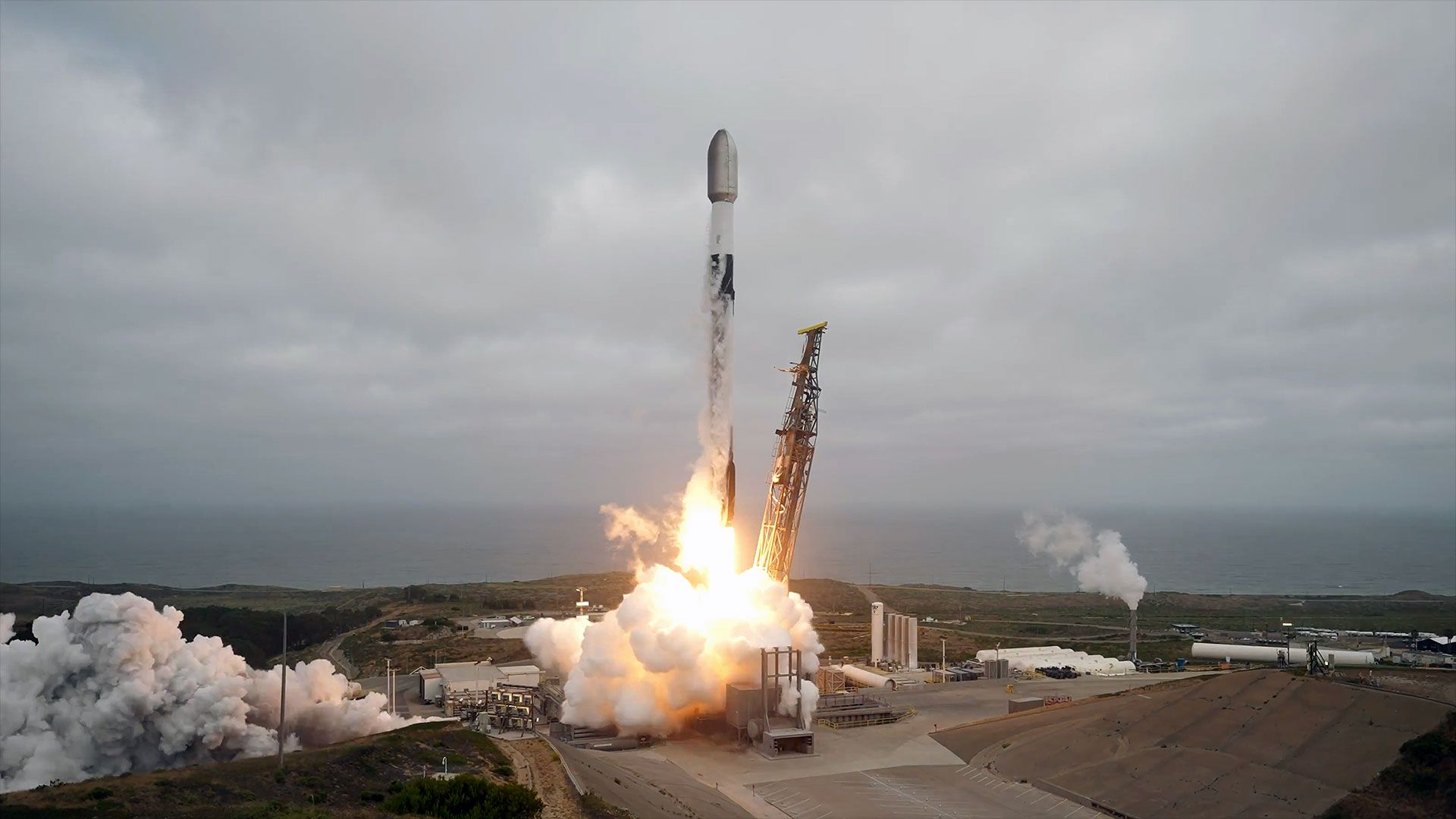
SpaceX launched 24 Starlink satellites on a Falcon 9 from Vandenberg Space Force Base, with liftoff at 12:09 p.m. EDT and first-stage booster B1088 completing its 17th flight. The mission increased Starlink's active relay count to more than 10,700 and marked SpaceX's 75th Falcon 9 mission of 2026. The update is operationally positive but largely routine, with limited near-term market impact.
This launch is another data point that the low-Earth-orbit broadband market is shifting from a buildout story to an operations-and-monetization story. The marginal value is no longer just “more satellites,” but higher network density that improves latency, handoff reliability, and capacity utilization in underserved corridors — which matters most for aviation, maritime, and remote enterprise contracts where uptime converts directly into pricing power. The second-order effect is competitive: every incremental orbit refresh raises the bar for any non-integrated rival trying to match global coverage without owning launch capability.
The more interesting read-through is to aerospace supply chain and launch economics. A high-flight-count reusable booster with another clean recovery reinforces that SpaceX’s cost curve remains structurally below every public launch peer, which compresses the addressable market for legacy launch providers and forces them into either niche mission profiles or lower-margin pricing. Over months, that can pressure contractors exposed to U.S. government/commercial launch competition and could also slow the re-rating of any “space infrastructure” basket that assumes multiple winners rather than a dominant platform.
Near term, the catalyst path is execution, not announcement: cadence, reuse depth, and satellite deployment reliability. The main risk is not launch failure but marginal return decay if the network approaches regional saturation faster than demand grows, or if regulators/telcos push back on spectrum coordination and terrestrial substitution. The contrarian view is that investors may be overestimating how much of this is pure growth; the real equity value may already be in the logistics moat and launch cost deflation, not in the satellites themselves.
AI-powered research, real-time alerts, and portfolio analytics for institutional investors.
Overall Sentiment
neutral
Sentiment Score
0.15
