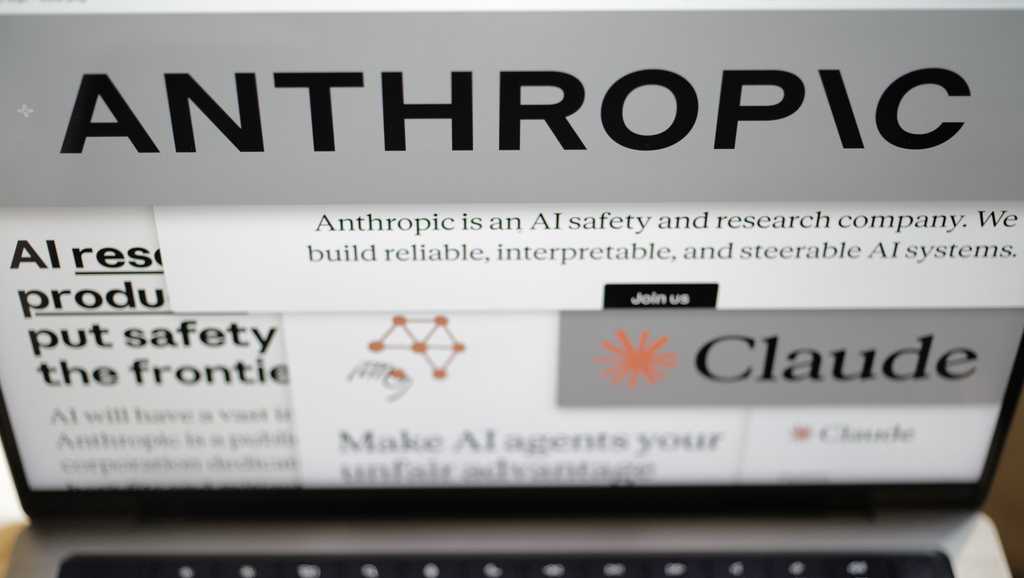
The Pentagon has formally designated AI firm Anthropic and its Claude product as a supply chain risk effective immediately, a move that could force government contractors to stop using Claude and requires the military to phase out its use within six months; Anthropic says it will challenge the designation in court. The decision, driven by national-security concerns over domestic surveillance and autonomous weapons, prompted Lockheed Martin to seek alternative LLM providers and drew criticism from former national-security officials and lawmakers, even as Anthropic reported a surge in consumer sign-ups (over one million daily) and says Microsoft can continue non-defense collaborations.
Market structure: The immediate winners are Microsoft (MSFT) and other established cloud/LLM suppliers able to absorb classified workloads; they gain incremental pricing power as DoD and primes scramble to replace Claude over 3–6 months. Losers are Anthropic (private) and any midsized defense/subcontractor tightly integrated with Claude — expect short-term revenue disruptions for niche contractors and accelerated procurement toward Azure/Google Cloud capacity, tightening compute demand and lifting cloud gross margins modestly (100–300bp) if migration is sustained.
Risk assessment: Tail risks include (A) escalation of the supply-chain designation to other domestic AI suppliers causing a 15–30% tech re-rate, and (B) a court injunction restoring Anthropic that triggers rapid share-redistribution; both scenarios are plausible within a 60–180 day legal and policy window. Hidden dependencies: MSFT’s AI lift depends on OpenAI contract terms and Azure capacity; a simultaneous geopolitical shock (e.g., Iran-related) could reallocate capital to defense bonds and reduce risk appetite, compressing tech multiples.
Trade implications: Favor selective long-MSFT exposure sized 1.5–3% of equity risk via defined-risk options (6–9 month call spreads 10–20% OTM) to capture enterprise substitution while limiting drawdown. Implement a relative-value pair: long MSFT vs short GOOGL (equal notional 1–2%) for 3–6 months to trade expected share gains in defense/enterprise LLMs. Buy short-dated (1–3 month) puts on XLK or a tech beta sleeve (size 0.5–1%) as insurance against regulatory contagion.
Contrarian angles: Consensus underestimates how a favorable court outcome for Anthropic would promptly re-open defense channels and hand back share — creating a sharp mean-reversion trade in providers that prematurely priced Anthropic’s exit. The reaction may be overdone for Google; if MSFT’s OpenAI integration proves operationally constrained, rotation back into GOOGL or select defense IT names could outperform within 60–120 days. Historical analog: vendor bans (Huawei 2019) concentrated demand to incumbents, then normalized after policy/legal clarity.
AI-powered research, real-time alerts, and portfolio analytics for institutional investors.
Request TrialOverall Sentiment
moderately negative
Sentiment Score
-0.42
Ticker Sentiment
