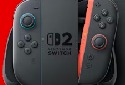
As of March 2026, Nintendo Switch 2 US sales reached 5.42 million units versus 4.89 million for Switch 1 over the same aligned 10-month period, leaving Switch 2 ahead by 529,717 units. In the latest month, however, Switch 1 outsold Switch 2 by 889,549 units, narrowing the lead. The article frames the comparison as driven by launch timing and holiday lineup differences rather than a fundamental change in demand.
The core signal is not that one console is “winning” in isolation, but that monetization is becoming more hit-driven and less hardware-driven. When the installed base is only modestly ahead on a comparable timeline, software cadence and exclusivity can swing attach-rate economics meaningfully; that raises the value of first-party content and makes year-over-year unit comparisons a poor predictor of ecosystem cash flow. In practice, the market should care more about whether the next 2-3 tentpole releases extend engagement than about the current cumulative gap.
The second-order effect is channel behavior: retailers, accessory makers, and publishers will likely optimize inventory and marketing around known software catalysts rather than hardware momentum. That favors companies with direct control over first-party IP and digital storefront economics, while commoditized accessory and third-party physical software exposure becomes more timing-sensitive. If the launch calendar is light for 1-2 quarters, the hardware base can still look healthy while downstream monetization quietly decelerates.
The contrarian point is that “ahead by a small margin” may actually be a softer outcome than headline optics imply if the comparison period is flattered by launch-era software. A strong hardware trajectory without sustained franchise releases is not self-reinforcing; it can plateau quickly once novelty fades. The real risk over the next 6-12 months is not unit disappointment, but a miss in software mix that compresses gross margin and weakens engagement, especially if the major franchise roadmap slips.
For portfolios, the highest-conviction angle is to separate content owners from hardware proxies. The article argues for a barbell: own the IP monetizers that benefit from each new blockbuster cycle, and be selective on businesses whose thesis depends on broad hardware acceleration rather than content cadence. If the next marquee releases do not land on schedule, the market will likely re-rate those names within 1-2 earnings prints.
AI-powered research, real-time alerts, and portfolio analytics for institutional investors.
Request DemoOverall Sentiment
neutral
Sentiment Score
0.10
