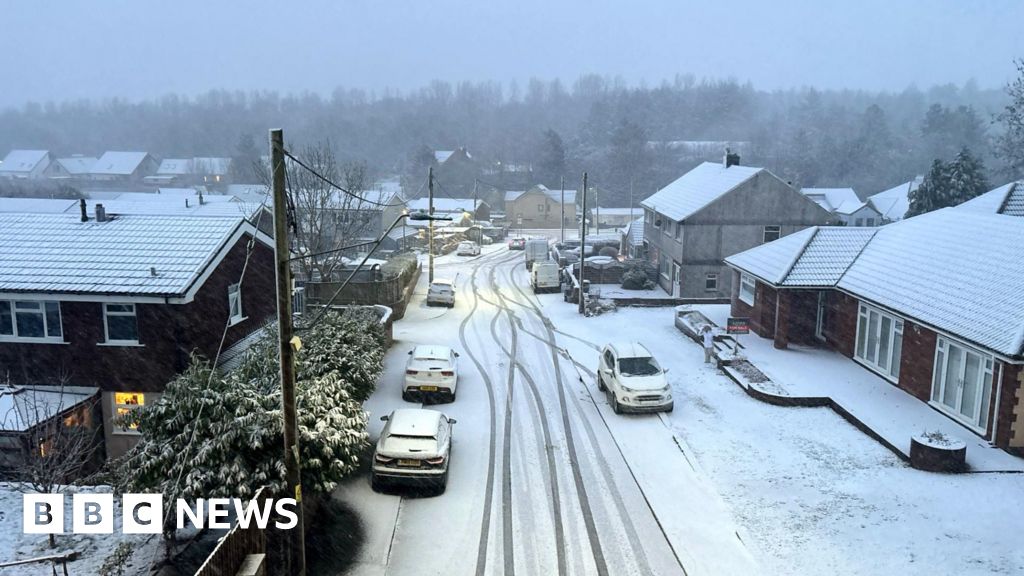
Storm Goretti brought peak gusts of 99mph (recorded at St Mary's, Isles of Scilly) and heavy snow to the UK, leaving roughly 57,000 properties without power and prompting amber warnings for heavy snow across the Midlands, Wales, South West England and Yorkshire with 20–30cm likely in places. Major travel disruption is reported — south-west rail services suspended, East Midlands Railway halted services between Manchester and Sheffield, Birmingham Airport suspended runway use — thousands of school closures and emergency alerts to ~500,000 phones highlight localized operational, utility and infrastructure risks, though the event is unlikely to produce a large systemic market shock.
Market structure: Acute winners are short-dated power/gas suppliers and rental power/temporary infrastructure providers (generator rentals, emergency crews) and building-materials/contractors that capture repair demand; losers are regional transport operators, small utilities with outage exposure, and insurers facing near-term claims. Expect short-term power/gas forward curves to spike (TTF +10–30% intraday-to-weeks) and localized materials prices to rise 5–15% as logistic frictions and rapid repair demand hit already-tight supply chains. Risk assessment: Tail risks include prolonged grid outages or cascading infrastructure failures forcing regulatory emergency measures (forced capex, customer compensation) and systemic insurer repricing; low-probability but high-impact scenario is multi-week supply disruption to ports/rails pushing inflation prints +20–40bp. Immediate impact (days) is operational disruption; short-term (weeks) is commodity/parts ordering and price spikes; long-term (quarters) is accelerated resilience capex and insurance premium resets. Trade implications: Favor short-dated directional exposure to energy volatility (long TTF/gas 1–3 month) and tactical longs in generator-rental/contractor equities (Aggreko) and building-materials (CRH) for 1–3 months; hedge regulated utilities (NGG) with protective put spreads sized to 1–2% notional. Tilt away from small-cap regional transport and travel operators into companies providing remediation services; buy options rather than outright large long equity exposure to limit drawdown from rapid mean reversion. Contrarian angles: Consensus fear likely overshoots operational damage — historical UK storms show most disruption normalizes within 2–4 weeks, leaving positive re-rating for contractors and resilience-capex beneficiaries over quarters. If government or regulator announces accelerated infrastructure spending, NGG/large cap utilities could flip from weak to buyable; conversely, an absence of such announcements keeps short-term downside for unloved operators.
AI-powered research, real-time alerts, and portfolio analytics for institutional investors.
Request DemoOverall Sentiment
moderately negative
Sentiment Score
-0.35
Ticker Sentiment
