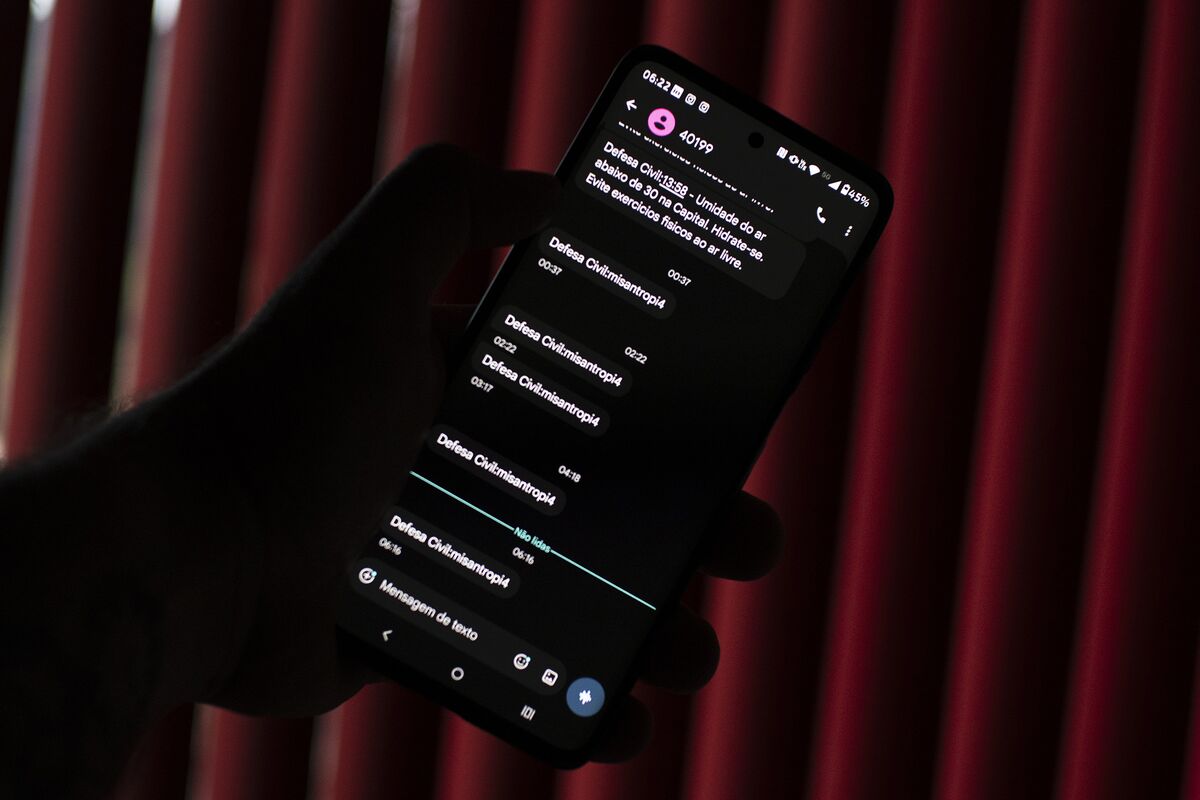
Brazil’s civil defense alert system was reportedly hacked, sending fake 'Extreme Alert' messages containing the word 'misanthropy' to millions of mobile phones. Federal police and the Integration and Regional Development Ministry are investigating, and officials said 10 alerts were tracked across several states. The number of phones affected nationwide was not disclosed, limiting the immediate quantified impact.
This is less a pure cybersecurity headline than a credibility shock to state digital infrastructure. When public-warning channels can be spoofed at national scale, the second-order damage is loss of trust in any future emergency message, which can reduce compliance in a real weather event and force the government to overinvest in redundant channels, audits, and identity controls over the next 6-18 months. That tends to benefit vendors tied to authenticated messaging, telecom security, endpoint management, and critical-infrastructure monitoring rather than generic firewall names.
The near-term loser set is the public-sector and telecom ecosystem operating the alert rails: they now face an immediate procurement and remediation cycle, plus potential regulatory tightening around message signing, segmented access, and incident reporting. If the investigation finds a single compromised credential or under-monitored admin path, the market will likely extrapolate broader weaknesses in municipal and federal systems, increasing pressure on budget lines for identity, PAM, and SIEM. The supply-chain effect is that integrators and managed-security providers with government references may see faster bookings, while smaller regional contractors could face frozen procurements during the review period.
The key catalyst is whether this becomes a one-off prank or a proof point for hostile access to emergency infrastructure. If attribution points to a financially motivated actor, the impact stays mostly domestic and fades in days; if there is any hint of political or election-adjacent interference, the issue can extend for months and drive a much larger policy response. The contrarian angle is that the initial selloff in Brazilian risk assets could be overdone because the event is reputationally severe but economically small; the bigger tradable implication is not GDP, but accelerated spending on cyber controls and telecom resilience.
From a positioning perspective, this argues for owning companies that monetize incident-driven budget expansion and public-sector hardening rather than broad exposure to Brazilian equities. The better setup is to buy on confirmation of remediation spending, not on the first headline, because procurement cycles lag the news by one to two quarters. In the interim, any weakness in large-cap cybersecurity software after a Brazil-specific scare is likely a buying opportunity if it lowers forward multiples without changing global demand signals.
AI-powered research, real-time alerts, and portfolio analytics for institutional investors.
Request DemoOverall Sentiment
mildly negative
Sentiment Score
-0.20
