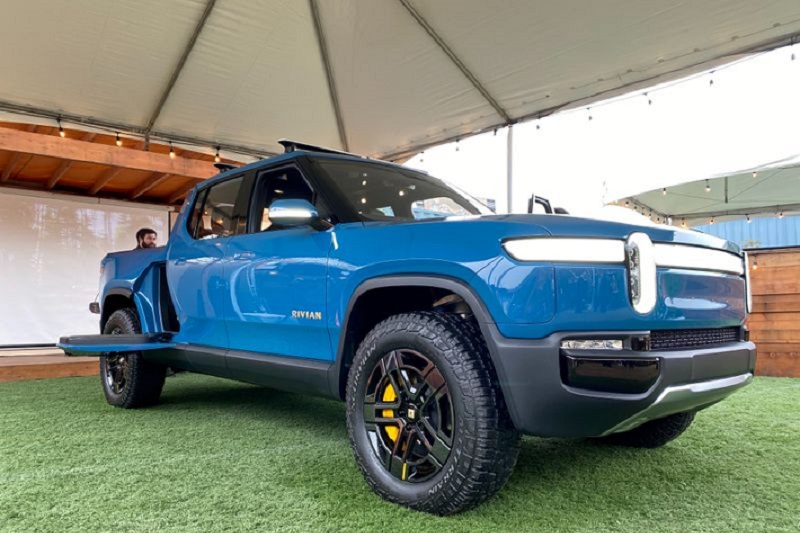
NHTSA opened an investigation into Rivian’s rear toe link defect across approximately 115,000 R1 pickups and SUVs after two owner complaints, including one collision. Rivian said its data shows the toe links are functioning as intended and that it does not believe the component caused the incidents, but the probe adds regulatory and recall overhang after a nearly 20,000-vehicle recall earlier this year.
This is less about one probe and more about the market re-pricing Rivian’s defect-risk distribution. When a component is implicated in both a prior recall and a fresh federal investigation, the overhang shifts from a one-off quality event to a recurring warranty/liability regime that can compress gross margin and delay operating leverage for multiple quarters. The key second-order effect is not just direct repair cost, but higher insurance, slower fleet adoption, and a heavier discount rate applied to the company’s long-duration EV narrative.
The near-term loser is likely Rivian’s multiple rather than its unit sales, but the longer-duration risk is that buyers and lessors become more conservative on residual values. That can raise monthly payments even if sticker prices stay unchanged, which hurts demand at the margin and can force incentive spending to defend volumes. Competitively, this is a relative positive for legacy OEM EV programs and for any EV brand with better perceived durability, because buyers in this segment are unusually sensitive to safety reputation and downtime.
The catalyst path is binary: if Rivian can quickly show a clean engineering fix and the NHTSA outcome is narrow, the stock can bounce on reduced tail risk within days to weeks. If the investigation broadens or another incident occurs, the issue becomes a months-long settlement and recall cycle that could force management to revise guidance on warranty reserves and cash burn. The market is likely underestimating how a small number of serious safety complaints can matter more than total unit volume for an unprofitable automaker.
The contrarian take is that this may be more of a sentiment and balance-sheet issue than an existential product flaw. If the company has genuinely isolated the problem to a limited production window or supplier batch, the selloff can overshoot because headline risk tends to price in worst-case fleet-wide contamination before the technical facts are known. That said, with EV names already vulnerable to capital-markets fatigue, investors usually pay up only after proof, not promises.
AI-powered research, real-time alerts, and portfolio analytics for institutional investors.
Request DemoOverall Sentiment
mildly negative
Sentiment Score
-0.35
Ticker Sentiment
