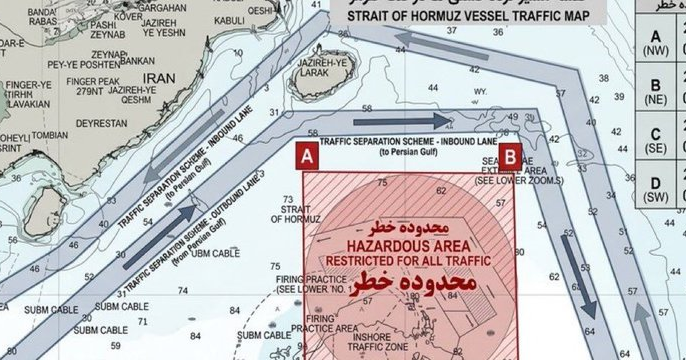
The article argues that any disruption to the Strait of Hormuz would trigger a major but ultimately self-defeating shock, with roughly 21 million barrels per day normally transiting the chokepoint and Middle Eastern shut-ins estimated at 7.5 to 9.1 million barrels per day. It highlights that Asian buyers, especially China and India, are most exposed, while U.S. crude exports have surged to a record 4.9 million barrels per day and could soon reach 5 million, helping redirect supply and cap price spikes. The broader market implication is permanent rerouting of energy flows, weaker Iranian leverage, and higher short-term volatility in oil and shipping markets.
The market is underestimating how quickly chokepoint threats become self-defeating once buyers and shippers internalize the risk. The first-order shock is higher prompt crude and freight costs, but the second-order effect is a permanent re-rating of non-Hormuz supply chains: Gulf exporters will monetize redundancy, Asian refiners will optimize for security over spot cheapness, and marginal barrels from the Atlantic basin gain structural pricing power. That shifts bargaining leverage away from any producer that depends on threatened throughput and toward flexible exporters with pipeline access, storage optionality, and resilient shipping insurance.
The clearest medium-term winner is the US export complex, not because higher prices last forever, but because every episode like this lowers the probability that Asia will rely on a single source or route again. That creates a persistent bid for US Gulf Coast crude differentials, tanker utilization, and Gulf Coast terminal capacity; the real trade is not just higher oil, but widening logistics spreads and secular volume growth for export infrastructure. Over 6-18 months, the more interesting expression is in midstream operators and tankers rather than beta-long the commodity itself.
The main tail risk is a fast diplomatic off-ramp or a sudden restoration of flow that crushes the crisis premium before diversification plans fully mature. If the ceasefire holds and transits normalize for several weeks, the near-term spike in energy equities can fade faster than the longer-run structural thesis, especially if inventory builds and Asian buyers re-engage on discounted Middle Eastern barrels. Conversely, if disruption persists for multiple months, expect a lagged capex wave into terminals, pipelines, storage, and LNG-linked security-of-supply projects, which is where the durable P&L likely sits.
The contrarian point is that the market may be too focused on oil price direction and not enough on the trade architecture that emerges after the shock. The bigger dislocation is a redistribution of margin from hostage-like supply routes to logistics and optionality assets. This is less an all-clear for energy bears than an argument that the real alpha lies in infrastructure scarcity and export flexibility, while the original chokepoint-holder becomes increasingly non-investable as a strategic supplier.
AI-powered research, real-time alerts, and portfolio analytics for institutional investors.
Request TrialOverall Sentiment
moderately negative
Sentiment Score
-0.35
