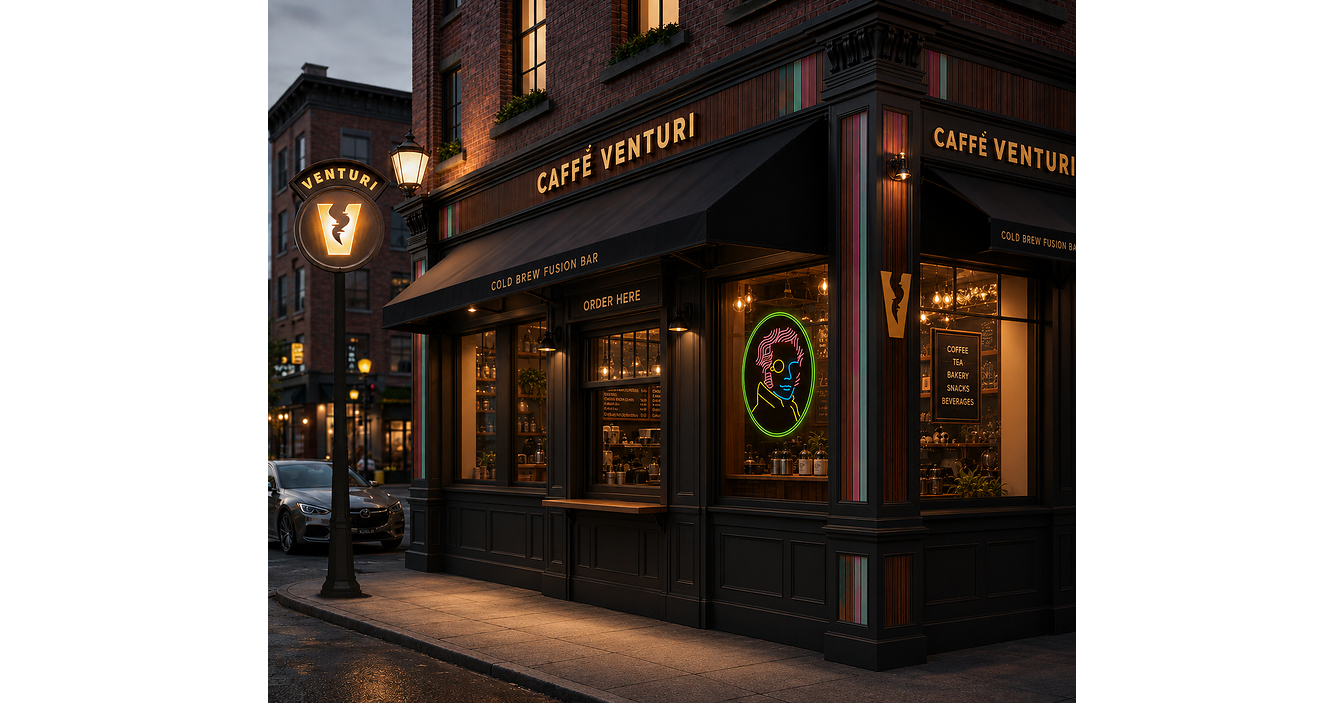
Venturi Bold Brew announced the launch of Caffé Venturi, a downtown Atlanta cold brew fusion bar opening in the coming months, with a Virginia Highlands sit-down café planned around late 2026. The company is rolling out a national network vision via repeatable flagship locations developed with Azalea Fresh Market, aiming to deepen loyalty and create a direct, high-margin consumer channel. The news is a constructive brand and expansion update with likely limited near-term financial market impact.
This is more brand signaling than a near-term earnings event. The key market mechanism is not cafe revenue itself, but whether a successful owned-store format can raise lifetime value per customer and support premium pricing across the packaged business; at this scale, the financial impact is likely immaterial for 1-3 quarters. The operational risk is the opposite: a hospitality-forward rollout can quietly add SG&A, labor complexity, and buildout spend before any meaningful throughput is proven.
The likely winners, if the concept works, are the landlord/operator partners and any adjacent premium beverage suppliers that can win menu placement; the losers are local indie cold-brew shops and, marginally, Starbucks/BROS in dense urban trade areas if the format becomes a repeatable traffic driver. But the more important second-order effect is that direct-trade sourcing and a six-SKU lineup introduce commodity and inventory exposure that is easy to underwrite in PR and harder to sustain through a coffee cost cycle.
Contrarian view: the market should be skeptical of the “high-margin channel” claim. Company-operated cafes typically compress returns versus asset-light distribution unless unit volumes are exceptional, so the right question is not whether the concept is cool, but whether same-store sales can cover occupancy and labor after opening fanfare fades. For the public tickers provided, there is no clear mechanical read-through yet; any price response would likely be sentiment-only and fade unless management later quantifies rollout economics.
Falsifiers to watch over the next 1-3 months: delayed opening, weak local traction, or any disclosure that buildout costs and staffing push payback beyond 24 months. Over 6-18 months, a more scalable thesis would require evidence of multi-unit replication with consistent gross margin and no deterioration in the core packaged business.
AI-powered research, real-time alerts, and portfolio analytics for institutional investors.
Request DemoOverall Sentiment
mildly positive
Sentiment Score
0.18
Ticker Sentiment
