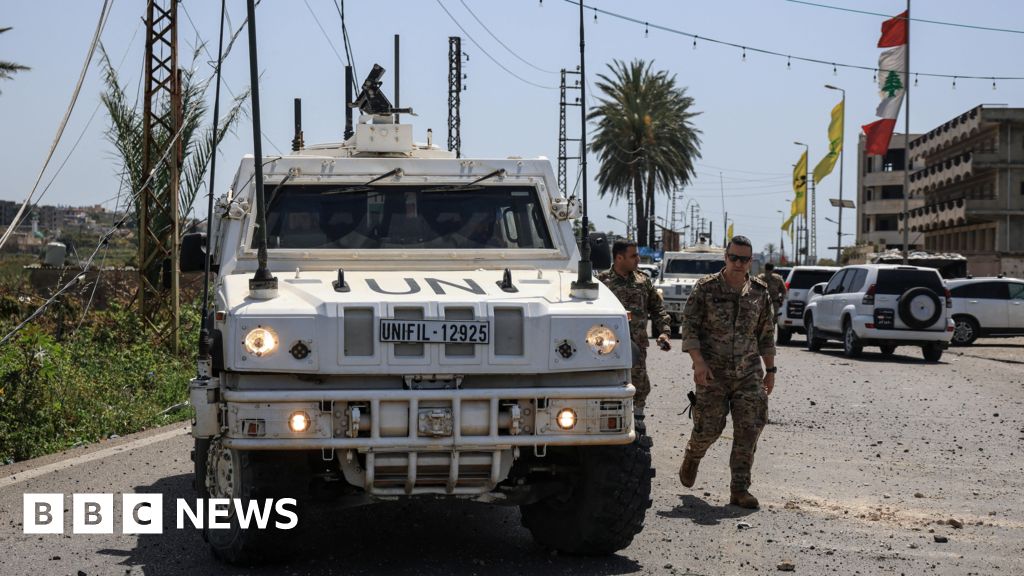
A French UN peacekeeper was killed and three others were wounded in southern Lebanon after a UN patrol came under small-arms fire, which French President Emmanuel Macron called a deliberate attack. Unifil said the patrol was clearing explosive ordnance near Ghanduriyah when it was ambushed, and both France and Lebanon have called for investigations and arrests. The incident heightens already elevated geopolitical risk in southern Lebanon amid the Israel-Hezbollah conflict and raises concerns over UN peacekeeping security.
The market read-through is less about Lebanon-specific escalation and more about a deterioration in the credibility of the post-ceasefire enforcement mechanism. Once peacekeepers become targetable, the cost of maintaining international monitoring rises nonlinearly, which increases the odds of a thinner, more militarized buffer and a higher probability of localized spillover into northern Israel risk assets over the next 1-4 weeks. That typically supports defense primes, surveillance, drones, and electronic warfare names while pressuring any Lebanese sovereign/ quasi-sovereign risk proxies through wider funding spreads and weaker reconstruction optionality.
The second-order effect is on operational tempo: if UN routes remain intermittently inaccessible, clearance, engineering, and logistics delays increase for both humanitarian actors and any future stabilization deployment. That can extend the conflict’s tail by months even without a headline war expansion, because each incident hardens rules of engagement and reduces room for deconfliction. It also raises legal and political salience in Europe, where a killed French national increases pressure for a sharper French stance; that can matter for contractor award flow and coalition diplomacy more than for immediate battlefield outcomes.
Consensus may overestimate the chance that this stays a contained, one-off incident. The bigger risk is a sequence of “ambiguous” attacks that steadily degrade UNIFIL’s ability to operate, making the ceasefire de facto unenforceable and increasing the probability of a broader southern Lebanon security vacuum. The contrarian angle is that this is not only a risk-off event but also a procurement catalyst: governments tend to spend after personnel losses, not after abstract warnings.
AI-powered research, real-time alerts, and portfolio analytics for institutional investors.
Request TrialOverall Sentiment
strongly negative
Sentiment Score
-0.75
