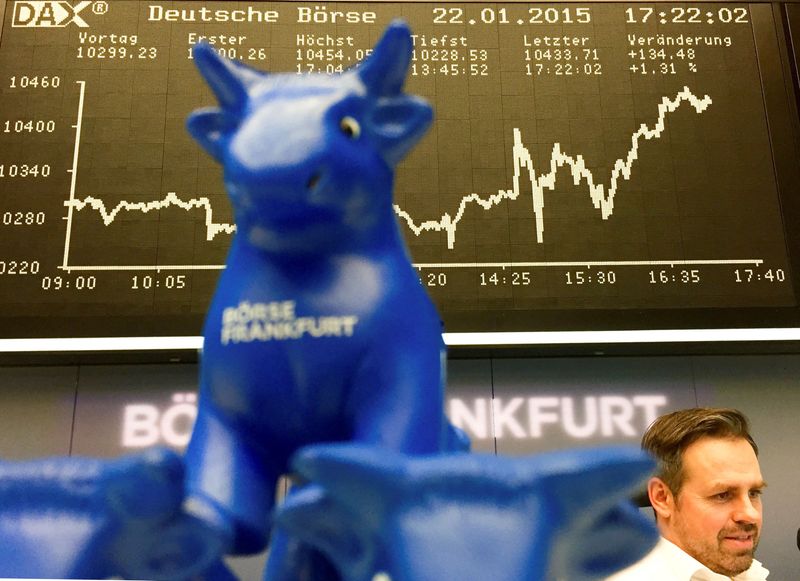
European equities saw gains Monday, primarily driven by heightened expectations for a September Federal Reserve rate cut following weaker U.S. payroll data, with markets anticipating a 25-50 basis point reduction. However, these advances were constrained by escalating political uncertainty in France, including a critical confidence vote for Prime Minister Bayrou and persistent concerns over the nation's budget deficit and debt, compounded by political instability in Japan following PM Ishiba's resignation. Concurrently, German exports unexpectedly declined 0.6% in July, while industrial production rose 1.3%. In commodities, crude oil prices increased after OPEC+ agreed to a smaller-than-anticipated 137,000 barrels per day production hike for October.
European equities are exhibiting tentative gains, with Germany's DAX up 0.9%, driven by heightened expectations of a U.S. Federal Reserve interest rate cut in September following a soft U.S. payrolls report. Markets are pricing in a cut of at least 25 basis points, with the upcoming U.S. inflation report poised to influence whether a more aggressive 50-basis-point reduction is likely. However, this optimism is being significantly tempered by acute political uncertainty in Europe and Asia. In France, the eurozone's second-largest economy, Prime Minister Bayrou faces a near-certain defeat in a confidence vote, threatening the government's ability to address a budget deficit nearly double the EU's 3% limit and risking a further credit downgrade from Moody's. This pressure is reflected in the country's 30-year bond yield, which has reached levels not seen since 2009. Compounding regional instability, Japan's Prime Minister Ishiba has announced his resignation, initiating a potential leadership struggle. In economic data, Germany presented a mixed picture with an unexpected 0.6% fall in July exports alongside a 1.3% rise in industrial production. Meanwhile, energy markets are showing strength, with Brent and WTI crude rising approximately 1% after OPEC+ agreed to a modest production increase of 137,000 barrels per day for October, a substantially smaller hike than in previous months, suggesting a tighter supply outlook.
AI-powered research, real-time alerts, and portfolio analytics for institutional investors.
Overall Sentiment
Mixed
Sentiment Score
-0.15
Ticker Sentiment
