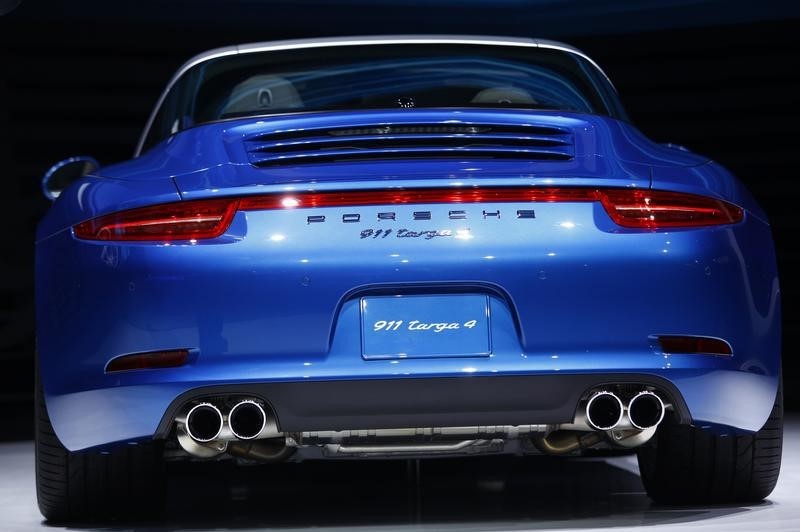
Porsche AG's first-quarter operating profit fell 21.9% to €595 million and deliveries declined nearly 15% to 60,991 vehicles, while revenue dropped 5.2% to €8.40 billion. The company kept full-year guidance unchanged at €35 billion to €36 billion in revenue and maintained a 7.1% operating return on sales at the top end of its 5.5% to 7.5% target range. However, battery EV penetration slipped to 19.8%, below the 24% to 26% full-year target, despite stronger automotive net cashflow of €514 million.
The clean read-through is that Porsche is defending earnings quality by sacrificing volume, which is usually manageable until the mix stops cooperating. The bigger signal is not the quarter itself but the strategic pivot: if management leans further into pricing discipline and product rationalization, the near-term beneficiaries are premium European peers with cleaner EV and hybrid lineups, while the losers are suppliers levered to Porsche’s unit growth assumptions. That matters because a lower-volume, higher-margin stance tends to push pain downstream first: lower orders for content-heavy components, more pressure on tier-1 pricing, and weaker manufacturing leverage for the broader German auto complex.
The cash flow improvement is the part the market may underappreciate. If capex stays restrained and working capital remains tight, Porsche can keep free cash flow acceptable even with softer deliveries, which reduces balance-sheet stress and lowers the odds of a near-term equity reset. But that also means management has room to defer investment decisions into the autumn strategy update; the catalyst risk is that the market could begin pricing a slower product cadence and a longer transition period just as consensus had been expecting a cleaner growth reacceleration.
The EV mix decline is the most important second-order issue. If battery-electric share stays below target into the summer, it raises the probability that Porsche will prioritize hybrids and combustion-adjacent models longer than the market likes, which supports near-term profitability but weakens the premium multiple case for the stock. Over months, the trade is less about this quarter’s miss and more about whether the 2035 overhaul can prove that Porsche can scale EVs without destroying margin, a question that will likely keep valuation capped until the capital markets day.
Contrarianly, the bearish reaction may be too mechanically linked to unit declines and not enough to cash generation and guidance discipline. If the company can hold margin near the top of range while stabilizing cash conversion, the stock can de-rate less than the headline delivery trend suggests; however, the asymmetry flips if the next two prints show continued EV underpenetration or a second leg down in deliveries, because then the market will infer structural demand weakness rather than temporary mix management.
AI-powered research, real-time alerts, and portfolio analytics for institutional investors.
Request DemoOverall Sentiment
mildly negative
Sentiment Score
-0.15
