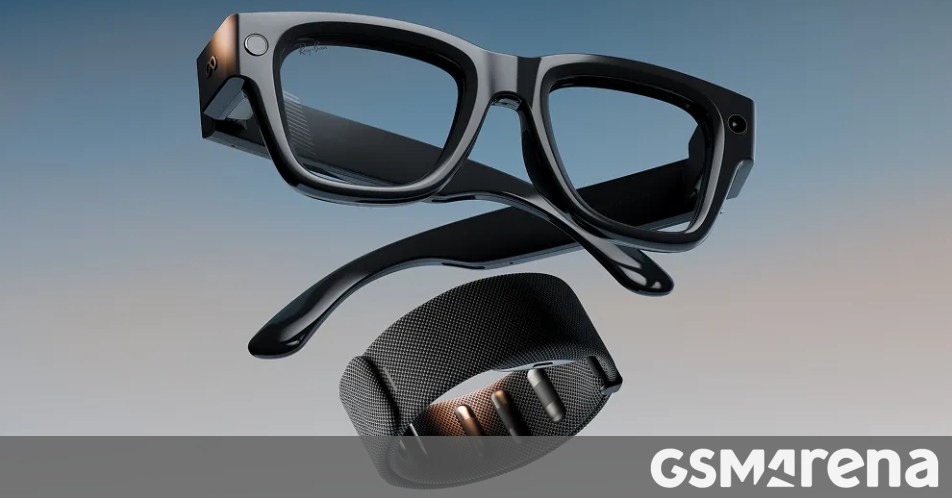
Meta's Ray-Ban Display smart glasses received a major software update, including Neural Handwriting for all users, in-display recording, expanded Maps, WhatsApp group video calls, and Instagram/Facebook feature upgrades. Meta also opened the device to third-party developers via an SDK and WebApps, which could broaden the ecosystem and utility of the $800 wearable. The update is positive for product differentiation and developer traction, but the near-term market impact is likely limited.
This is less about a single feature update and more about Meta proving it can turn an expensive hardware SKU into a software platform. Opening the device to third-party developers meaningfully changes the growth curve: once a device has a credible app layer, engagement can extend beyond novelty use cases and into habitual utility, which is what ultimately lowers return rates and supports premium pricing. That matters because the next leg of the thesis is not unit growth alone, but monetizable time spent and attach rates for accessories, services, and future glass form factors.
The second-order beneficiary is Meta’s ecosystem moat, not just the glasses line. If developers can rapidly port mobile experiences into a wearable interface, the company can compress the adoption cycle for new interaction paradigms while forcing competitors into a catch-up game on both hardware and SDK tooling. For Google, the risk is less immediate product displacement and more expectation-setting: developers and consumers will start benchmarking any Android XR launch against this form factor’s existing utility, raising the bar for launch quality and app availability.
The main risk is that this remains a high-income enthusiast product until the input method becomes socially frictionless and battery/thermal constraints are solved. In the next 3-6 months, the catalyst is developer momentum; in 12-24 months, it is whether third-party apps create daily-use patterns rather than demos. A slower-than-expected app ecosystem or any privacy backlash around recording/features could cap upside, but the setup is favorable because the market still tends to underwrite wearables as optional gadgets rather than platform primitives.
The contrarian angle is that the market may be over-focusing on the device itself and underestimating the strategic value of the input layer. If sEMG-based control becomes the de facto standard for lightweight XR interaction, the real winner could be the platform owner that controls the developer stack and user identity graph, not the OEM that ships the glass. That makes this less of a hardware cycle trade and more of a long-duration ecosystem capture story.
AI-powered research, real-time alerts, and portfolio analytics for institutional investors.
Request DemoOverall Sentiment
moderately positive
Sentiment Score
0.35
Ticker Sentiment
