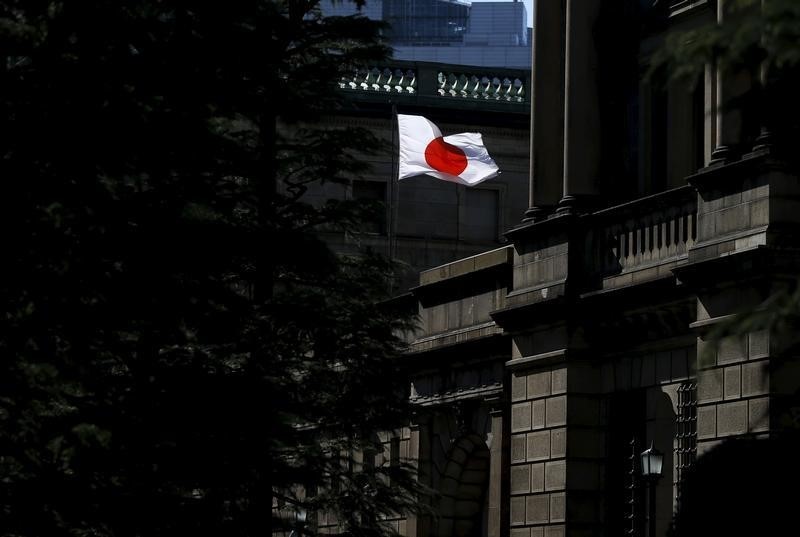
The Bank of Japan is widely expected to keep its benchmark short-term rate unchanged at 0.75% on April 28, though the central bank may still sound hawkish amid sticky inflation, higher oil prices, and Iran-related supply risks. Expectations for an April hold have pressured USD/JPY, while the Nikkei 225 has hit record highs on strength in tech, banking, and industrial shares. Markets will focus on Governor Kazuo Ueda’s guidance, as a hawkish shift could support the yen but weigh on Japanese equities.
The market is treating the BOJ as a one-meeting story, but the more important setup is a volatility regime shift in Japanese rates/FX. If the bank holds while keeping a tightening bias, it likely compresses near-term JPY downside but does not remove the carry unwind risk that has been building in global macro books; that is a recipe for choppy USDJPY with lower conviction in directional breakouts. The bigger second-order effect is that Japanese banks can continue to outperform on curve steepening expectations even if the policy rate is unchanged, while export-heavy equities get a temporary translation tailwind only if the yen weakens fast enough to offset higher imported input costs.
For equities, the rally in the Nikkei looks tactically crowded. Record highs plus a still-unresolved energy shock create asymmetric downside if Ueda sounds even marginally more hawkish than priced, because Japanese index leadership has been concentrated in rate-sensitive financials, semis, and cyclicals that are vulnerable to multiple compression when discount-rate expectations rise. The less obvious loser is the domestic consumer/discretionary complex: if the BOJ is forced to validate inflation persistence, wage gains can be partially offset by real-income pressure from energy and food, which tends to show up in retail, autos, and household goods with a 1-2 quarter lag.
The contrarian read is that the market may be underpricing the BOJ’s incentive to avoid signaling weakness in the yen. A hold paired with hawkish rhetoric is not neutral; it raises the odds of a June hike and keeps intervention risk alive below 160, which can create a sharper USDJPY downside move than rates markets expect. In that scenario, the best risk/reward is not simply short Nikkei, but short the most rate-sensitive pockets versus long defensives or exporters with stronger offshore earnings hedges.
From a timing perspective, the next 1-5 trading days are about Ueda’s language; the next 1-3 months are about whether inflation expectations and oil/shipping pass-through force a June move. If the BOJ disappoints hawks, the yen can temporarily weaken, but that likely extends rather than removes tightening risk, setting up a second selloff in equities later as rate-hike odds rebuild.
AI-powered research, real-time alerts, and portfolio analytics for institutional investors.
Request DemoOverall Sentiment
neutral
Sentiment Score
0.05
Ticker Sentiment
