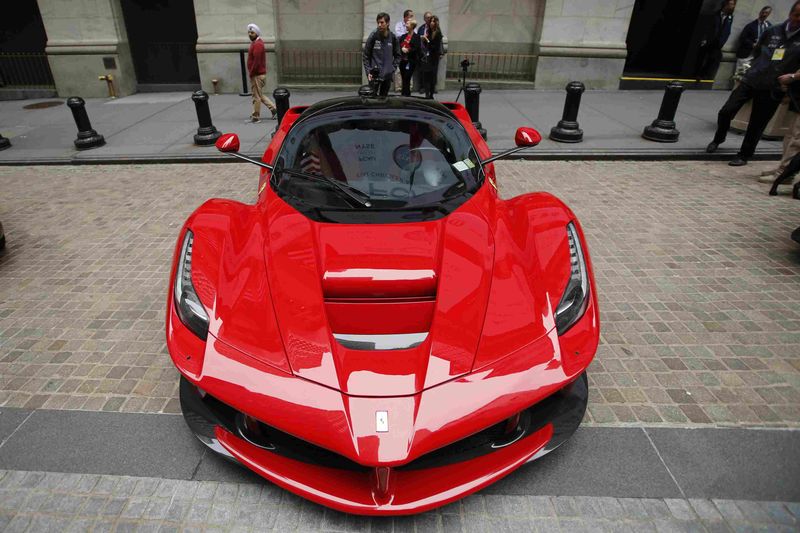
Ferrari shares fell 6.1% after the launch of its first fully electric vehicle, the €550,000 Luce, as investors worried the design shift and weak luxury EV demand could dilute the brand. The stock also faced pre-existing caution after Morgan Stanley cut its price target to EUR 330 from EUR 357. Broader markets were mixed, with the STOXX 600 flat and US equities slightly higher, while headlines on US-Iran tensions supported the dollar and oil but did not offset Ferrari-specific selling pressure.
RACE is being punished less for one product than for what the product signals: management is willing to stretch the brand into a segment where scarcity, not volume, is the economic moat. If the market starts to believe Ferrari can be “premium auto” rather than “collectible object,” the multiple compression can persist well beyond the initial launch window because the damage would show up in residual values, order book quality, and pricing discipline across the broader lineup.
The second-order winner is not another EV maker so much as the rest of the luxury stack that can preserve its halo without taking on battery risk. That creates a relative value argument for names with stronger heritage and less need to prove EV credibility, while suppliers exposed to ultra-luxury platforms may see delayed volume assumptions as OEMs wait to gauge reception. The fact that peers have already retreated from full-EV ambitions makes the bar for Ferrari’s success unusually high; a mediocre launch would be read as confirmation that the category itself is structurally weak, not just badly timed.
The setup is also sensitive to positioning. A sharp post-launch drawdown suggests crowded longs have started de-risking, but the move is still mostly about narrative, not earnings, because deliveries are years away and the financial impact is deferred. That means the stock can stay weak for months if sell-side models start haircutting long-term margin assumptions, yet any evidence of scarcity pricing or waitlist strength could trigger a violent mean reversion.
The contrarian angle is that investors may be overpricing near-term dilution risk and underpricing Ferrari’s ability to arbitrage exclusivity. A €550k price point means even modest unit economics can be acceptable if the model expands the addressable base of ultra-wealthy buyers without cannibalizing core demand; the real test is whether the brand can turn an EV into a trophy asset rather than a commodity car.
AI-powered research, real-time alerts, and portfolio analytics for institutional investors.
Request DemoOverall Sentiment
moderately negative
Sentiment Score
-0.47
Ticker Sentiment
