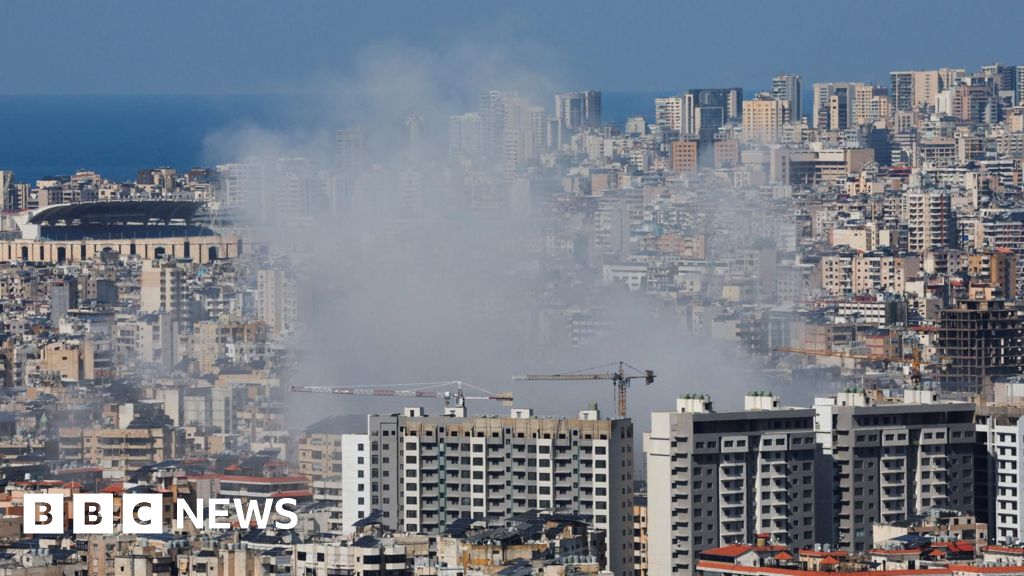
Israeli forces struck Hezbollah targets in Lebanon after the Iran-aligned militia launched rockets and drones at Haifa to avenge the assassination of Iran's Supreme Leader, with Lebanon reporting 31 dead in Beirut's southern suburbs and the south. Israel warned of further strikes and ordered evacuations of over 50 villages while Lebanon's government moved to ban Hezbollah's military activities, marking a rapid regional escalation following a US-Israeli strike on Iran's leadership and Iran's retaliatory missile and drone launches. The widening confrontation raises immediate geopolitical risk for the Levant and Gulf, with meaningful implications for investor risk premia, regional sovereign and emerging-market sentiment, and potential energy/defense sector volatility.
Market structure: Winners include global defense primes (LMT, RTX, GD, NOC) and Israeli defender Elbit (ESLT) from near-term order acceleration; energy producers (XOM, CVX) and freight owners (ZIM) benefit if oil or shipping disruption widens. Losers are Lebanon assets and local banks, Israeli tourism/airlines (AAL/DAL) and regional EM credits; expect immediate risk‑off pressure on EM FX and sovereign spreads. Near-term pricing power shifts to producers of physical security (defense, hard commodities, P&I insurers) while consumer/discretionary travel/retail faces demand destruction.
Risk assessment: Tail scenarios include escalation to a Gulf-wide disruption driving Brent >$100 within 30 days (10–15% probability) and a prolonged two‑front war pulling in Iran and US forces (20–25% probability) — both would widen USD funding spreads and IG/EM credit spreads by 150–300bp. Immediate (days): safe‑haven flows into Treasuries/Gold and higher VIX; short‑term (weeks/months): EM outflows and corporate credit spreads widen; long‑term (quarters): elevated defense budgets and re‑shoring capex. Hidden dependencies: maritime insurance spikes, re‑routing via Suez/longer voyages, and EU energy substitute needs could amplify commodity moves.
Trade implications: Favor 3–6 month tactical longs in defense (establish 2–3% positions split LMT/RTX/NOC) and a 1–2% regional play in ESLT; hedge with 0.5–1% long GLD as crash hedge. Energy: add conditional exposure (1–2% long XOM/CVX) via 3‑month call spreads if Brent breaches $90 — size to double if Brent >$100. Pair trades: long RTX (2%) / short AAL (1.5%) to capture relative resilience. Use options: buy 3‑month EIS (iShares MSCI Israel) puts (1% notional) to protect equity exposure; consider VIX call spread if VIX >25.
Contrarian angles: Markets may overprice perpetual escalation — historical parallels (2006 Hezbollah‑Israel war) show regional conflict can be contained with limited global oil disruption; defense stocks often re‑rate early then mean‑revert. Mispricings: selective EM sovereigns without direct Gulf exposure could be oversold — buy 3–6 month tactical muni/sovereign belly bonds on >50bp spread widening and trim defense longs on >15% rally. Unintended consequences: prolonged high freight rates favor ZIM (consider 0.5–1% long) and insurers — watch P&I rate moves as a trade trigger.
AI-powered research, real-time alerts, and portfolio analytics for institutional investors.
Request TrialOverall Sentiment
strongly negative
Sentiment Score
-0.70
