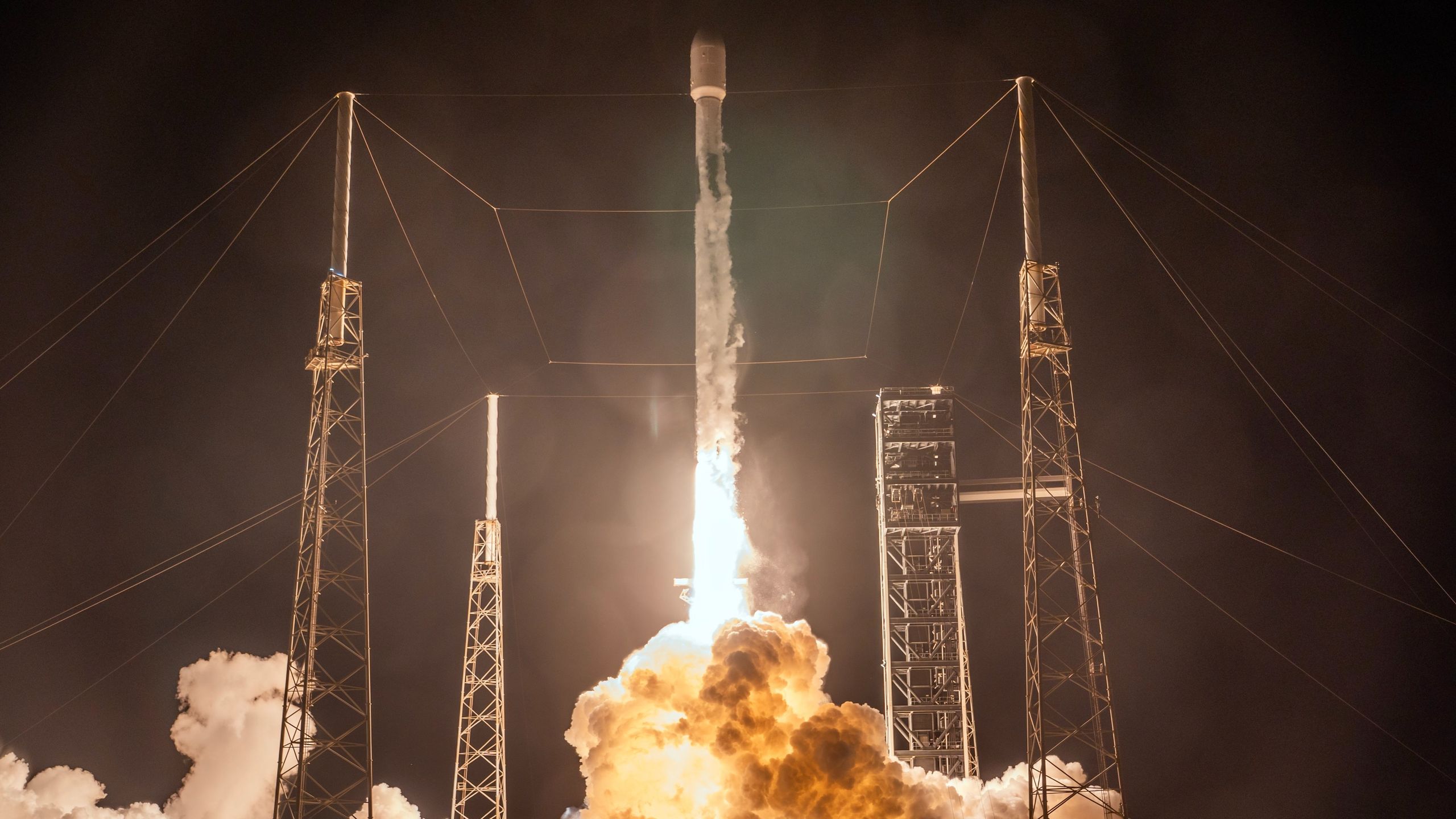
SpaceX successfully launched the 15,400-pound SXM-11 SiriusXM satellite from Cape Canaveral on June 28, with Falcon 9 booster B1085 landing safely on the drone ship after its 17th flight. The satellite was deployed into geosynchronous transfer orbit on schedule 34.5 minutes after liftoff and will join SiriusXM's seven-spacecraft fleet. The article is largely operational and historical in nature, with limited direct market-moving implications beyond confirming another routine SpaceX mission.
This is a quiet but important signal that the heavy-lift GEO launch market remains structurally alive even as most investor attention sits on LEO broadband. For commercial satcom operators, the economic moat is no longer just spacecraft performance; it is access to a launch provider with repeatable reusability and schedule reliability, which lowers all-in mission risk and preserves balance-sheet optionality for satellite owners. That dynamic tends to favor the launch incumbent and the satellite bus/parts supply chain over purely propulsion-centric competitors that cannot match cadence.
The second-order effect is that GEO operators are being forced into a higher-reliability, lower-launch-cost regime while the market still prices them like slow-growth legacy telecom assets. If launch costs stay compressed, replacement cycles can tighten because operators can justify more frequent refreshes to protect spectrum/value and reduce outage risk. That supports suppliers tied to radiation-hardened electronics, power systems, and high-reliability components more than the prime integrators, whose margins can get squeezed if launch savings are competed away into customer pricing.
The contrarian miss is that launch success here is not bullish for every space beneficiary; it reinforces a winner-take-most structure. SpaceX’s cadence and reusability widen the gap versus smaller launch rivals and make it harder for alternative commercial launch providers to price above cost unless they differentiate on specialty payloads or national security access. Over months, the key catalyst is whether more GEO operators follow with accelerated fleet refresh orders; if not, the trade fades back into a one-off mission headline rather than a durable demand inflection.
AI-powered research, real-time alerts, and portfolio analytics for institutional investors.
Request DemoOverall Sentiment
neutral
Sentiment Score
0.12
