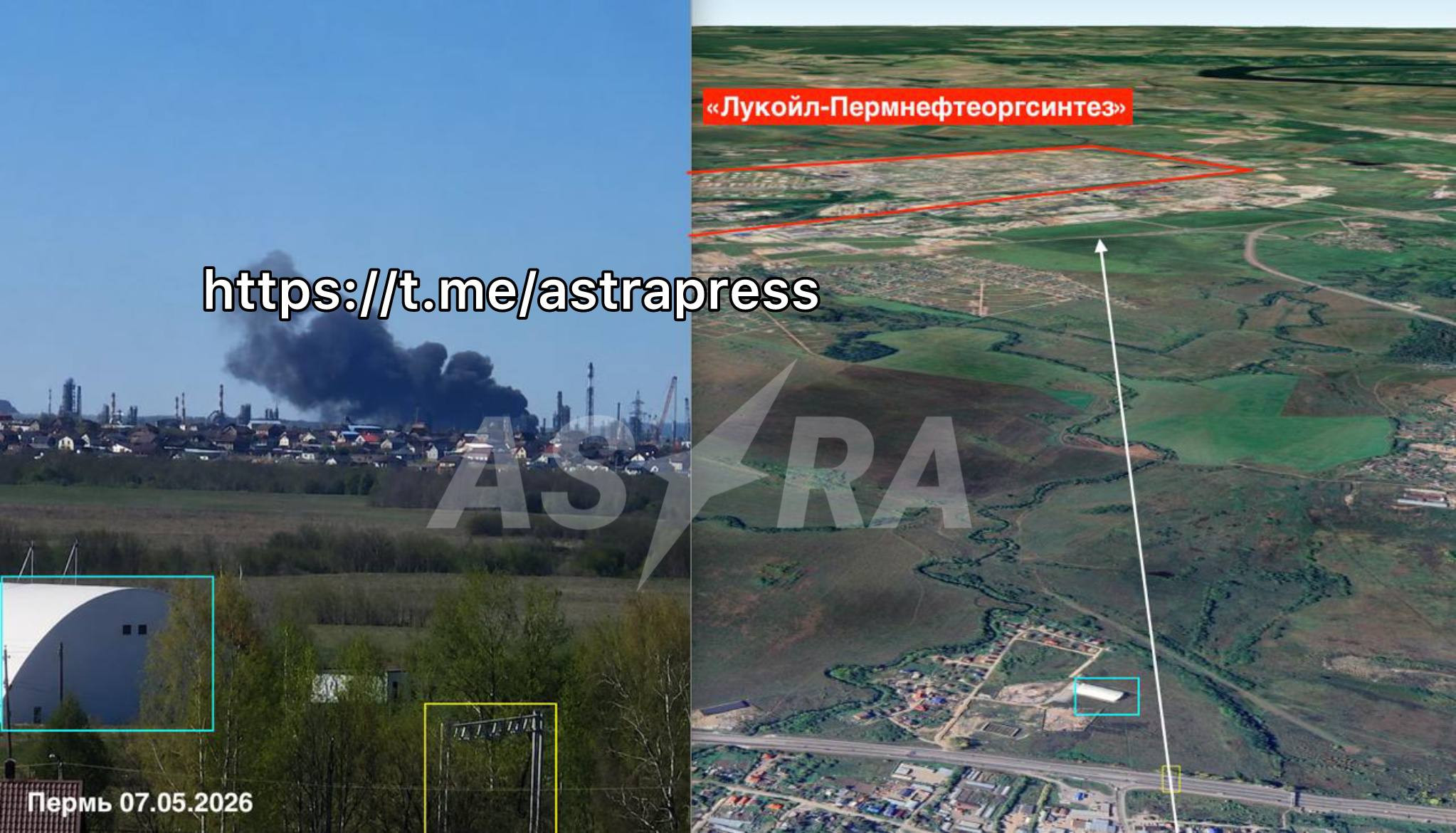
Russia’s Perm oil refinery has fully stopped processing after a May 7 Ukrainian drone strike triggered a fire and damaged key equipment, forcing shutdown of primary and secondary units. The facility processed about 12.6 million tons of crude in 2024, or roughly 250,000 barrels per day, and repairs are expected to take weeks. The outage adds to ongoing disruptions to Russian fuel supply and could tighten regional refined-product availability.
This is less an isolated refinery headline than a signal that Ukraine’s strike campaign is now reaching the marginal barrel of Russia’s domestic fuel system. The key second-order effect is not just reduced crude throughput, but tighter regional logistics: when a large inland refinery goes offline, product flows re-route to already-busy rail and pipeline networks, raising bottlenecks and forcing local price discrimination. That tends to hit middle-distillate availability first, which can bleed into trucking, agriculture, and industrial users before it is visible in headline export numbers.
The market implication is asymmetric. Global crude may not react much if the lost output is temporary, but refined products can gap higher on even modest outages because replacement supply is less fungible and shipping arbitrage is slower. If repairs truly take weeks, the bigger read-through is that Russia’s refining system is becoming progressively less resilient to drone attrition, increasing the probability of repeated downtime and a rolling inventory draw rather than a one-off hit.
For Europe and Asia, the transmission is through diesel and fuel oil spreads, not Brent direction. That favors refiners with access to non-Russian crude and strong product export optionality, while hurting industrials and transport-heavy sectors in regions that import gasoil. The contrarian risk is that the market overestimates persistence: if Moscow prioritizes rapid patchwork repairs or shifts crude slate to other domestic plants, the price spike can fade in days even though the strategic damage remains.
The broader geopolitical upside for Ukraine is negotiating leverage, but the financial market angle is that infrastructure fragility has now become a repeatable tool. That argues for trading volatility in fuel spreads rather than a directional oil beta bet.
AI-powered research, real-time alerts, and portfolio analytics for institutional investors.
Request DemoOverall Sentiment
strongly negative
Sentiment Score
-0.55
