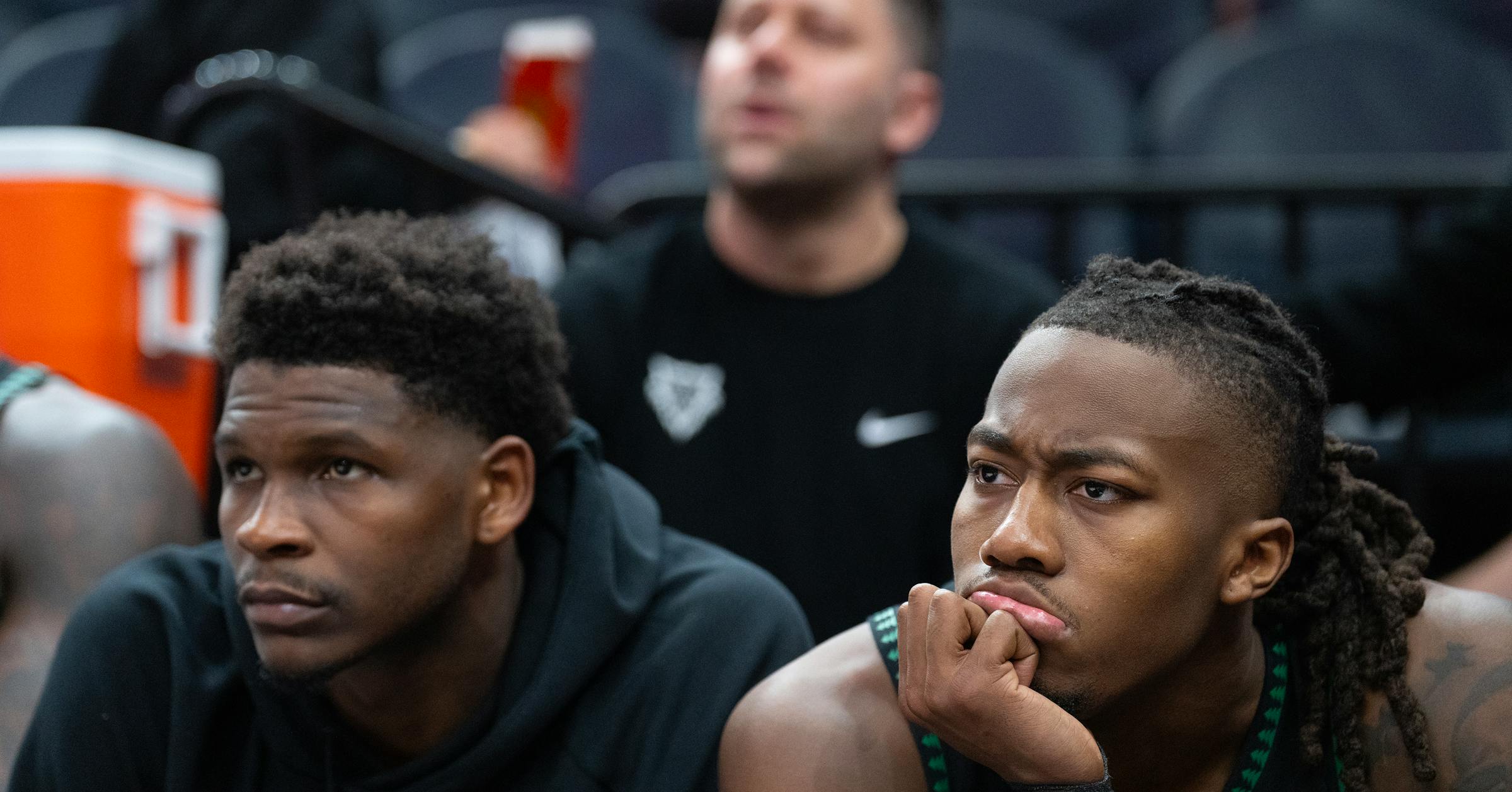
The Timberwolves were eliminated from the NBA Western Conference semifinals, losing Game 6 to the Spurs 139-109 as San Antonio won the series 4-2. Stephon Castle led the Spurs with 32 points, while Anthony Edwards and Terrence Shannon Jr. scored 21 each for Minnesota. The result ends Minnesota’s season and sends San Antonio to face the defending champion Thunder in the Western Conference finals.
For media and entertainment, the important takeaway is not the outcome of a single playoff game but the distribution of attention. A lopsided closeout is usually better for the league’s broader content machine than a protracted series: it clears the path to a marquee conference final and concentrates casual-fan demand into a smaller number of high-leverage broadcasts. That tends to benefit the strongest rights holders and ad sellers more than individual teams, because inventory with a clear storyline and superstar contrast monetizes better than evenly matched, lower-urgency games.
The second-order effect is on narrative optionality. A deep run from the Spurs creates a fresh national-market star arc around Castle/Wembanyama and a new ratings test versus the defending champs, which is more valuable than another repetitive contender matchup. If the conference final becomes competitive, it can modestly lift late-round ad CPMs and social engagement; if it is a short series, the broader impact is still limited because the league has already extracted enough from the Western playoff window. The key risk is that one-sided games accelerate viewer fatigue, which matters more in the current streaming-era environment where audience churn is a month-to-month issue rather than a season-long one.
Contrarian view: the market often overweights “big-market” narratives and underweights novelty. A young, visually distinctive team can outperform on digital reach even if it is not the most traditional ratings draw, so assuming the defending champion always maximizes attention may be too simplistic. The bigger medium-term catalyst is whether the league can convert this into highlight-driven engagement and subscriber retention; that is a weeks-to-months question, not a one-night box score question.
AI-powered research, real-time alerts, and portfolio analytics for institutional investors.
Request DemoOverall Sentiment
mildly negative
Sentiment Score
-0.20
