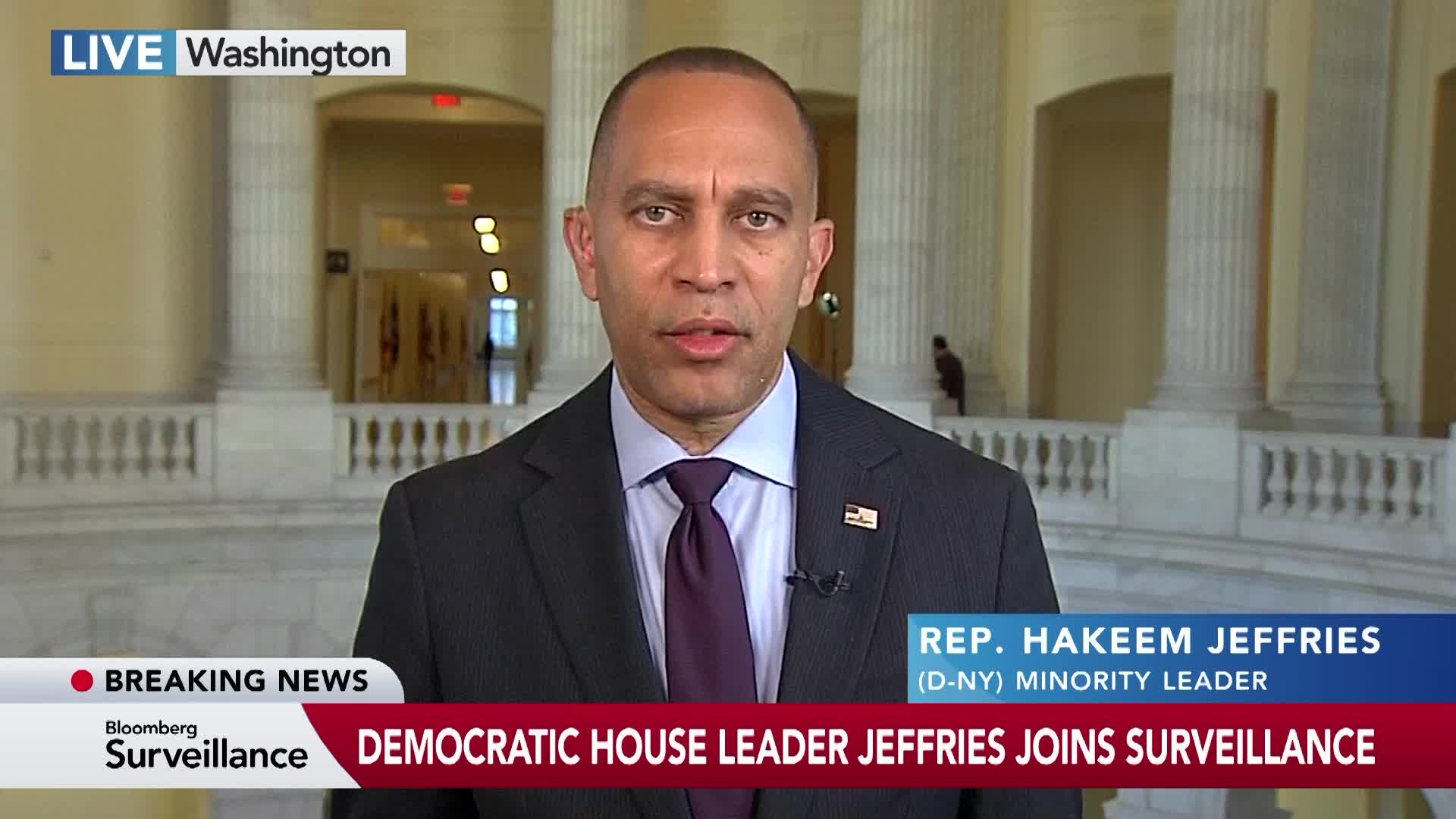
House Minority Leader Hakeem Jeffries has indicated a current absence of recent bipartisan discussions between the Republican and Democratic parties.
Watch House Minority Leader Jeffries Says No Recent Talks Between GOP, Democrats - Bloomberg House Minority Leader Hakeem Jeffries has publicly stated a current lack of recent bipartisan discussions between the Republican and Democratic parties. This announcement signals a potential impasse in legislative cooperation, which could impact policy formulation and implementation. The absence of dialogue suggests ongoing political polarization within the U.S. Congress. This political development carries a mildly negative sentiment, reflecting uncertainty regarding future legislative progress. Key policy areas, including fiscal spending, debt ceiling negotiations, and regulatory reforms, could face delays or stalemates without bipartisan engagement. The market impact is assessed as low to moderate (0.4), indicating that while not immediately disruptive, it contributes to a cautious outlook. The uncertain tone surrounding inter-party relations highlights potential risks for investors relying on predictable policy environments. Prolonged legislative gridlock could introduce volatility, particularly in sectors sensitive to government spending or regulation. This situation underscores the importance of monitoring political developments as a key macro factor.
AI-powered research, real-time alerts, and portfolio analytics for institutional investors.
Request DemoOverall Sentiment
mildly negative
Sentiment Score
-0.35
