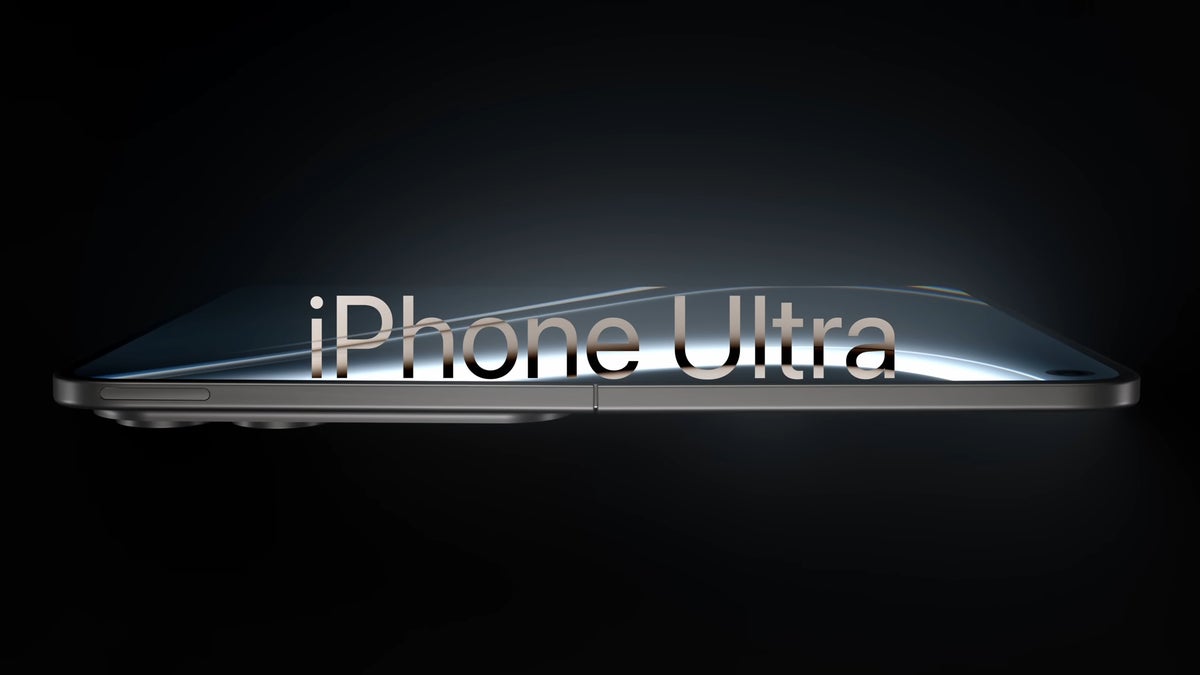
A new leak suggests Apple’s foldable iPhone, likely the iPhone Ultra, will be about 9.23 mm thick when folded and roughly 13 mm including the camera bump, slimmer than prior 9.5-9.8 mm estimates. The article frames the device as potentially more competitive versus Samsung’s Galaxy Z Fold line on design, while emphasizing that Apple still needs a near-perfect execution. The news is speculative and product-focused, with limited immediate market impact.
The important signal is not the extra millimeters, it’s that Apple appears to be converging on a form factor that can force an ecosystem reset rather than merely join the existing foldable category. If the industrial design is meaningfully thinner while preserving battery life and hinge durability, Apple can widen the addressable market from enthusiasts to mainstream upgraders who previously rejected foldables as too bulky or fragile. That matters most for suppliers tied to precision metal, ultra-thin glass, hinges, and assembly test/inspection, because the first-order unit opportunity is modest but the second-order mix shift toward higher ASP components can be material.
The competitive effect is asymmetric. Samsung and Chinese OEMs have spent years educating the market, but Apple’s entry can collapse the decision cycle for premium iPhone users who were waiting for a “safe” foldable, potentially redirecting share from both existing foldables and high-end slab phones. The biggest loser is not necessarily Samsung handset share immediately; it is the incumbent assumption that foldables remain niche and that component pricing will stay commodity-like. If Apple validates the wide-format design, suppliers with exposure to Apple qualification could see a multi-year re-rating, while rivals that optimized around the narrower book-style format may face design obsolescence and lower attach rates on legacy components.
The near-term risk is execution, not concept. Apple can create demand on launch day, but any visible compromise in crease, thermal behavior, camera protrusion, or durability would convert the story from category expansion to premium disappointment, which is more damaging for Apple than for peers because expectations are so elevated. Time horizon matters: the stock impact from the rumor stream is mostly sentiment-driven over days to weeks, but the real P&L driver is 12-24 months out when channel mix, upgrade conversion, and supplier ramp determine whether this becomes a new platform or a one-off halo product.
The contrarian view is that the market may be overestimating how much the first model moves near-term Apple earnings. Even a successful launch likely starts as a low-volume premium SKU, with contribution dominated by margin mix rather than units, so the trade may be better expressed through suppliers and option convexity than outright equity beta. The more interesting setup is that Apple’s entry could compress valuations across non-Apple foldable OEMs if investors extrapolate a winner-take-most dynamic before actual demand elasticity is proven.
AI-powered research, real-time alerts, and portfolio analytics for institutional investors.
Request DemoOverall Sentiment
mildly positive
Sentiment Score
0.15
Ticker Sentiment
