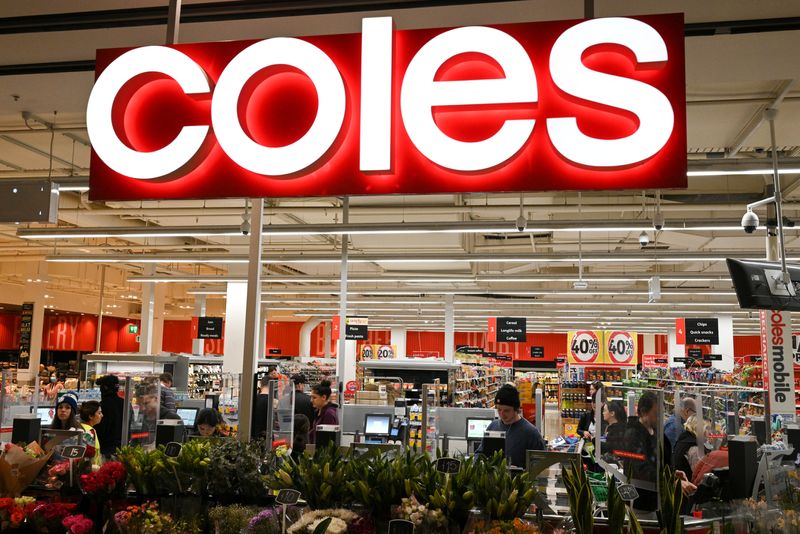
Coles Group reported third-quarter group sales revenue up 3.1% to A$10.7 billion, with supermarkets rising 4.0% to A$9.78 billion and online sales jumping 24.8%. E-commerce penetration increased to 13.6% of supermarket sales, while supermarket price inflation eased to 0.8% excluding tobacco. Offsetting the strength, liquor sales fell 3.9% and the company flagged rising fuel, freight, and packaging costs as a potential headwind.
The important read-through is not just that food retail is holding up, but that demand is becoming more defensive and more digital at the same time. Pantry-staple stocking tied to geopolitical anxiety is a short-duration tailwind, yet it can pull forward demand into the current quarter and leave a softer comp later if the shock fades. That makes the strength in core grocery less durable than headline sales suggest, especially if basket inflation keeps decelerating and consumers trade down to lower-margin private label or promotional items.
For the broader retail ecosystem, stronger online penetration is a structural negative for legacy last-mile grocery competitors that still rely on store-only economics. The mix shift toward delivery and click-and-collect tends to reward scale, fulfillment density, and disciplined pricing, while squeezing smaller chains and discretionary retailers that depend on impulse traffic. The liquor weakness is a separate warning sign: it usually lags consumer stress and can be a canary for softer non-essential spend across adjacent categories over the next 1-2 quarters.
The bigger second-order risk is cost inflation re-accelerating before pricing power has fully normalized. Fuel, freight, and packaging are exactly the inputs that can compress margin with a lag of one to two reporting cycles, so even if top-line remains stable, EBIT risk can show up later in FY25. If Middle East tensions ease and staples demand normalizes, the market may be overestimating how much of this quarter is repeatable.
Consensus is likely to treat this as a simple defensive-grocery positive, but the better signal is that earnings quality may be peaking while cost pressure is about to turn. That argues for owning scale winners selectively, but fading any assumption that the current grocery growth rate is a clean run-rate. The asymmetry is in margin, not revenue: if promo intensity rises and freight worsens, the next disappointment could come from earnings leverage rather than sales.
AI-powered research, real-time alerts, and portfolio analytics for institutional investors.
Request DemoOverall Sentiment
moderately positive
Sentiment Score
0.35
Ticker Sentiment
