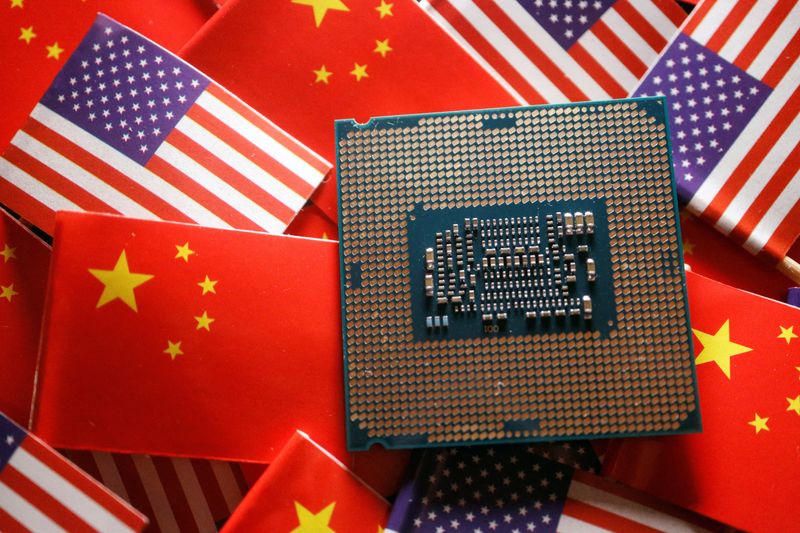
Major Chinese municipalities are setting ambitious targets for AI semiconductor self-sufficiency by 2027, with goals ranging from 70% to 100% domestic control, aiming to significantly reduce reliance on U.S. suppliers like Nvidia. This strategic push is projected to erode Nvidia's current ~80% market share in China to 50-60% within five years, as domestic firms like Huawei, Cambricon, and Baidu expand production with increasingly competitive offerings, aligning with President Xi Jinping's call for technological self-reliance.
China is intensifying its strategic push for semiconductor self-reliance, with major municipalities like Shanghai and Beijing establishing aggressive targets for domestic AI chip usage of 70% to 100% by 2027. This state-directed policy, aimed at reducing dependence on U.S. technology, poses a significant and direct threat to Nvidia's market dominance in the region. According to a Shanxi Securities note, Nvidia's market share in China's AI chip sector, which stood at approximately 80% in early 2024, is projected to contract to between 50% and 60% within the next five years. This shift is being enabled by the rapid expansion and improving competitiveness of domestic firms such as Huawei, Cambricon, and Baidu's Kunlun unit. The technological gap is narrowing, as evidenced by Huawei’s Ascend 910B chip, which already delivers about 85% of the performance of Nvidia’s comparable H20 chip, with its next-generation product expected to achieve parity.
AI-powered research, real-time alerts, and portfolio analytics for institutional investors.
Request DemoOverall Sentiment
mixed
Sentiment Score
0.00
Ticker Sentiment
