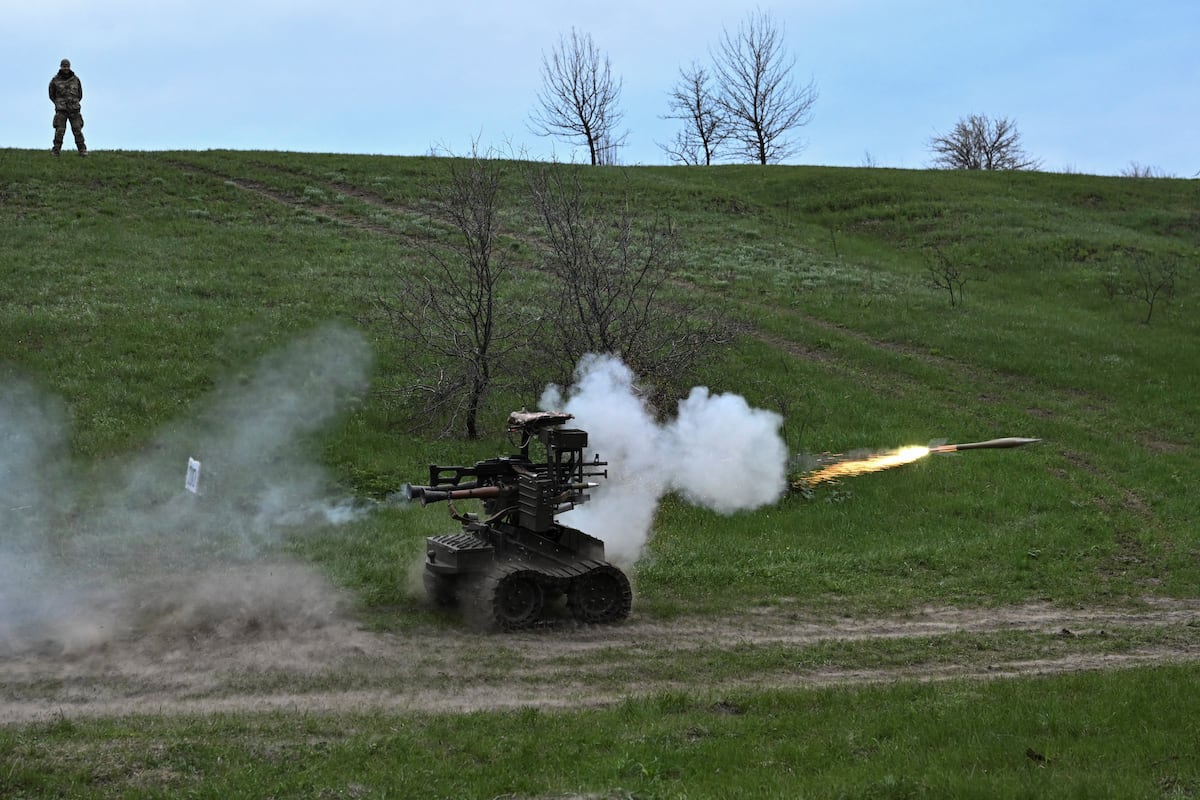
Ukraine plans to contract 25,000 unmanned ground vehicles in the first half of 2026, more than double its 2025 total, as it aims to move 100% of frontline logistics to robotic systems. The Defense Ministry says it has already spent over 14 billion hryvnia ($330 million) this year on more than 181,000 drones, UGVs and electronic warfare systems, while also starting 2027 contracts to support manufacturer pipelines. Kyiv also cleared the Bizon-L logistics robot for operational use under NATO cataloging standards.
This is less a one-off procurement headline than a proof-of-concept for a wartime robotics industrial policy. The second-order winner is not just UGV assemblers, but the full stack behind autonomy-at-the-edge: rugged compute, thermal imaging, encrypted comms, power management, drivetrains, and battlefield software that shortens the sensor-to-shooter cycle. Once logistics is delegated to machines, the bottleneck shifts from manpower to maintenance uptime, spares, and secure software updates — a procurement profile that favors vendors with repeatable, serial production rather than boutique prototypes.
The commercial implication is that Ukraine is effectively creating a live-fire reference customer for NATO-adjacent ground robotics. If these platforms are codified into allied catalogs and field-proven at scale, exportability could matter more than unit economics in the near term; a small number of successful programs can unlock multi-year procurement cycles across Europe. That said, the timeline is not linear: the biggest execution risk is not demand, but battlefield attrition, EW degradation, and sustainment friction once deployment expands from demonstrations to thousands of kilometers of contested front.
The contrarian view is that the market may be overestimating how easily robotics substitutes for infantry logistics in high-interference environments. A surge in contracts can coexist with low effective fleet availability if jamming, weather, terrain, or last-mile maintenance raise failure rates. That creates an underappreciated split: headline beneficiaries are hardware integrators, but the best economics may accrue to firms selling consumables, batteries, secure radios, and repair services rather than the vehicles themselves. If the program disappoints, the reversal would likely show up first in replacement orders and grant funding over the next 6-12 months, not immediately in current production numbers.
AI-powered research, real-time alerts, and portfolio analytics for institutional investors.
Request TrialOverall Sentiment
mildly positive
Sentiment Score
0.35
