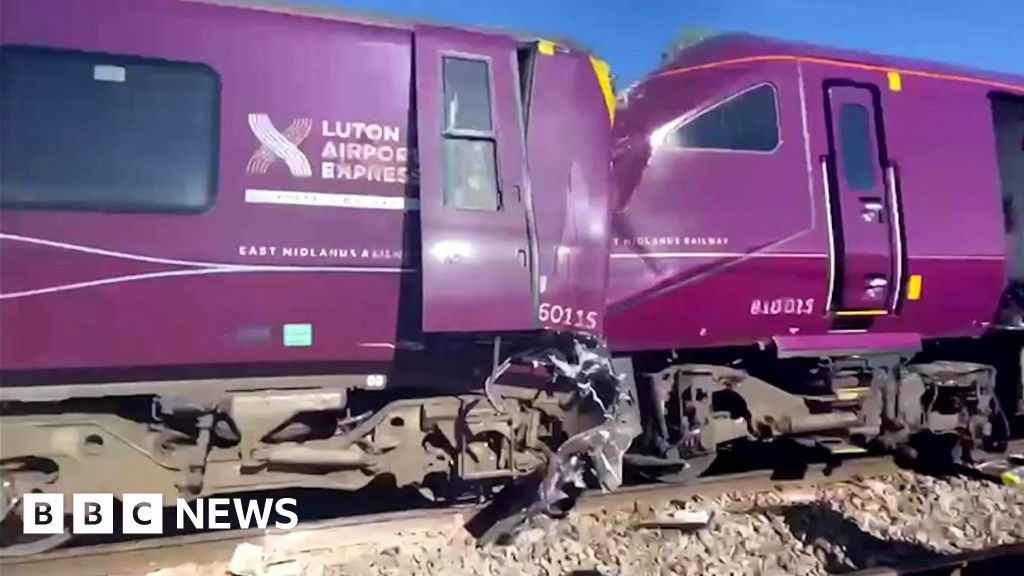
A train collision in the Bedford area left 1 person dead and 89 injured, including 11 very serious injuries and 22 serious injuries, prompting police to declare a major incident. East Midlands Railway services to and from London St Pancras were suspended for the rest of Friday, with disruption expected into Saturday while investigators determine the cause. The event is a major transportation safety shock with potential operational and regulatory implications for the rail network.
The immediate market read is not about the accident itself but about the probability distribution for rail disruption costs expanding from one-off compensation into a multi-week operating and reputational drag. For the operator, the first-order hit is lower seat utilization and higher disruption reimbursements; the second-order hit is that safety scrutiny typically forces slower timetable recovery, more conservative dispatching, and higher crew/inspection costs for several weeks, which can compress margins even after service resumes.
The bigger issue is regulatory optionality. A fatal collision on a busy intercity corridor raises the odds of accelerated oversight on signaling, train-control procedures, and incident response across the network, not just for the named operator. That matters because rail stocks and infrastructure contractors often re-rate on capex visibility: if the inquiry points to systems failure rather than human error, this can pull forward spending on safety upgrades by 6-18 months, benefiting signaling, monitoring, and rail-tech vendors while pressuring operators through higher compliance expense.
The consensus is likely to underappreciate the asymmetry between a short operational interruption and a long-tail policy response. The near-term earnings impact should be modest in absolute terms unless service is disrupted for weeks, but the headline risk can persist for months as investigators, regulators, and unions keep the story alive. In that scenario, the market usually over-discounts the operator first, then later re-prices beneficiaries of mandated safety capex once the remediation roadmap becomes visible.
AI-powered research, real-time alerts, and portfolio analytics for institutional investors.
Request DemoOverall Sentiment
extremely negative
Sentiment Score
-0.92
Ticker Sentiment
