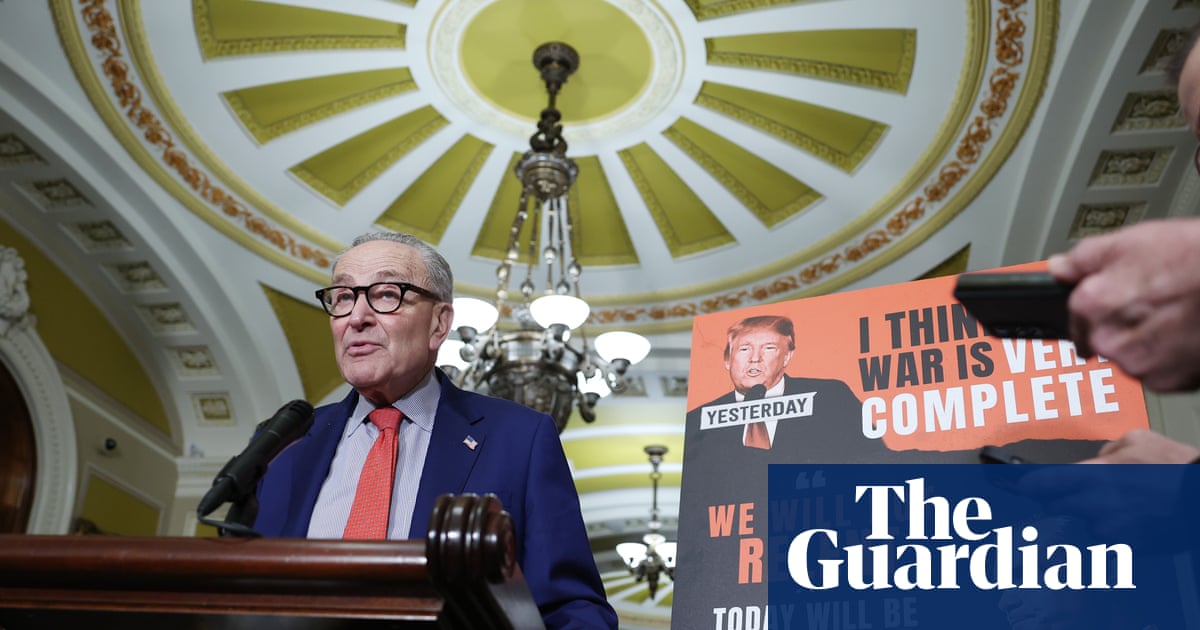
Trump’s renewed threats and the US-led assault on Iran have triggered a broader political and market-risk shock, with Democrats pushing war-powers resolutions, impeachment talk, and demands for more congressional oversight. The article highlights rising concerns over defense spending, gas prices, consumer sentiment at record lows, and the potential for wider Middle East escalation. It also underscores a growing intra-Democratic split over Israel, military intervention, and the party’s foreign policy direction heading into the midterms and 2028.
The immediate market read is not just “Middle East risk-on-risk-off,” but a re-pricing of US policy volatility as a persistent input into assets. That raises the equity risk premium, but the bigger second-order effect is on duration: a sustained rise in oil-driven inflation expectations can keep real yields elevated even if growth weakens, which is toxic for long-duration sectors and supportive for cash-generative defense and energy balance sheets. Defense is not a uniform winner. Prime contractors with large existing backlogs should outperform if Congress authorizes incremental spending, but the more interesting trade is in the subcontractor and muni/industrial ecosystem tied to procurement, munitions replenishment, and logistics. Conversely, any surge in Pentagon funding financed through larger deficits is negative for rate-sensitive domestic infrastructure names because higher term premiums compress project economics and raise refinancing risk over a 6-18 month window. The political overlay matters for positioning. If Democrats make war powers and anti-defense-lobby messaging central into the midterms, the beneficiary is not “anti-defense” in the abstract but candidates and issuers tied to bread-and-butter fiscal themes; that creates a wedge between national-security spending and household spending. The market may also be underestimating how quickly consumer sentiment can spill into hard data if gasoline stays elevated for several weeks, which would hit cyclicals and small caps before any actual earnings revisions show up. Consensus is likely overconfident that this is a short-lived headline shock. The underappreciated tail risk is a second escalation or a failed ceasefire, which would keep crude risk premium embedded and force institutions to de-gross in growth and discretionary. The contrarian view is that the political backlash could cap the administration’s willingness to sustain military pressure, making the best asymmetry a temporary volatility spike rather than a durable regime shift.
AI-powered research, real-time alerts, and portfolio analytics for institutional investors.
Request DemoOverall Sentiment
strongly negative
Sentiment Score
-0.58
