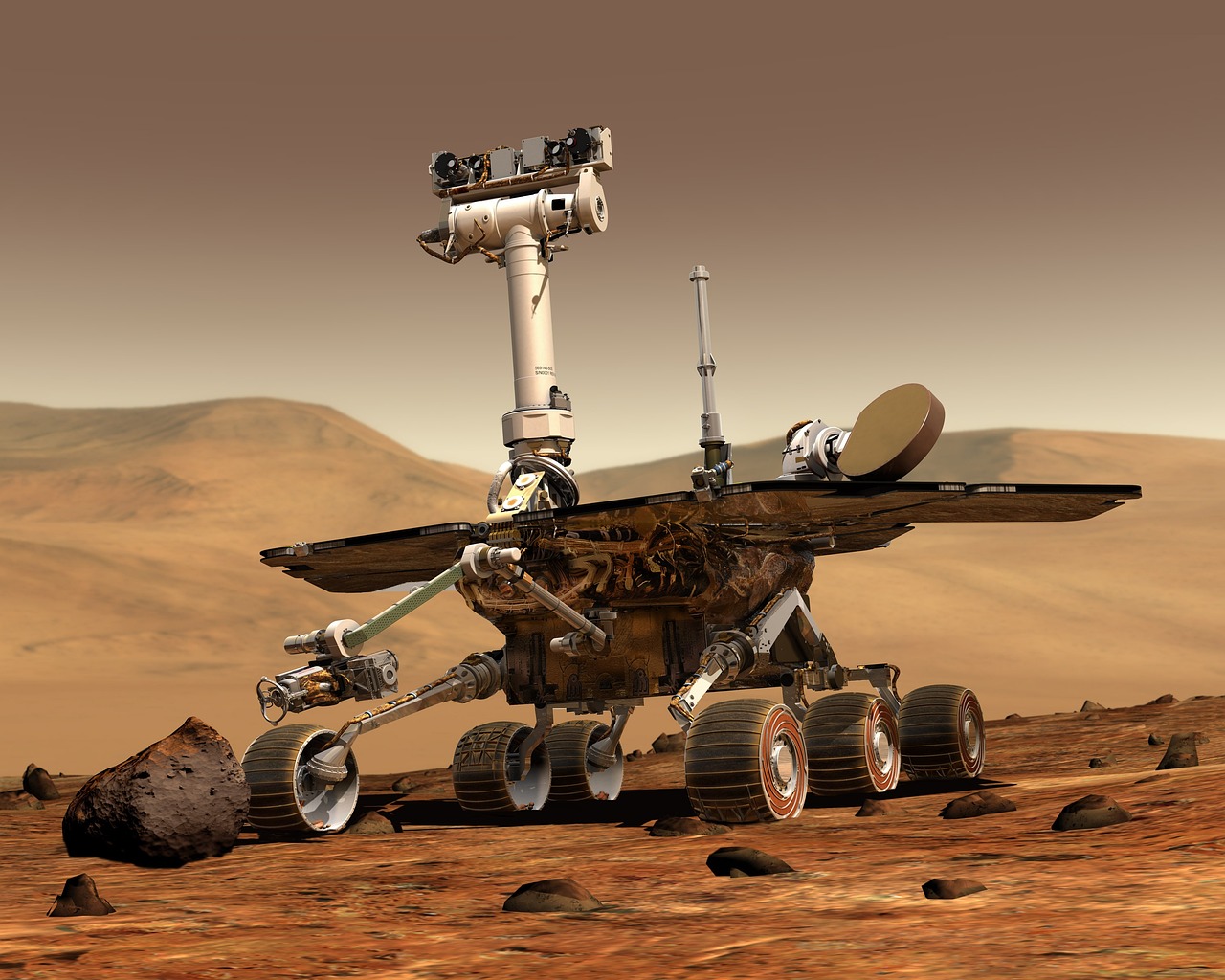
Advances in onboard AI navigation are enabling more autonomous Mars and lunar missions—NASA's Perseverance has used vision-enabled AI to generate continuous paths and drive hundreds of meters without human route planning—while machine-learning tools (AEGIS, MLNav) and task-prioritization algorithms improve science return. Research and mission concepts emphasize coordinated multi-robot and swarm systems for mapping and exploring hazardous environments such as lunar lava tubes, a capability that could underpin future infrastructure, resource extraction and long-duration human operations; technical risks remain around verification, communications and fault tolerance. Investors should monitor aerospace contractors, robotics and AI suppliers pursuing autonomy and multi-agent systems as potential long-term beneficiaries, though near-term market impact is limited.
Market structure: AI-driven navigation shifts value to three buckets — prime defense/aerospace contractors that integrate verified autonomy (Lockheed Martin LMT, Northrop Grumman NOC, L3Harris LHX), edge-AI chip and sensor suppliers (NVIDIA NVDA, AMD, Teledyne TDY), and specialized robotics/launch integrators. Niche pure-play small-cap explorers and imagery-only firms face pricing pressure and higher funding costs as capital reallocates to validated suppliers; expect supplier premiums for rad‑hard processors and IMUs of ~10–30% versus COTS equivalents over 2–4 years. Credit spreads for smallspace SMID names should widen; demand for commodities like titanium and specialty alloys ticks up modestly over multi-year buildouts.
Risk assessment: Tail risks include mission failures, renewed ITAR/export controls, and software-verification setbacks that could pause procurement (low-probability but high-impact). Immediate (days–weeks): news and test results move small-cap volatile names; short-term (0–12 months): contract awards and agency budget signals; long-term (2–5 years): sustained revenue ramp if autonomous fleets are adopted. Hidden dependencies: launch cadence, NASA/ESA procurement cycles, and rad‑hard chip supply concentration. Catalysts: successful Perseverance/CLPS demonstrations, major NASA/DoD contracts, or a demonstrated on-orbit autonomous test within 6–18 months.
Trade implications: Tactical: establish 1–2% long positions in NOC and LHX (12–36 month hold) to capture sticky defense procurement; size 1% long NVDA via a 3‑month 5–10% OTM call spread to play edge-AI adoption, risk 0.5–1% portfolio. Relative value: pair long LHX (1.5%) / short ARKX (1%) for 12–24 months expecting re-rating toward large primes. Reduce small-cap pure-play space exposure (cut to <1% aggregate) and avoid speculative LEO/sat‑tourism names.
AI-powered research, real-time alerts, and portfolio analytics for institutional investors.
Request DemoOverall Sentiment
mildly positive
Sentiment Score
0.25
Contrarian angles: The market underestimates verification/validation lag — commercial revenue is likely backloaded 2–5 years, so speculative names may be overvalued now. Historical parallel: military UAVs incubated ~8–10 years before scale procurement; expect similar lag. Unintended consequence: stricter export controls will concentrate wins with U.S. incumbents (NOC, LHX, NVDA) and punish international suppliers — favor domestic primes and foundry/AI leaders, short speculative space ETFs and unprofitable smallcaps on 6–18 month horizon.
