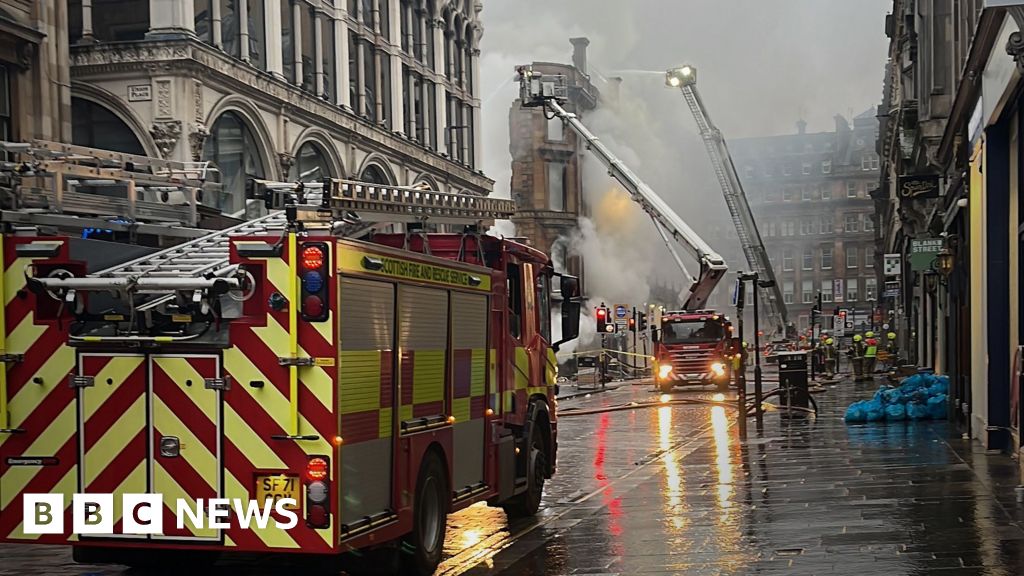
All train services at Glasgow Central were cancelled on Monday after a fire that began at 15:45 on Sunday in a vape shop caused an adjacent B-listed Victorian building (Union Corner) to collapse; no injuries reported. ScotRail suspended high‑level services and said low‑level trains will pass through without calling (stopping at Argyle Street and Anderston) with limited replacement transport; Avanti West Coast honored LNER between Edinburgh and London and TransPennine Express canceled key routes to Liverpool and Manchester. Emergency response peaked with 18 vehicles and was scaled back to nine appliances; the station will remain closed 'until further notice', creating material local travel disruption and potential operational/reputational impacts for rail operators.
Expect an immediate, measurable modal shift as displaced passengers seek surface alternatives; coaches, private hire and short‑haul car trips soak up demand in the first 48–72 hours, with residual schedule friction lingering for 1–4 weeks as rolling stock and crew rosters are rebalanced across intercity corridors. That redistribution creates an outsized, short‑duration revenue upswing for coach operators and hire companies while imposing ticket refund/compensation and operational disruption costs on intercity rail franchises that cannot be fully arbitraged away by short‑term ticketing fixes.
Property and insurance channels are a second, slower channel: damage to adjacent Victorian‑era assets and any liability claims will produce modest but concentrated claims for commercial property insurers and accelerate inspection/retrofit programs for heritage façades across other city centres. That, in turn, should lift RFP activity and tender wins for civil‑engineering and restoration contractors over a 3–12 month horizon, with the largest earnings benefit accruing to firms with specialist masonry and façade‑strengthening capacity.
Behavioral shifts matter: corporate travel managers will reprice routing risk, favoring air or consolidated coach charters for regional business travel where redundancy is valued, which could depress some season‑ticket rollover volumes if commuters re-evaluate alternatives. Policymakers and regulators will also amplify safety inspections and permitting friction for older mixed‑use blocks — a persistent policy drag that could increase capex budgets for landlords and municipalities over the next 6–18 months.
Key catalysts to watch are duration (closure >2 weeks), insurer reserve updates, and public procurement notices for restoration contracts; conversely a rapid, well‑publicised reopening with government compensation would materially reduce the upside for transport substitutes and contractors and is the primary near‑term reversal risk.
AI-powered research, real-time alerts, and portfolio analytics for institutional investors.
Request DemoOverall Sentiment
mildly negative
Sentiment Score
-0.25
