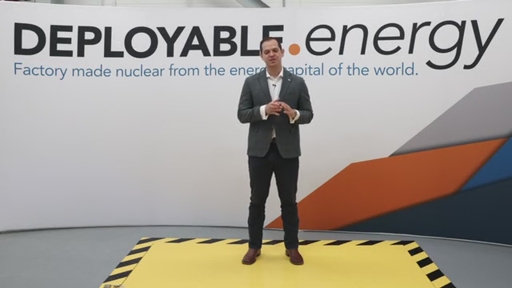
Deployable Energy said its Unity demonstration reactor achieved initial criticality at Idaho National Laboratory, reaching the milestone in roughly 150 days from project kick-off. The test validates the company’s compact 1 MWe nuclear “battery” design under DOE’s Nuclear Energy Launch Pad and follows a plan to deliver three reactors to criticality by July 4. Management framed the result as a major speed-to-market benchmark, with the next phase moving into phased reactor physics, load-following, safety, and full-power testing to support future licensing and commercialization.
This is a technical de-risking event, not an economic inflection. The market will likely overreact to the symbolism, but the real value transfer is to the enabling layer: HALEU/fuel-cycle names and specialized nuclear service providers gain more durable upside than any single reactor developer because the bottleneck shifts from “can it go critical?” to “can it be licensed, fueled, and replicated at acceptable delivered cost.” Public comps most likely to benefit from sentiment spillover are uranium and fuel-cycle proxies such as UUUU, CCJ, LEU, and broader advanced-nuclear baskets like URA/SMR/OKLO, though the read-through is mostly multiple support rather than near-term earnings.
The next 1-3 months matter more than the headline: follow-on test data on load-following, thermal stability, and full-power operation will determine whether this becomes a financing catalyst or a one-off press release. The key failure mode is that commercialization economics remain unproven; if capex, security, and NRC path length don’t compress materially, advanced microreactors stay niche for defense/remote sites rather than a scalable utility product. That means upside for the category may be better captured in fuel supply and component shortages than in reactor OEMs.
Contrarian view: “criticality achieved” is the easiest milestone to monetize psychologically, so the move can be overdone before any order book evidence exists. The consensus is likely missing that the market for deployable nuclear is still a procurement and permitting problem, not a physics problem, and that the first real demand pull may come from defense and industrial resilience buyers, not traditional power utilities. Falsifiers are simple: no licensing traction, no named customers, or any indication the phased testing exposes performance limitations; in that case, the initial enthusiasm should fade over 1-2 quarters.
AI-powered research, real-time alerts, and portfolio analytics for institutional investors.
Request DemoOverall Sentiment
strongly positive
Sentiment Score
0.60
Ticker Sentiment
