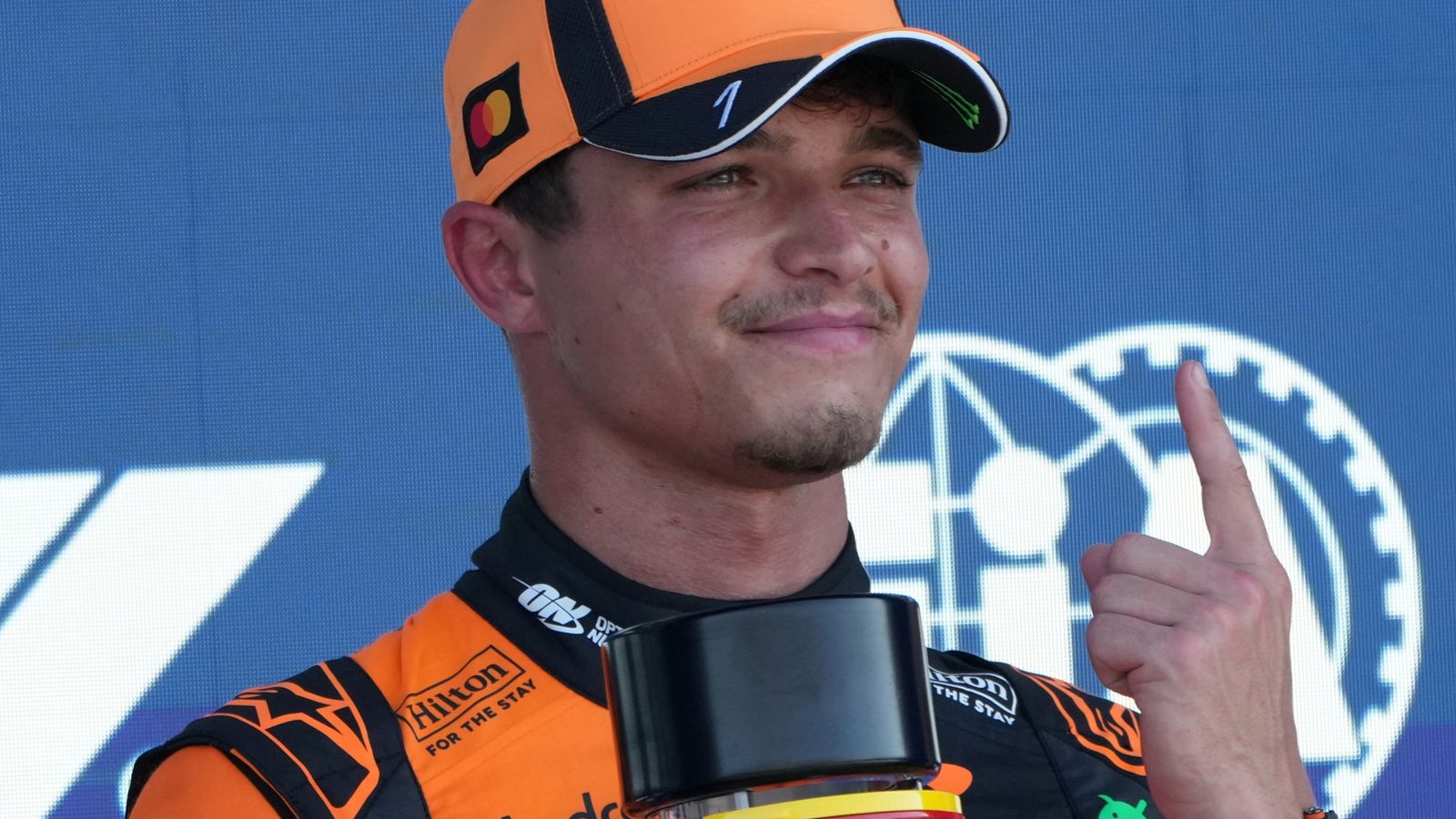
Lando Norris took Sprint pole in Miami with a 1:27.869 lap, ending Mercedes' run of qualifying dominance in the 2026 season. McLaren locked out strong pace with Oscar Piastri third, while championship leader Kimi Antonelli was second and George Russell fell to sixth. The result suggests McLaren's upgraded car is gaining on Mercedes, Ferrari, and Red Bull, but the news is primarily sporting and likely has limited broader market impact.
McLaren’s upgrade hit is the cleanest near-term signal here: in F1, a meaningful qualifying step-change tends to translate first into sponsor/brand relevance and only later into championship points. The market is likely underestimating how quickly a visible performance turn can re-rate season narratives, because media value in motorsport is convex to front-row presence rather than cumulative standings. That matters most for NOW and any ancillary media exposure tied to race-weekend traffic, where a sustained McLaren contention story can support engagement and conversion around live streaming windows.
Mercedes’ softer update cadence creates a window for relative-share loss in the sport’s attention economy, not just on-track results. If McLaren/Ferrari/Red Bull have pulled forward their upgrade curves while Mercedes saves its bigger package for Canada, then the next 2-3 race weekends should amplify volatility in fandom, sponsorship chatter, and broadcast draw—especially if Norris remains in the pole/top-3 mix. The second-order effect is that “competitive uncertainty” itself is monetizable: close qualifying spreads increase must-watch value, but only if the field remains non-dominant; a single-team rebound later in June would reverse that tailwind.
The contrarian risk is that this may be a short-lived upgrade bump rather than a durable regime change. Sprint pole is a noisy data point: track-specific setup, tire warmup, and one-lap execution can overstate underlying race pace, so the real test is whether McLaren can convert into Sunday points over the next 1-2 Grands Prix. If they can’t, the current optimism gets faded quickly; if they can, the season narrative shifts from Mercedes-led to a multi-team fight, which typically extends media interest and supports platform traffic into the summer schedule.
For RACE, the path is more indirect but still relevant: stronger F1 competition improves race-day viewership and sponsor monetization across the series, but any single-team dominance would compress engagement. The key is whether the 2026 upgrade cycle remains evenly distributed; that determines whether this is a one-weekend pop or the start of a higher-retention content environment. In either case, the biggest upside is not ticket sales alone but repeat viewing and cross-platform minutes, which are what the streaming economics actually price.
AI-powered research, real-time alerts, and portfolio analytics for institutional investors.
Request DemoOverall Sentiment
mildly positive
Sentiment Score
0.25
Ticker Sentiment
