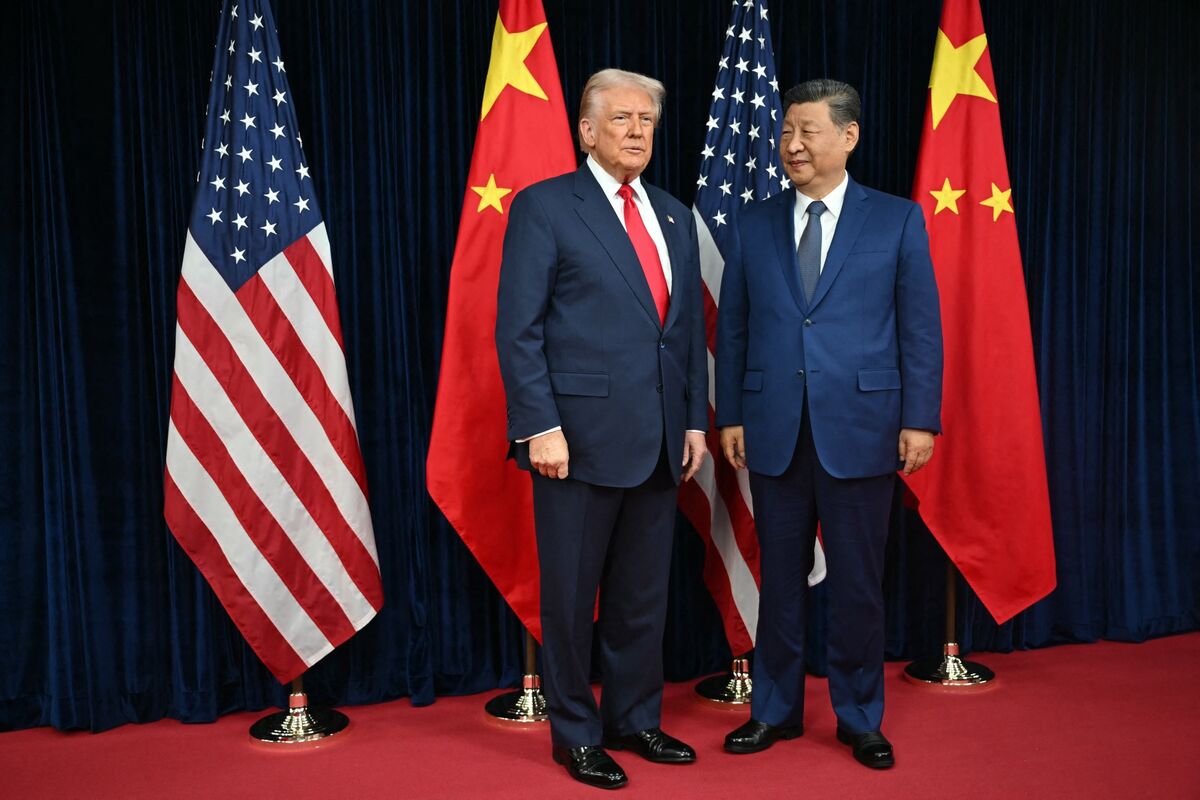
President Donald Trump postponed his planned visit to Beijing later this month. Beijing views the delay as a relief that avoids potentially awkward interactions with Trump amid the war in Iran, lowering near-term diplomatic risk but maintaining geopolitical uncertainty that could modestly affect China-sensitive assets and investor sentiment.
A near-term reduction in bilateral high-level engagement increases the probability that policy frictions — export controls, selective tariffs, and investment screening — remain the default stance rather than being softened by a headline summit. Mechanically, that favors capital allocation toward domestic-facing winners (state capex, SOE contractors, internal consumption platforms) and away from export-intense supply-chain incumbents; modelled conservatively, this raises the chance of persistent downside pressure on export-oriented margins by 3–8% over the next 12 months while boosting targeted domestic credit flow by a similar order.
Markets will rotate from headline-driven spot risk to structural positioning: expect a short-term compression in Hong Kong and US-listed China growth multiples (relative underperformance vs A-shares) over 1–3 months as offshore liquidity rebalances. At the same time, Chinese policy buffers (FX reserves, bond purchases) are likely to mute immediate FX shocks, sending a portion of incremental flows into sovereign and short-duration local bonds; anticipate 10–30bp tighter 3–6 month onshore bond yields versus offshore peers as safe allocation stalls equity outflows.
Tail risks are asymmetric: a rapid rapprochement or a summit announcement would reverse moves inside weeks and re-rate export names sharply, whereas a coordinated escalation (secondary sanctions or new tech bans) would deliver a multi-quarter structural hit to a narrow set of semiconductor and electronics supply chains. Monitor three catalysts on tight timelines: (1) any formal meeting scheduling (days–weeks), (2) new trade/tech measures (weeks–months), (3) material Iran spillovers raising defense risk (immediate).
Consensus frames lower diplomatic friction as relief for Beijing; the blind spot is that the absence of engagement also cements the path dependence toward onshore-first policy and selective decoupling — a multi-year earnings and capex reallocation that markets have only partially priced.
AI-powered research, real-time alerts, and portfolio analytics for institutional investors.
Request DemoOverall Sentiment
neutral
Sentiment Score
0.05
